Sports Performance Archives - Page 5 of 6 - Rausch Physical Therapy & Wellness

Blog

Are Breaking Pitches Age Dependent?

It’s said that Cy Young Award winner Clayton Kershaw of the Los Angeles Dodgers wasn’t initially a valid prospect as a Major League Baseball pitcher. That is until one spring training game in 2008, when he sent Boston Red Sox heavy hitter Sean Casey back to the dugout shaking his head, leading Vin Scully to exclaim, “Ohhh, what a curveball! Holy mackerel! He just broke off Public Enemy No. 1.” Most Dodgers fans will remember March 9, 2008 as the day of the breakout breaking pitch that started Kershaw’s legendary career.
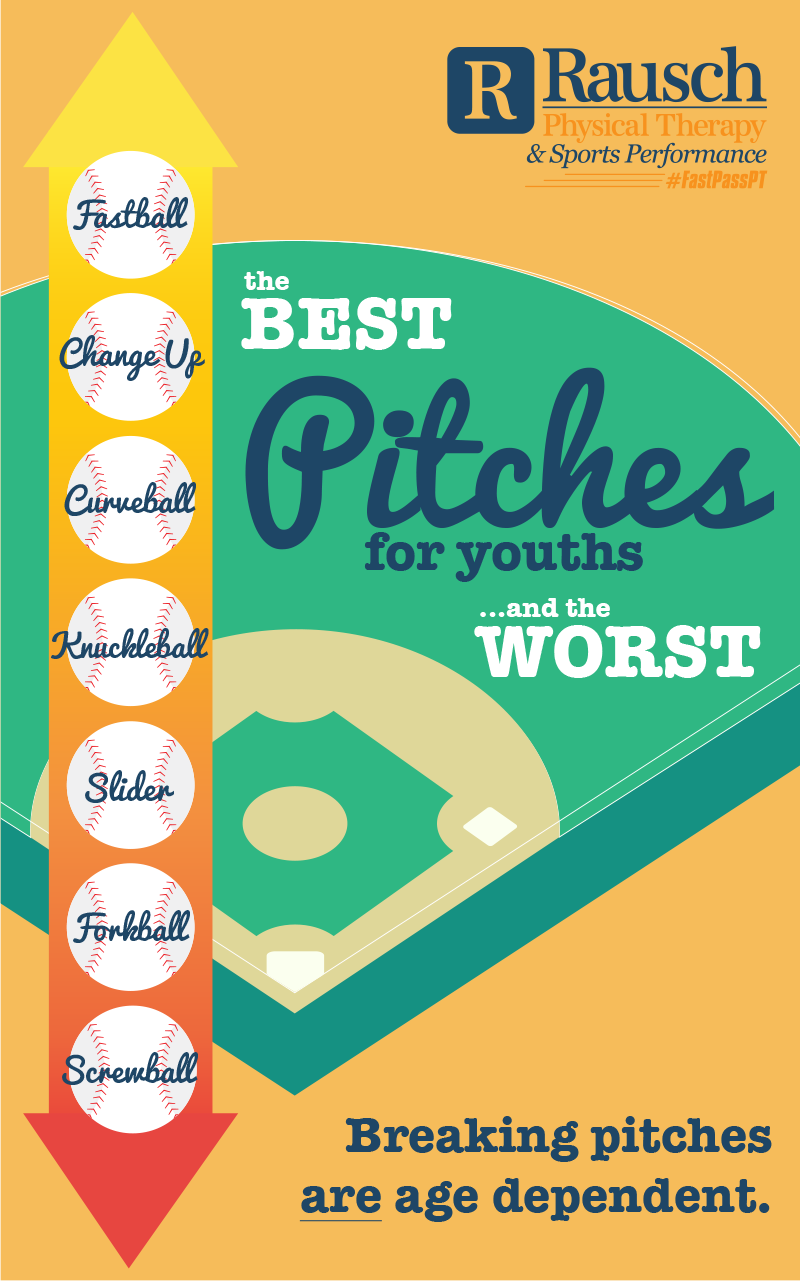
Image by Rausch Physical Therapy & Sports Performance.

Kershaw was just 19 years old when he showed the world he had mastered his 12-6 curveball in that storied spring training game. However, it’s been long proposed that allowing young pitchers to throw breaking pitches, such as curveballs and sliders, has created more injuries in youth baseball. So just how much truth is there to that old adage?

The best pitches for young baseball players

Research highlights the importance of factoring in the age and physical maturity of a player before teaching certain breaking pitches. Several recent studies claim that most throwing injuries that develop later on in a baseball player’s career can be traced back to throwing breaking pitches incorrectly or at too young of an age.

Due to the immaturity of a young pitcher’s body and the lack of strength throughout his/her shoulder and forearm, the best pitches for young ballplayers to learn are the fastball and change up. These two pitches create the least amount of strain and torque on the shoulder and elbow.

The worst pitches for young baseball players

While there is no definitive proof that throwing curveballs directly causes injury, this pitch does place increased strain on the shoulder when thrown incorrectly. With this in mind, coaches and parents should hold off on teaching their players how to throw a curve until s/he is at least 15 years old. What about the slider? While the angle of release makes the slider easier on the shoulder than the curveball, due to the increased torque on the elbow compared to other pitches it should still not be initiated until a pitcher is at least 16 years old. Other pitches, such as the sinker, knuckleball and screwball, also put significant strain on the shoulder and elbow and are therefore not advisable until a pitcher is much older.

Age (in Years) Recommendation For Learning Various Pitches

This chart explains the appropriate age to start teaching ballplayers certain pitches:

Fastball: 8 ± 2 Slider: 16 ± 2
Change-up: 10 ± 3 Forkball: 16 ± 2
Curveball: 14 ± 2 Screwball: 17 ± 2
Knuckleball: 15 ± 3

Even once a ball player is determined mature enough to learn breaking pitches, there still needs to be proper instruction to safely execute these pitches and minimize a player’s injury potential. Breaking pitches are age dependent, and coaches and parents must adhere to this guideline or they’ll increase the risk of injury in their child or players.

[framedbox]References and Further Reading:


Jonathan-Meltzer

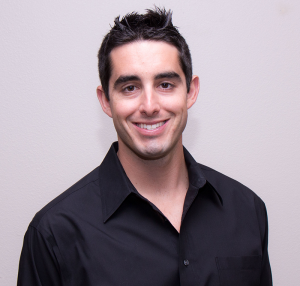
Jonathan Meltzer graduated from the University of Redlands with a bachelor of arts in biology and a minor in physical education. Following graduation, Jonathan discovered his passion for physical therapy while working as a Physical Therapy Aide. After graduating top of his class from Loma Linda University in 2012 with a Doctorate in Physical Therapy, Jonathan began his career at Rausch Physical Therapy and Sports Performance. Jonathan’s goals are to identify limitations and treat his patients with the most recent and innovative techniques in order to maximize functional independence and obtain his patients’ individual goals.

How to Prevent Postural Pain in Cyclists

Remember the days when you could turn your neck to look behind you as you backed out of a parking space? Or when you could look down and actually see your feet without bending forward? Your inability to make simple movements now-a-days may be a symptom of “Pedal Pushers Postural Pain Syndrome.” It’s what happens when you ride a bike for eight hours per week while also working 55 hours in an office chair. You know the feeling—that lovely stiffness, neck pain, and burning between your shoulder blades that’s oh-so magical.[one_half]Let’s do some quick math to determine how much time the average cyclist spends sitting every day. As an example, let’s use Ted; Ted sells insurance by day and loves to ride his mountain bike in the evenings… and binge watch Real Housewives of Orange County. (No judgement, here.) So, Ted’s daily sitting time looks something like this:

  • Drive to work = 1 hour
  • Work = 8 hours
  • Drive home = 1 hour
  • Bike ride = 2 hours
  • TV time = 2 hours
  • Daily total = 14 hours! In just one day!

[/one_half][one_half_last][/one_half_last]If this sounds eerily familiar, (except maybe you prefer Keeping up with the Kardashians over Real Housewives) consider this: the human body was never designed to sit in a chair for extended periods of time. In fact, our bodies were designed to stand or squat, but not sit.

Sitting for a long time can lead to tight hip flexors, weak butt muscles, and a stiff spine. Ouch. However, I have great news! This stuff is easily fixable; you just have to be diligent and willing to make a few small changes that will significantly improve your quality of life.

Kevin’s Seven Tips for Phasing Out Pedal Pushers Postural Pain:

  1. Get UP! Walk, move, and stretch every 30 minutes throughout your work day.
  2. Take conference calls standing up. Get a wireless headset and pace your office while listening to your boss ramble. Just make sure to put it on mute and watch where you’re going!
  3. Do Yoga or Pilates during your lunch break. Many studios offer abbreviated lunch-time classes for just this reason. I cannot tell you how nice it is to walk on over to ABC Pilates at noon and stretch out my stress.
  4. Learn to love your foam roll. Stretch and foam roll every night. You can buy one for cheap and work out that tension while you’re on your fourth episode of the night.
  5. Get massages frequently. Tissue work helps to clean up the bogginess in your fascia (the connective tissue fibers that surround your muscles) and will have immediate pain relieving effects.
  6. Stretch your hip flexors and strengthen your butt.
  7. Get a great Bike Fit! A proper Bike Fit is a valuable service. These pros can make the necessary adjustments to your machine that will help with comfort, injuries and power output. You can google around for local bike shop that does Bike Fits, or if you’re in South Orange County check out Rausch PT’s tried and true favorites:

Yes, new bikes are pretty, but spend some time on the motor that pushes your bike along: YOU! The more dedicated you are to making these simple changes, the better you’ll feel and the faster, better and longer you’ll ride. To get you started, I’ve made a free cycling-specific exercise program to help with postural pain. Go to www.homeprograms.net, and the login information is:

Your Email Address: bikerider@bike.com

Your Clinic ID: 1006

So get on it and start taking care of your motor today. It totally deserves it.

All the best to your health,

Inbox-35061-messages-1987-unread


Kevin RauschAs the president and founder of Rausch Physical Therapy & Sports Performance, Kevin Rausch, PT, MPT takes great pride in the care of every single patient he treats. Kevin specializes in sacroiliac joint dysfunctions, running and cycling injuries, and return-to-sport planning for athletes. Since the first day he opened his clinic in 2006, Kevin has strived to provide the best in care, service and technology so as to strengthen his patients’ total body health and get them back to doing what they love.

Find Kevin on Google+

A lesson in mental toughness from Russell Wilson

I don’t know Russell Wilson personally, but in my practice as a Professional Sport Psychologist for the past 33 years, I know a thing or two about what it takes to become a champion, about mental toughness and resilience to adversity, all of which Russell and the Seahawks displayed so beautifully in the NFC Championship game on Sunday.

Like NFL quarterbacks, all athletes have to deal with obstacles, challenges and setbacks.  Will they fold under such circumstances, believing that they cannot succeed and wait for the next opportunity to prove themselves?

stock-footage-a-female-athlete-breathes-heavy-and-sweats-after-an-intense-exercise-while-looking-into-the-cameraOr…like Russell Wilson, will they embrace the mindset of a champion, by maintaining supreme confidence in the face of adversity and bounce back from setbacks? Do you have a game plan on the back burner to deal with unforeseen setbacks in your sport? Do you have the confidence and mental toughness to be resilient in the face of adversity?

One important lesson to be learned from Russell Wilson is that we all have choices regarding how to assess a really devastating situation.  During the first half of his game against Green Bay, his performance was so poor that he had a zero quarterback rating, and he was playing the worst game of his NFL career. With his team down by a score of 16-0, one choice Russell had was to admit to himself that it wasn’t his or the Seahawks’ day, lose the belief that a victory was possible, and just try to get through the second half without more embarrassment.  In other words, play it safe, while expecting to lose.

But neither Russell Wilson nor the Seahawks think that way.  Even with only a few minutes left in the game, with his team still trailing by 12 points, he trusted his ability to bring victory to the Seahawks.  Mental toughness is the ability to sustain your intensity and bounce back, despite setbacks, adversity, and unexpected obstacles.  And that kind of mental toughness paid off.

Mental toughness skills include confidence building, resiliency, and developing an “identity statement” that an athlete can repeat, along with other positive affirmations each day.

An “identity statement” is a realistic reminder (no room for modesty here) of the real qualities you possess as an elite athlete and the vision you have of your future performance.  The purpose of such a statement is to enhance your self-esteem and confidence, especially when you begin to doubt yourself.  Here is an example:

“I am intelligent and I know my sport better than anyone on my team.  I have the greatest work ethic and I will eventually be an all-star.”

Combining such a statement with relaxing breathing and visualizing past successes builds the mental toughness necessary for bouncing back from setbacks.  Certainly Russell Wilson, the Seattle Seahawks and the coaching all practice mental toughness and it really paid off big time in the NFC championship game!


dr-singer11Jack N. Singer, Ph.D. is a licensed and certified Clinical/Sport Psychologist and Performance Success Coach, based in Mission Viejo, CA.  For more information and a FREE 15 minute consultation for all Rausch PT clients and family, contact Jack at 949-481-5660. www.drjacksinger.com

How to Prevent Throwing Injuries in Youth Baseball

Jonathan Little League
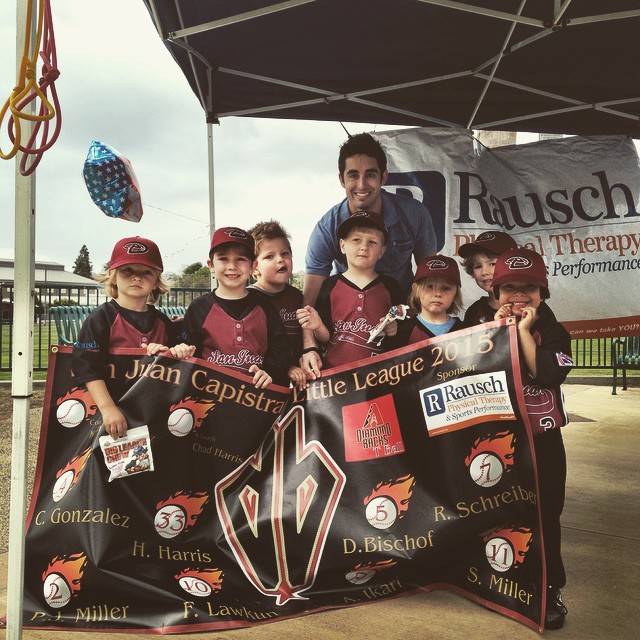
Start ’em young! Jonathan in the community educating little leaguers and their parents about youth baseball injury prevention.

Around the office, they call me “The Baseball Guy.” My years of clinical treatment of ballplayers at Rausch Physical Therapy and Sports Performance, coupled with my interest in biomechanical research, has motivated me to find new ways to reverse the alarming increase in youth baseball arm injuries. In fact, for the past two years I have been developing injury prevention programs for southern Orange County baseball leagues to help protect our youth’s elbows and shoulders.

And it looks like I am not the only one getting on base with this initiative. Major League Baseball and USA Baseball recently teamed up to launch their Pitch Smart program, which is designed to educate parents, coaches and young athletes about how to avoid overuse injuries. It includes information on pitching guidelines, injury risk factors, Tommy John surgery and more.

I have found that out of all the risk factors that can cause injury, the number one is pitching too much, both in a game and in any given year. New research is coming out every month about the correlation of throwing too much and arm injuries in little league athletes. Did you know:

  • If you pitch more than 100 innings in a year, whether little league, club or showcase, it will increase your risk of injury by 3.5x
  • If you pitch greater than 8 months in a year, it will increase risk of surgery by 5x
  • Kids should take off about 2-3 months of competitive pitching in a year and engage in other sports or active rest where they are still using their arms, just not in a pitching motion


Throw Right
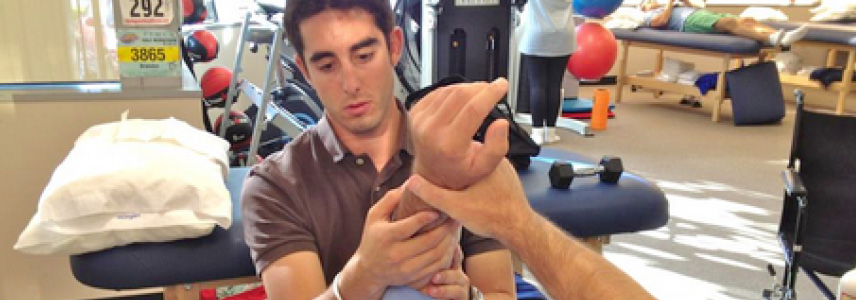
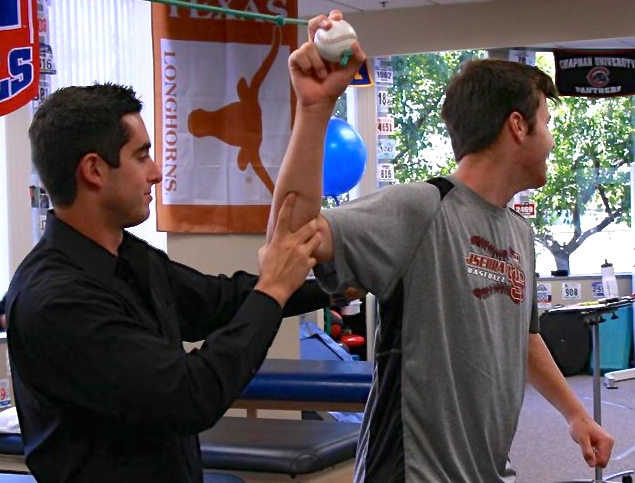
Jonathan taking a patient through Rausch Physical Therapy Throw Right program.

We as medical professionals need to transfer this information to the public so that change can occur in the traditions and schedules of little league baseball. The Pitch Smart initiative proves to me—and hopefully to parents and coaches—how crucial injury awareness and prevention is. I want to take this information and use my skill to prevent, rehabilitate and treat the youth of little league baseball. At Rausch PT, we offer our Throw Right program, which is designed to improve throwing mechanics and decrease risk of injury by evaluating strength, balance and range of motion. It’s a great way for throwing athletes of any age and experience to stay healthy and in the game for many, many years.

If you have any questions about throwing injury prevention or rehabilitation, please send me an email and I will be happy to answer them. For now, take care of those elbows and shoulders!

Sincerely, The Baseball Guy

Jonathan Meltzer, D.P.T.

jonathan@rauschpt.net


Jonathan-Meltzer

Jonathan Meltzer graduated from the University of Redlands with a bachelor of arts in biology and a minor in physical education. Following graduation, Jonathan discovered his passion for physical therapy while working as a Physical Therapy Aide. After graduating top of his class from Loma Linda University in 2012 with a Doctorate in Physical Therapy, Jonathan began his career at Rausch Physical Therapy and Sports Performance. Jonathan’s goals are to identify limitations and treat his patients with the most recent and innovative techniques in order to maximize functional independence and obtain his patients’ individual goals.
Triumph this Year!

Leading Off Blog 2If you’re reading this, then you’re like most of us. You made an awesome resolution for 2015, and have probably already failed at it. Take it easy. You’re amongst good company. We’ve already done the same thing. As I prepared to write this #2015 Leading Off section, I spent some time on one of my favorite websites, TedX.com. This site if full of interesting ideas, out of the box thinkers, and challenging viewpoints. Check it out.
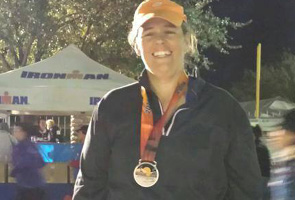
Leading Off Blog 1I was intrigued by this talk “Quit Trying and Triumph” by Clare Barcus. Its a must see! In her presentation she speaks about her own hurdles in life and how she used to “try” to overcome them. The difficulties she has are real, they can and did negatively affect her life, work, school, and social well being. Throughout most of her life she “tried” to overcome her hurdles, until in one certain situation, she realized that she needed to deal with, accept, and triumph over her hurdle. It’s an amazing story!

This year, I challenge all of you to TRIUMPH. Be victorious in your journey and concer. Triumph does not come easily. It is not a “try” type of an effort, and it is not a weak-sauced “resolution” that you will forget about in a month. Triumph, is a supreme process of achievement through specific and hard work. Through struggle and strive. Despite your hurdles, physical challenges, and above the ever present negativity. It takes commitment and self introspection on a daily basis.

Leading Off Blog 3So what will you be triumphant with this year?
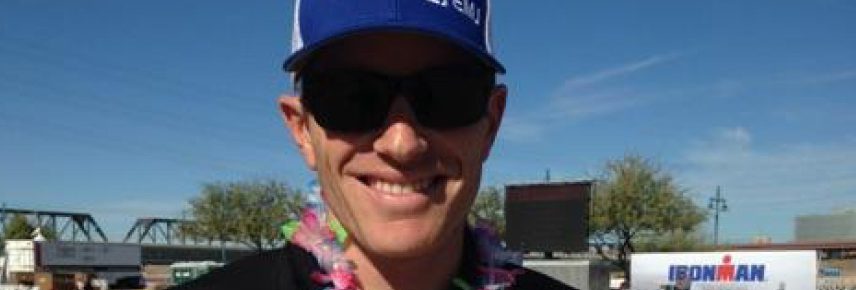
Will you be a better dad – Will you make the team – Will you get a promotion at work – Will you commit to helping a charity – Will you get into college – Will you start a new adventure – Will you fix that nagging leg injury – Will you do an Ironman – Will you get in shape – Will you deal with a personal issue – Will you spend more time with a friend in need – WILL YOU____________________________________?

“Do or do not. There is no try” – Yoda

#TRIUMPH this year!

Inbox-35061-messages-1987-unread

Swim For Your Life

When I first moved to California, I lived a brief stint with an amazing family in Thousand Oaks who I affectionately refer to as my California family. They are a great group of people and I got to be real close with them as well as do a lot of activities with them. One of my favorite activities was Master’s swimming with the Dad of the family, Steve. He was swimming to stay in shape but also for a more serious (and somewhat comical) reason. He was practicing his swimming so that if he ever was stranded in the ocean and needed to swim to shore to survive, he would be able to do so. Not a bad reason if you think about it.

This past week, I stumbled across an article on ESPN titled something along the lines of “Ex-Dolphins Fullback Swims for Life”. This obviously piqued my interest, so I clicked on it. The focal point of the story, Rob Konrad, recently found himself in a “boaters nightmare” off the coast of Florida. He was fishing when his boat was hit by a wave and threw him overboard. His boat was on autopilot and sailed itself off into the distance as he was stranded without a life jacket.

Konrad realized very quickly that his only option was to swim for it. He had a wife and two kids waiting for him at home and there was not another boat in sight. So, he set off to swim back to shore. During his trek, a boat came within 50 yards and the coast guard unknowingly had a spotlight on him, but neither of them saw him. He was on his own. He washed up on shore at 4:30am after a 16 hour, 27 mile swim filled with chilly waters, bites from sea life, and circling sharks.

The biggest takeaway I got from the story is that we are training not only for our events, but also for our lives. You never know when extreme endurance and athletic ability will come in handy on a day to day basis. Letting yourself go isn’t an option.

Link to Story: http://espn.go.com/nfl/story/_/id/12155533/rob-konrad-recounts-16-hour-swim-survival

Questions? email jack@rauschpt.net
Jack McPheron, Performance Lab Director

Something’s in the Water

If you haven’t noticed a trend in the Rausch Office, it seems as though there is something in the water. Every time you turn around someone else is PREGNANT! Being the last female in the office that is pregnant and embracing my last week of work, here are a few things I have learned.

Growing a human is hard work. So give yourself some credit. Your number one priority is taking care of yourself and your child; and in my opinion, a healthy diet and appropriate sleep take precedent. So you may need to adjust your exercise expectations. I originally set a goal of running 3 miles 3 times a week and swimming 2 times a week. Reality: I have been nowhere close. Between juggling work, household duties, a new puppy (I know…crazy!) and day to day tasks; I am exhausted. What has been more realistic for me: frequent walks, occasional swims, taking the stairs and a few simple home exercises.  I am not setting any records, but I feel good!

Your body is changing; expect some aches and pains. But you should not be suffering.  So when you do find the time and energy to exercise, follow these general guidelines for a safe and healthy exercise program:

  • After your first trimester avoid doing any exercises on your back.
  • If you have not exercised recently, start slowly!
  • Avoid exercise in hot, humid weather or when you have a fever.
  • Drink lots of water to optimize hydration and avoid overheating.
  • Modify the intensity, so you can maintain a conversation during exercise.

So what are some of the changes that happen to the body during pregnancy? The most obvious is weight gain. And this extra weight makes your body work harder for everyday tasks. The extra weight in the front of your body, our amazing baby bump, not only shifts your center of gravity, affecting balance, but it also puts extra stress on your pelvis and low back. On top of the extra weight, the hormones released by the body also cause ligament laxity. This is great news come delivery day; but in the meantime you lose the support and stability around your joints, making them susceptible to injury.


Qualifying for Kona

This past season has been an amazing journey. I sit here now, with my Ironman AZ first place trophy for M30-34 age group and my KONA lei, and am still shell-shocked how I arrived here.  I am so incredibly blessed to have the support crew that I have around me.  Back in the very beginning of the season I found myself at the doctor’s office. I had been pushing through some hip pain for long enough and needed some professional help. I knew what was ahead. I was eyeing a race schedule that would have anyone excited.  It could be considered the ‘Best of the Best’ of triathlons around the world- Wildflower Long Course, Escape from Alcatraz, Ironman 70.3 World Championships, and finally Ironman Arizona. My goal was to qualify for Kona out in AZ, but this was 11 months away.

Profile - Blog 1I thought it was too early to think about it, but looking back on it, I was wrong. The crew at Rausch Physical Therapy were my saviors at that time, I just didn’t know it yet. I worked with Christina and the rest of the support team there as they tirelessly worked to get my body back on track. I was stretching, doing strength work and was being educated. That’s the piece that was so valuable.
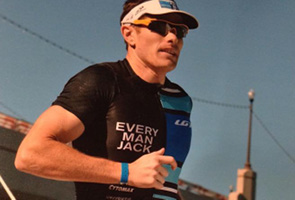
Even with my injury bringing me down in the dumps both physically and mentally, I was being built up from the inside-out. I worked with the team for about 2 months and came away a healed athlete, yes, but a better educated one as well. This is something that stuck with me throughout the season. I took better care for my body and it paid off.

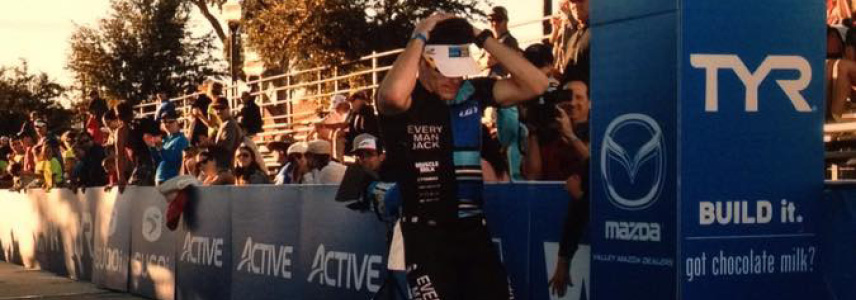
Profile - Blog 3I showed up on the start line in AZ and had a certain kind of confidence that is hard to explain.  I wrote ‘CMO’ (my wife’s initials, and someone I can’t do these races without), and ‘BELIEVE’, on my hands in marker. I looked at them often during the race when I would start to lose focus or start to hear negative thoughts. My secret during races is recognizing those negative thoughts that come and embrace them. Every person will have some sort of negative thought that will come in their head during a race like Ironman and the best way to handle it is to treat it like a person. I always say, “oh hey, there you are. I was wondering when you were going to show up. You’ll have to take a seat now though because I am about to do something incredible”.
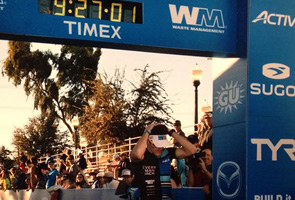
Profile - Blog 4I had a solid swim and came off the extremely windy (worse than past years) bike course in 2nd place in my age group. I felt good starting the run and knew what I had trained for and knew what I was capable of. It was my time to execute that plan. I ticked off the miles and found myself in first place around mile 9. I tried not to stop and start high-fiving people at that point because I was so pumped. I have never been in first before in a 70.3 or full Ironman race like this. I went through the halfway point and threw up a #1 sign to my family cheering for me. I could feel their energy and feel the fact that they were proud of me. The next 8 or so miles were tough feeling like I was running aid station to aid station looking for sugar. I got a time from fellow teammates telling me I was about 5min up on second with only 5 miles to go. I was running scared but at the same time, I BELIEVED!


There were moments where I wanted to walk and give up. But there were more times when I felt like I was floating and had visions of what I would do going down the finishing chute as an age group champ.  It’s funny how things really play out though. That last mile was damage control and even tunnel vision. All I had left when I crossed the finish line was me putting my hands on my head in shock- I couldn’t believe what I had just done. I wanted to share my excitement with my family immediately. I wanted to hug them. I was just too crushed to do so. It would have to wait until a later time. I was KONA bound. But better yet, I was a changed athlete, and I truly believe it was due to the education I received early on from the crew at Rausch. They laid the foundation, I built it up. They believed in me and I am forever grateful. Thanks for reading.

The Weightless Way to IMAZ

Name:
Robin Littrell

Number of Ironmans completed:
2, IMAZ 2012 & IMAZ 2014.

What was your reason for IMAZ 2014?
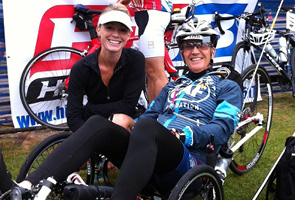
IMAZ 2014 Training was a little different from my first experience, but I was very committed to make it to the race. You see I was racing with my daughter Briana.  How many mothers out there can say,“I did an Ironman with my daughter”! Bragging rights forever!!!

How did your training go?

My training started at a nice and steady pace. I didn’t have any real issues, but started to feel a little bit of pressure in my right foot.   My coach advised me to see my doctor ASAP. I did, long story short is I was diagnosed with a stress fracture. I saw a podiatrist was told to tape my foot and run.

Did you do anything outside of what the Podiatrist suggested?

I was looking into other ways to train. I have been to Rausch for various reasons and knew about the Anti-gravity treadmill. I started to use the Altra-G Treadmill to keep my endurance and mileage up. It was a great way to get my training in without further injuring my foot. I also had weekly physical therapy sessions with Dustin, the combination was just perfect.

And how did you feel come race day?

When race day came I was so thrilled that once again I was at the starting line ready to go!!

Arizona Ironman 2014 was very challenging to say the least! But I finished☺I am again thrilled to say I am an ironman!

This time around it took the whole village to get me there, without the encouragement from my wonderful coach Martha,  Rausch PT and my husband “Bob” my journey would have  a very different ending.

Winning the Kona Lottery

How long has competing at Kona been a dream of yours for?

Competing at the Ironman World Championship in Kona has been a dream I pursued for more years than I can count. I started competing in triathlons in 1994 a couple years after graduating from college where I had cycled competitively for five years. Early on, I saw the Ironman World Championship on TV and was captivated by the goal and dream of someday finishing this race.

How did you finally gain a position at Kona?

Absent the speed to qualify with an age group win at a qualifying race, my only option to race in Kona has been a lottery spot. I have entered the lottery every consecutive year for longer than I can remember without luck. This year’s lottery winners were announced on April 15th at 9:00AM PST. With no email from the WTC by 9:03AM, I resigned myself to another year without an entry. As I glanced over the list of lottery winners on the Ironman website to see if recognized any names, I suddenly encountered my name on the list. What?! I had a sense of disbelief since I hadn’t received an email. Was I reading this right or were my eyes deceiving me? I reached for my phone and checked my email again. The email confirming my lottery spot had arrived at 9:24AM. I was stunned and elated. I finally had my chance to make this dream a reality.

Once in, where did you training take you?

In the months leading up to the race, my training progressed well. In training for other IM distance races previously, I knew to temper my enthusiasm in the early months, stay healthy, keep it interesting and have fun. Over the summer, I raced at Escape from Alcatraz, Vineman 70.3, Coveathlon and Big Kahuna Aquabike. Plans for racing IMLT 70.3 as a final big training day fell through with the race cancellation, but the long rides and runs were in the bank so I took this in stride. I was fortunate to stay healthy as my training volume increased. A bit of discomfort in my heel area was quickly addressed with a few visits to Jessica Snyder at Rausch Physical Therapy. I was able to keep moving forward in my training without any downtime which was important both physically and mentally.

What were a few highlights of race week in Kona?

We arrived in Kona on Tuesday before race day. Leading up to race day, I enjoyed practice swims in the ocean, the coffee boat and the Underpants Run along with some relaxation time and a drive to Hawi to check out the bike course. Another highlight was a chance encounter along Alii Drive with Chrissie Wellington who wished me a good race as I rode my bike to check-in on Friday.

The big day has arrived, how did it go?

A big part of competing in an Ironman is taking the conditions of the day and making the best of the circumstances. When the cannon went off on race morning, my first goal was to finish and enjoy the experience. And if I’m honest, I had a finish time in mind I thought I could achieve if circumstances allowed.

The swim felt good and I was out of the water in 1:24. A little slower than I expected, but no reason to fall apart over 9-10 minutes. The first 30 miles of the bike were comfortable and on target. Out on the Queen K, conditions abruptly changed at Mile 30 with an incredible headwind that left me riding 7.7mph on flat terrain. I watched my average speed plummet and later learned my support crew thought I’d crashed or flatted with the sharp decrease in speed. By Mile 40, I was reassessing my time goals. As the strong winds continued to gut both my speed and ability stay aero, I knew my time goal was slipping away. The ride on to Hawi was hard. And slow. And uphill. And windy. Probably the toughest riding conditions I’ve experienced in 27 years as a cyclist. I was grateful for the turnaround in Hawi and anticipated tailwinds, but with gusting crosswinds, even the downhill was slow in order to maintain bike control. 112 miles later, I came off the bike absolutely fried. My legs rebelled at my attempt to run in to T2 and I slowed to a brisk walk. Coming out of T2, I again tried to run. I was able to jog easily and gradually loosened up to maintain a decent pace through the first 16 miles. The pace slowed a bit until Mile 25 but I kept a moderate jog while walking the aid stations. As I came back into town, my pace picked up heading downhill to Alii Drive. Making the final turn on Alii Drive was magical. My legs no longer hurt. My pace accelerated all the way across the finish line. I finished in 14:42.

It’s been a few weeks since Kona, have you been able to reflect much?

Recently a friend asked me if I ever asked myself “Why am I doing this?” when I was out on the course that day. My answer came easily, “no”. On race day, I was able to embrace every minute of the day, from the pre-race nerves to a beautiful swim, the incredibly challenging winds on bike course and the run along Alii Drive at sunset. And the finish….An incredible feeling of accomplishment beyond words. I feel privileged to have had to the opportunity to race in Kona along with incredible support from a wonderful group of friends and husband who supported me through my training and traveled to Kona to cheer me on.


5 Season Success Tips

“Success is the sum of small efforts repeated day in and day out” – Robert Collier.

I couldn’t agree more with Mr. Collier, but what do those small efforts look like on an everyday level? What are the little things that your body needs to stay healthy as you endure a grueling season of ___________ (it all counts).

This list is meant to be encouraging. So don’t go getting all – “I don’t have time for that”, “I’m too busy to take care of myself, I have too much training/practice to do”. The key to this opportunity is SMALL. Remember, its all the little things that you do that keep you healthy and in the game.


  1. Have a great OFF SEASON! – this is your chance to let your body heal up. Get rested and get ready for the next opportunity to succeed. So if you skip this, you are missing out. Give your self 2-4 weeks of fun, play, recovery, something different. When making your training program, start with a defined off-season. Whether your 11 or 59 playing baseball or running a marathon, your body is not meant to do the same thing all year round.
  2. Get STRONGER – that’s right people strong and stable muscles get hurt less, they protect joints, they hit the ball further and they protect you. So get stronger. The pre-season time is best time to make this happen. 3-5 strength workouts per week: weights, crossfit, boot camp, ABC Pilates, Run Fusion, etc. You can strength training (and you should) during season too, but knock it down to 1-2 strength workouts per week.
  3. Build your CORE – your core is where its at. Its the center of you, its the first thing that contracts when you throw a baseball and it should be engaged during your entire marathon. It can be trained daily and core work should be challenging but fun. No I am not talking about sit ups here, they work your abs and make you look good on the beach; but they don’t do much for your core. I’m talking about Planks, Overhead Squats, Spiderman’s, Pilates, Inch-worms, etc… These strengthen and stabilize the center of you so that your arms and legs can be awesome.
  4. RECOVER every day – if you want to feel great for tomorrow’s workout. Your time spent recovering each day is dependant on how long and how hard your days workout was. It can be as easy as icing your throwing elbow, to as long as wearing compression pants for 6 hours after your workout. Remember, how you recover today will determine how well you start practice tomorrow.

Check out these RECOVERY opportunities:

  • Cool Down for 10 minutes after your workout (stretch, drills, technique work)
  • Ice if it hurts or is sore for 10 minutes. Or if you really want to treat yourself, jump in an ice bath for 8 minutes.
  • Compression Pants – these work great to reduce lactic acid build up, flush your legs, and are research proven to make you run/ride faster tomorrow. 3-6 hours of wear after your workout is best.
  • Stretch – spend 2 minutes stretching every muscle you used in todays practice. Slow and easy. And if your coach tells you not to stretch because it will make you slower, find a new coach (yes, I’ve heard this before:)
  • Tissue work – foam roll, massage stick, massage, ART, etc. All of it works as long as you do it! This is the most important step to recovery. Spend time rewarding your tissues for the hard work they put in today. In fact, if you are going to pick one thing to do out of this whole post, PICK THIS ONE!
  1. Technique – spend time honing in your technique. Work on your mechanics, do focused drills in your warm up and cool down during every workout. This is a great way to prevent injury, because the vast majority of overuse injuries come from flawed techniques. Did you know that during a 3 hour bike ride your knees bend and straighten over 16,200 times! If you do it wrong 16,000 times every workout, you’re going to get hurt! Same goes for baseball. If you throw the ball 100 times per game with bad mechanics your elbow and your shoulder will get injured. So do it RIGHT. #RunRIGHT, #BikeRIGHT, #ThrowRIGHT – biomechanical analysis and movement correction to help you get it RIGHT.
  2. Get Treated – often. Your body goes through a lot every practice. Not all of it ends up in an injury, if taken care of. But it will end up in the dreaded time off, season ending, ordeal if you don’t listen to your body and get it worked on. Who works on you is up to you, PT’s, Chiro’s, ART’ers, Massage Therapists, etc are all great at keeping your tissues healthy. So find someone in your area, that helps make a difference. Of course Rausch PT has 7 PT’s, 4 massage therapists, an ART guy, and a whole rad team to keep you in the game. I know not everyone reading this lives in the OC. So go find someone that know’s how to work with athletes and can keep your tissues healthy. The more often you get treated the better you’ll feel, practice, respond, and succeed.

Bottom line, take care of your body this season and it will take care of you.

“Listen to your body when it whispers to you, because when it screams at you its too late” – Amber Neben, World Champion Cyclist.

I love this line from Amber, she’s right on. Do the little things that add up to a successful season of whatever you play. Parents, you’ll have to chat with and keep up with your kids as they work hard on their teams. Pain is never normal in any sport for any reason. Utilize the #fastpassPT option at Rausch PT to get in right away. No prescription needed to get examined and fixed by the best PT’s.

One last point – as the end of the year is coming soon. You have the opportunity to use Flexible Spending and Health Savings Accounts – you can use these towards our Performance Lab services. Right Right. Bike Right. Throw Right. VO2 Max. AlterG. ABC Pilates. Custom Orthotics and Hypoxico.

Training Knowledge is Power

VO2 Testing

With the introduction of the internet not all that long ago, we have all quickly realized now more than ever that knowledge is power. We can see this in everyday life and it is important to know that knowledge is extremely powerful when it comes to our athletic training as well. How much knowledge do you have when it comes to your training? Are you aware of your anaerobic threshold, your aerobic threshold, your heart rate training zones, or your resting metabolic rate? If not, you should be!

Many people train at a medium-hard intensity for every workout and wonder why they aren’t seeing the benefits? Training nonspecifically without a plan can lead to plateaus, injuries, and a lack in performance. VO2 testing can help you to determine your training zones as well as your anaerobic and aerobic threshold. All of this information is very important in order to cater your daily workouts to your specific training and racing goals.

A VO2 Test is a graded exercise test on a treadmill or bike with a mask over your face that measures the volume of your expired air as well as the percent of oxygen and carbon dioxide in each expired breath. By gathering this data, one can learn their aerobic and anaerobic threshold, and potentially your VO2 Max. This information will help you to understand your heart rate zones and training intensities for effective training. Heart rate zones are unique to each person’s physiology and should be known when training for any endurance event. Training too hard or too easy can lead to long term damage and falling short of goals.

A VO2 Test is the perfect way for you to gain an edge over your competition and to understand how to train smarter, not harder. VO2 testing isn’t just for the elites anymore as it makes training more enjoyable and safer for athletes of all abilities.

Schedule your test today and get on the road to better performances and less fatigue!

Cost:$150

Schedule Here

Questions? email jack@rauschpt.net Jack McPheron, Performance Lab Director