

Wellness and Healthy Aging Archives - Page 6 of 7 - Rausch Physical Therapy & Wellness

Blog

The Myth of the “Ergonomic Workplace”

The Myth of the “Ergonomic Workplace” 1
BY KEVIN CAPATA, DPT, RAUSCH PHYSICAL THERAPY

Should I get a standing desk? Do I need a chair with a lumbar-support cushion? Is it okay to cross my legs? How can I keep correct posture for eight hours at work!?

As a physical therapist, my patients ask me these types of questions far too often. I can understand why; we’ve heard that sitting at a desk all day is (literally) killing us, we can feel the aches and pains of the 40-hour work week, and we want a quick fix. Enter: “The Ergonomic Workstation”—the latest “solution” to the daily grind.

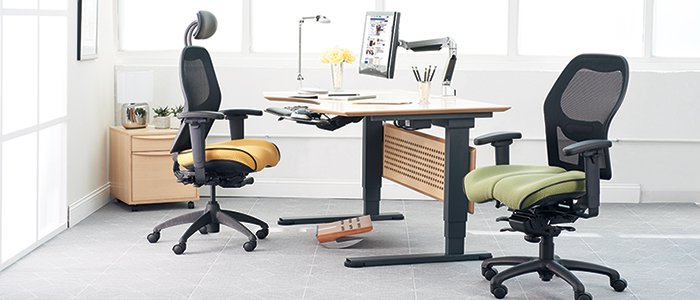
We’ve all heard or read about the ideal “ergonomic” setup for your office, and people will spend hundreds of dollars on products to achieve it. Try a treadmill desk. Swap out your chair for a stability ball. Get an ergonomic keyboard. Sit up straight… no, lean back… NO, stand up! From desk accessories to office furniture, my patients are buying anything that promises to alleviate their poor posture and the pain that comes with it—but is this money well spent?

The Myth of the “Ergonomic Workplace”

Now, I believe that ergonomic products are great in theory, and yes an “ergonomic” set up at your office may help correct some “poor” posture during your workday. But as a physical therapist, I’m here to let you in on a secret: it doesn’t really matter what kind of chair you use or how you sit at your desk; what matters is YOU.

Yep, when it comes down to it, the ergonomic workstation is a myth. The truth is, being desk-bound and sedentary is what’s killing us.

When you’re at your desk for hours, it doesn’t matter how you’re sitting, or if you’re standing, or even if you’re walking on a treadmill—if you do the same movement or hold the same position for a prolonged period, it’s unhealthy. You can be sitting in the most ergonomic chair money can buy, but if you sit in it for hours at a time, your body will adapt and struggle to function when you’re no longer in that position, which is why you feel that soreness, stiffness and pain.

So yes, always sitting hunched forward at your computer is bad, BUT always sitting stick straight is not great either. Maintaining ANY position all day, every day is not good for you! As biomechanist Katy Bowman puts it in one of my favorite books, “It’s not the load that breaks you down, it’s the way you carry it.”

DID YOU KNOW? The Average American is Sedentary for 21 Hours Per Day

In fact, sitting has joined smoking and obesity as a top risk factor for chronic disease. Recent studies show that too much sitting contributes to a host of diseases—from obesity and diabetes to cancer and depression—and literally shortens your life.

Right down to the cellular level, our bodies crave frequent and varied movement. Yet I bet you can count the number of positions you are in throughout the day on one hand:

  1. Walk to your car
  2. Sit while you drive, at work, for meals, while watching TV…
  3. Lie down to sleep

In total, Americans are sitting an average of 13 hours a day and sleeping an average of eight hours, resulting in a sedentary lifestyle of around 21 hours per day. Sure, maybe you squeeze in a trip to the gym, but when you think about it, a sedentary lifestyle plus an hour of “exercise” is like eating candy and junk food all day, then deciding to have an apple for dinner!

The British Medical Journal claims that reducing the average time you spend sitting to less than three hours per day could increase your life expectancy by two years, but that’s definitely easier said than done considering that 13-hour average. So, what can we do to get—and stay—moving?

Stay Moving, Stay Healthy

It’s time to forget this notion that there’s one “best” work setup or posture; instead realize that the best position is your next position. Get up. MOVE. Change positions. Get into a new posture that you haven’t tried in a while. You don’t have to allow your environment to determine how you interact with it.
[framedbox]
[styled_title size=”2″]Kevin’s Three Rules for Avoiding Sitting[/styled_title]
Bound to your desk? Here are three rules to remember throughout your workday to help restore proper function to your tissues and muscles and combat sitting at work:

  1. For every 30 to 45 minutes of sitting, you should do five minutes of stretching or mobilization exercises
  2. Set an alarm for every 20 to 30 minutes to remind you to change positions. We all have smart phones, so no excuses!
  3. Find alternative positions to work in (e.g. kneel/stretch in front of your desk, use a headset and pace while on the phone, etc.)

EXAMPLES OF ALTERNATIVE WORKING POSITIONS:>

[one_fourth]

KNEELING

Place a towel under your knee, and alternate every few minutes.[/one_fourth][one_fourth]

<

HIGH/LOW CHAIR

Stand, then sit and hang one leg off at a time, switching sides every few minutes[/one_fourth][one_fourth]


STANDING

Try putting one leg on a small stool or box, and alternate every few minutes.[/one_fourth][one_fourth_last]


STRETCHING

Stretching while working is a great way to maintain productivity.[/one_fourth_last]

[/framedbox]

Apply this mantra to everything you do throughout your day. Been standing up for a while? Sit down. Sitting down? Stand up! Lay on your stomach while you’re watching TV, sit cross-legged while you read, stand on one foot while you brush your teeth. If you have kids, just watch how they move and how often they move, then imitate them for once.

To borrow again from Katy Bowman: “Exercise is movement, but movement is not always exercise.” Let’s change that! Make the decision to consciously create more movement in your daily life and you can exercise all day long. Instead of thinking of a 30-minute gym workout as your “exercise” for the day, recognize the fact that taking out the trash, choosing stairs over elevators, or jogging down the hall to talk to a colleague are all forms of daily “movement,” and movement is what your body truly needs to function properly.

By transforming your “exercise routine” into a daily “movement practice,” you can drastically decrease those creaks and pains that supposedly show up one morning out of nowhere. Don’t get me wrong, we are human and our bodies will breakdown. Still, I can tell you that by focusing on a daily movement practice, you’ll lower your risk of throwing out your back while doing a mundane task like taking out the trash.

Conclusion

Healing our country’s addiction to a sedentary lifestyle starts with a culture shift within the workplace. We need stop fearing that it’s taboo or unacceptable to leave our desks and move around. We shouldn’t feel weird doing exercises at our desk or standing during a long meeting. And if you are struggling to conjure up ways to get out of your chair and still maintain productivity, ask your PT for help! As movement experts, physical therapists can assess your work/home-life setup and create a personalized movement practice to help alleviate aches and “chronic” pain, and ultimately extend your life.


K2Kevin Capata, PT, DPT, CSCS is a licensed physical therapist at Rausch Physical Therapy & Sports Performance. After receiving his Doctor of Physical Therapy degree at Columbia University, Kevin started his career at Rausch PT, where he used to work as a physical therapy aide. Now, Kevin enjoys helping his patients recognize and fix movement faults to help them overcome their injury or pain, as well as empowering them with the knowledge and tools to prevent re-injury or potential new injuries.

Click to learn more about Kevin and our other physical therapists »



Health Care Companies Don’t Care About Your Health

You are wasting your money, and you’ve been at it for a while now.

I’m talking about health insurance. Legally everyone has to have it, but really, what has your health insurance done for you lately? Odds are: not much.

The Issue with Insurance

Most people won’t get through their deductible this year, and a large population won’t even see a specialist at all. So, if you paid your $1000 monthly premium (the average family price) and were relatively healthy this year, you’ll have paid your insurance company more than $12,000 with little-to-no benefit in return (And remember, health insurance is not like cell phone minutes—there are no roll-over programs for unused premiums.) This scenario is exactly what your health insurance company hopes will happen.

Every day you are inundated with television commercials, social media ads and mailers sent to your home from big health insurance companies, such as UnitedHealthcare, Kaiser and Blue Cross. They want your premium, and it must be pretty big business since these companies spend hundreds of millions of dollars just to get little ‘ol you as their client. Obviously you’re valuable to them, and they clearly want you as a member, so why do they make it so difficult for you to actually use your benefits once you are a member?

The Cyclist and the Insurance Company

Quick story. Most of you know that Rausch Physical Therapy is the premiere place to rehab injured cyclists in Orange County. Well, we recently had a patient fresh off knee surgery (Let’s call him Joe.) Joe’s a young guy, great cyclist, and he was more than eager to get on the road to recovery so he could get back on the road—an ideal physical therapy patient. There was just one issue: Joe’s insurance. UnitedHealthcare only allotted Joe six PT visits post-surgery. That’s it! Six visits gets him three weeks of therapy; that’s barely enough time to get Joe to bend his knee all the way, let alone get him back on the bike.

Now, here’s the kicker: his insurance company, UnitedHealthcare, has its own professional men’s and women’s cycling teams. That’s right, UnitedHealthcare pays $10 million every year to put its name on a blue cycling kit, but refuses to pay for the PT Joe the Cyclist needs to get back to cycling. Joe’s monthly premiums help UnitedHealthcare pay for its sponsorship costs, and in return UnitedHealthcare limits Joe’s coverage. How is UnitedHealthcare taking care of Joe’s health at all in this situation?

How Insurance Companies “Manage” Your Care

To be fair, UnitedHealthcare is not the only offender in this insurance game. Recently Anthem Blue Cross (BC) sent out letters to its constituents notifying them that it had hired a company called OrthoNet to “help manage” their physical therapy benefits. Reading between the lines, “help manage” really meant “to help limit your right to direct access to PT and the benefits you pay for each month.” Luckily for BC members, this plot never had the chance to come to fruition because OrthoNet has been sued and brought up on charges in other states for arbitrarily limiting benefits to the members it had been hired to “help manage.”

So, why would BC hire such a bad egg? What was in it for them? Combine the OrthoNet debacle with Joe’s story, and it suggests that it turns out your health insurance company is not really interested in your wellness, but rather in its bottom line. Health insurance should not be this way! The people whose hands you put your life (and money) in should be about supporting and restoring your health, plain and simple.

Okay, Quick Recap…

  • You have to have health insurance.
  • Companies spend millions of dollars made up of your paychecks to try to get new clients instead of to pay for your care.
  • They don’t want/plan to actually pay for your health care, and they will try whatever it takes to not pay the providers that do care for you.


How to Beat the Insurance Game

Now I know this sounds like a lot of negativity, and sometimes it’s overwhelming to think about the frustrating state our health care system is in. However, there are a few things you can do to fight for your health and improve your well-being.

  1. Think ‘prevention’ and avoid unnecessary copays. Exercise every day, do yoga every week, get a massage every month, and eat well at every meal.
  2. Never let your insurance limitations limit your care. Most providers genuinely care about their patients’ well-being, and they will try to come up with a way to work around your insurance issues, such as a cash pay discount.
  3. Get the care you need, then demand payment from your insurance. While your provider will do its best to help, ultimately it’s up to YOU to get payment from your insurance company. As their client you’ll have a lot more pull in that conversation.
  4. Report any insurance issues to the California Department of Managed Health Care. Don’t be shy; these guys are here to help, and it’s the only way your insurance company will ever be held accountable. Click here for the forms you need to file a complaint.

So be proactive. Nurture your wellness daily, and demand access to the care you pay for and deserve. Don’t be intimidated by your insurance company; we’re here to help.

All the best to you and your family this holiday season and upcoming year.

Stay healthy and run faster,

Inbox-35061-messages-1987-unread


StaffBioPage-KevinAs the president and founder of Rausch Physical Therapy & Sports Performance, Kevin Rausch, PT, MPT takes great pride in the care of every single patient he treats. Kevin specializes in sacroiliac joint dysfunctions, running and cycling injuries, and return-to-sport planning for athletes. Since the first day he opened his clinic in 2006, Kevin has strived to provide the best in care, service and technology so as to strengthen his patients’ total body health and get them back to doing what they love.
Find Kevin on Google+


Lessons From Hiking Whitney

Mount Whitney is the highest peak in the lower 48  boasting nearly 15,000 feet in elevation, and second only to Mount McKinley in Alaska. Starting from the Whitney Portal, the hike is 10.7 miles to the summit. I recently had the opportunity to hike Mount Whitney, and it was an amazing experience. If you ever get the chance, do it! The beauty of the mountain is unreal, and the physical and mental challenges are unlike anything I have ever experienced.

Here are four tried and true tips for my fellow adventurers who are interested in hiking Mount Whitney:

    1. Get an early start. It’s recommended that hikers reach the summit by noon, so we started at 3 a.m. Early, I know, but I’d suggest the same start time to other hikers; it gives you time for rest breaks, puts you ahead of the crowds (trail congestion increases as the time gets later), helps you avoid bad weather on the summit, and gets you back down the mountain before nightfall.
    1. Bring water. 4-5 liters should be plenty, but water-needs depend on body size and fitness level.
    1. Find the right equipment. Hiking poles: absolute must. Hiking boots? A bit too much; a good pair of trail shoes did the trick for me. Also, I did this hike in July, so while I wore hiking pants, next time I’d just wear running tights. Layers are the key to comfort—tank top, long-sleeve shirt, jacket. Weather conditions vary depending on the time of year, which will effect your footwear and clothing choices. Ultimately, wear what you’re accustomed to hiking in.
      *I suggest doing a few training hikes in the gear you’re planning on wearing; that’s how I discovered the boots I’d planned on wearing were actually a horrible choice and avoided sore toes and blisters.*
  1. Last and most importantly: altitude sickness is REAL. Unfortunately, I wasn’t able to go as far as I wanted to  because I started experiencing symptoms of altitude sickness—a very real and dangerous thing when hiking at high-altitude.

The Deadly Truth About Altitude Sickness

There are two primary forms of altitude sickness: high-altitude pulmonary edema (HAPE) and high-altitude cerebral edema (HACE). HAPE is fluid accumulation in the lungs, while HACE is fluid accumulation in the brain; both can lead to a coma or death.

If your feet or knees complain on long descents, custom orthotics or a running gait analysis can make the next big hike a lot more comfortable.

HAPE causes the obvious symptom of breathlessness (both with exercise and when at rest.) It can be deadly, especially when the breathlessness progresses to include elevated body temperature and coughing. HAPE has a high mortality rate in the absence of adequate emergency treatment.

HACE causes headache, dizziness, confusion and clumsiness. Drowsiness and loss of consciousness are major indications that HACE has reached a deadly level.

Often, these two conditions occur simultaneously, and again, this is very serious. Once symptoms start, they will progressively worsen and eventually lead to a coma or death. Immediate descent is the first course of action. Supplemental oxygen can be helpful in relieving symptoms and will essentially buy time.

How to Prevent Altitude Sickness

A prescription drug for altitude sickness does exist Acetazolamide (brand name Diamox.) The active ingredient is Dexamethasone, which prevents swelling in the brain and subsequently reduces symptoms. It is recommended that Diamox be taken several days prior to being at altitude as the side effects can be equally as bad and as deadly as the altitude sickness itself.

HACE occurs when your body fails to acclimatize while ascending to a high altitude; to prevent this, ascend slowly to allow the body more time to get used to the altitude. On the other hand, HAPE is difficult to prevent, as we don’t really know what makes some people more susceptible to it than others. Those with sleep apnea should be cautious, as should people who have experienced HAPE before.

Acute altitude sickness and all, it was an amazing trip. I would have saved myself the altitude sickness by training on Hypoxico Altitude Simulation System at the Performance Lab, which is something I will definitely do next time because we are already planning on going back.

[framedbox]Additional Links:


StaffHeadshot-Jessica copyJessica Snyder (PT, DPT, ATC, CSCS) received her Doctor of Physical Therapy degree at the University of St Augustine for Health Sciences – with an emphasis on orthopedics, movement science, and manual therapy. Jessica started her career as a Certified Athletic Trainer working with high school, college and professional athletes. She is also a Certified Strength and Conditioning Specialist (enhancing her ability to build custom strength, stability and performance-centered rehabilitation and return-to-sport programs) and Certified Natural Running Coach. Being a runner herself, Jessica specializes in running-related injuries, including the entire lower extremity. She is also passionate about treating headaches and neck/shoulder pain.

12 New Fitness Rules

Fitness research is ever evolving. There are new articles every time we turn around. So what is the latest and greatest. Outside Magazine decided to take a look at the past, present and future and create a list of the top 12 Fitness Rules.

As a group centred around outdoor enthusiast, they have taken their 37 years in the industry and come up with the following. Keep in mind that each person’s body is different, experiment and pay attention to how YOU respond. Read what Outside has listed as their top fitness trends.

Outside Magazine link

Time for Change

The Fall and Winter Seasons are now upon us, leaving behind the heat and humidity of this past summer. With that comes that offseason for triathletes, runners, and many other athletes. While this can be a time that drives one to become stir crazy with the lack of racing and training, it is actually the perfect time to work on multiple facets of the your sport, while still getting the much needed rest and recovery from a hard year of racing.

Tweaking a running stride, pedal stroke, or swim stroke during the peak of the season can be a risky endeavour. There is the chance it can lead to temporary soreness, slower times, and less efficiency during the transitional period. However, when there is no race on the line, the transition can be done effectively without worrying how it will impact an upcoming race.

Transition takes time, so make this offseason the offseason where you make all the necessary adjustments you’ve been putting off all year. Schedule a Run Right or Bike Right at Rausch Physical Therapy and get ready for your best year yet! A year with fewer injuries, faster times, and more efficiency. What is a better gift than that? Treat yourself this holiday season.

Questions? email jack@rauschpt.net Jack McPheron, Performance Lab Director

Check YOUR Engine Light!

“I saw the sign, but didn’t open up my eyes”! We hear it all the time. Your body tried to warn you. Your Check Engine light came on. It told you an injury was coming, but you decided to push through pain. It told you to get more rest, or you will get sick. We get it. Pushing ourselves is a true way to make progress toward improving our fitness and life goals. But we can’t achieve our personal best if we choose not to LISTEN TO OUR BODY!

Tune in to hear the alarms our bodies are sounding and know what to listen for. Stop popping ibuprofen just to make it through your next workout. You will run yourself right into an injury. Know how to identify if you have signs of overtraining. Listen to your body to solve sleep problems you may be facing.

Learn how to pay extra close attention to your body and it’s “check engine” light to improve your overall health, increase your vitality and enhance your performance.

Interested in learning more? READ ON!

6 Fitness Trends on the Rise

We are still enjoying the last few weeks of summer and the Huffington Post has already forecasted the fitness trends for 2015. Many of you have the latest and greatest gadgets, tech toys and wearable devices the sync up with apps to track your runs, rides, steps and sleep patterns.

What are we stoked about? Many of the fitness trends that we as a leading PT clinic and self-care experts (Dynamic Massage & ABC Pilates) have been saying for years is considered the top fitness trends for 2015:

  • Restorative Care
  • Recovery
  • Foam Roller

The new slogan to consider, Train Hard, Recover Harder! It used to be “No Pain, No Gain! Times have changed. Thankfully.

What’s really exciting? We are ahead of the curve!

Read the article in The Huffington Post and see if you are a fitness trendsetter:

2015 Forecasted Fitness Trends

View the NEW Restorative classes offered at ABC Pilates

View the Recovery massages offered at Dynamic Touch

#rauschpt #trendsetters #abcpilates #dynamictouch

Cavemen… They do exist.

Lucky us! We had the chance to treat the real Caveman, Conrad Stoltz a true legend in the world of off-road Triathlon. He’s still leading the pack and racing Pro at 40! Conrad is an all-round nice guy who gave us a glimpse into his background, race highlights, memorable moments and much more…

Name:
Conrad Stoltz “Caveman”

Where you are from?
Stellenbosch South Africa

Years in Sport:
Started 1988 age 14. Turned Pro after High School

Why did you get into this sport?
Turns out it’s more fun and adventurous than running round and round a 400m track

Favorite things outside of sport
Going cool places with with Princes Hotstuff (aka my wife, Liezel) coffee & cake, adventure, eating, fly fishing, dirt bikes & outdoors

Major Accomplishments:

  • 4x XTERRA World Champion
  • 3x ITU Cross Tri World Champion
  • 10x XTERRA USA Series Champion
  • 2x Olympian
  • 5x African triathlon Champion
  • 5x South African triathlon Champion
  • Winner Mrs Ts Chicago

The perfect ride and or race:
XTERRA Italy is pretty amazing: http://www.conradstoltz.com/index.php/caveman-wins-in-mountains-at-xterra-italy/

What you love about the sport:
XTERRA is a mix adrenaline with your lactic acid. To do well you need to be technically skilled, brave and robust- on top of being super fit and well trained. There’s tire and shoe choices to be made – according to the terrain. And its constantly changing according to the weather or the location:
You could be speeding through wooded single track with rocks, roots, mud- typically East Coast or Europe. Or you could be racing on a volcano in Hawaii, or running on a sandy beach in Brazil, riding the Flume trail overlooking Lake Tahoe, or bombing down crowd lined stairs and narrow alleys of a medieval Italian mountain village.
The destinations are phenomenal. Each with its own challenges and culture- this is what keeps it fresh and fun- and is the reason I’m still racing Pro at 40.

Race Aspirations or Inspiration:
I like the adventure, the adrenaline, the exotic locations, stunning natural beauty and of course the people are great- friendly and laid back. I also like going fast!

Favorite gear:
Hoka Mafate trail shoes. Specialized Sworks Stumpjumper trail bike. Oakley Radar XL. Clif Bar’s BuilderBar Cookies and Cream

Most memorable race moment:
Winning my 4th XTERRA Worlds title in 2010. I raced for my dad – who was fighting cancer. It was the 1st World title won on a 29er and I just had a perfect day: http://www.conradstoltz.com/index.php/xterra-world-champs-2010-race-report/

Blog: www.conradstoltz.com
Twitter: @ConradStoltz

The Worst Foods on the Planet!

They have some pretty dark secrets!

Most of us could guess the majority of the worst foods on the planet, but bet you don’t know why they’re so bad for us. Where do you think “movie theatre popcorn” ranks? How about farmed salmon or milk?

Find out what are the 15 Unhealthiest Foods on the Planet.

Once you get the low down on the real reasons they are a lousy choice for your health, you’ll think twice before reaching for that afternoon snack.

Read the article and let us know if you learned anything new: http://inspiyr.com/unhealthiest-foods/


Jump Start Your Engine

august newsletter 2014 - Google Docs-2Do you ever get that nagging soreness in your low back as climb hills? Or have a new leg pain as you increased your bike mileage from 20 miles to 75 mile rides? It happens to just about every cyclist. In fact, the data says that roughly 60% of all cyclists will have some sort of soft tissue injury on a yearly basis. Which really isn’t a bad percentage at all. Running injuries happen to 87% of all runners, and almost 65% of all Crossfitter’s are injured yearly. So cycling isn’t all that bad afterall!

But who wants to be hurt? It slows down training, makes us cranky, and prevents us from having fun racing. Luckily, there are quite a few steps you can take to prevent injuries or head them off as they come about. And of course, they will come about. So here’s what you can do:

  • Get regular soft tissue work (ART, Massage, Foam Roll, Lacrosse ball, etc)
  • Cross Train (Yoga, Pilates, Crossfit, P90X)
  • Get an EXPERT Bike Fit
  • and of course, buy everything carbon Di2 aero you can… 🙂

But let’s visit the idea of Bike Fit for a bit. This is a highly keyed in area in the world of cycling. Most fitter suggest that you have an Expert Bike Fit yearly, to which I have to agree. Cycling is unique amongst endurance sports, as it uses another piece of equipment (the bike) during the sport. Therefore, the mechanics of the bike can directly effect your body. And these effects go up exponentially as your mileage per week increases. The more you ride, the more mechanics matter.

I’d like to make further suggestion – Especially to those of you who are riding distances greater than 30 miles at a time. YOU MATTER! In fact, you matter a lot (pat yourself on the back here). Let’s take a quick look at a race car. Not just any race car but a Formula One… 2 + million dollar race car. That car is perfect. Light, quick, sleek, and ready to race. Now take that car and put great grandma in the drivers seat. How does the car work? If great grandma could get it in gear, it wouldn’t live up to its abilities. I’m not hating on great grandma’s here. I loved my great grandma, she brought me the best German cookies at every visit, but I definitely can’t imagine her driving an Formula One car.

So why do we (the cycling & triathlon community) allow great grandma to ride our super high performance, carbon framed, Di2 shifting rocket ship of a bike? This is where Bike RIGHT comes in…

  • cycling mechanics
  • knee position
  • posture
  • saddle position and fit
  • head position
  • pedaling form
  • muscular and flexibility imbalances

august newsletter 2014 - Google Docs-3Bike Right is how you take great grandma out of the driver seat and put Jeff Gordon (YOU) in it. We will analyze your form with biomechanical video software, check your body for imbalances and issues, and teach you how to sit, pedal, and move better on your bike. This Bike RIGHT is all about YOU.


Call the office (949) 276-5401 and schedule your Bike Right session (with Jeff Gordon.. wink-wink).

Optimistically, positive stuff happen…

I watched a rad show this week on Netflix. But if you know me, you know my TV watching is a bit eclectic. Yes, I watch the Kardashians, Real Housewives of the OC, Wicked Tuna, Deadliest Catch, Brad Brad World, and my new favorite Ladies of London! (Caroline Rules). Judge if you must… But I’ve found a new line of shows on Netflix called TED Talks. You may know some TED Talks from web searches or youtube. If you don’t know TED Talks- you should. They are a non-profit organization devoted to “spreading ideas”. Usually in the form of short but powerful talks. Started in the mid 80’s; Technology, Entertainment, and Design. But think science, business, and global issues talked through by really entertaining people in a short enough time span to keep you tuned in.

One episode caught my attention, titled “Optimism Bias” by Tali Sharot. This episode by Tali Sharot gives some great… Not only do “Optimist’s” get sick less, have better psychological health, stronger immune systems, are more attractive, heal faster, can handle stress better, the list goes on and on… But as Dr. Sharot points out, optimism has its challenges as well. Most optimists can be lead astray while making tough decisions because they only see the “bright side”.

I know this to be true in my own decision making models. I literally have to force myself to look at the other side of the coin, while making tough decisions. My default is to see the positive opportunity first, but that doesn’t make a good or well thought decision. By forcing myself to think or plan for the what if’s, the best decision can be made. But being an optimist, makes me do one thing really well. It makes me work harder. Because I know my optimism can be achieved. Not by sitting back and letting “everything take its course”, but by pushing through, over, and above to make the positive stuff happen.

Optimism and Positivity should stimulate you to make the optimistically, positive stuff happen! So look on the bright side today, but do it actively.

Dr. Tali Sharot’s Lecture

I like my bubble…

You’ve heard it called the “Orange Curtain” the “South County Bubble,” but I’m here to say, “I like my bubble!”. I love the local scene and our community. I’m a huge fan of local restaurants like Avila’s El Ranchito and Dublin 4, and I’m really into local racing too – like Thursday Night Crit @ Great Park. AWESOME!!

Since I can remember, I’ve been a fan of small, local businesses. After all I grew up in my parent’s restaurant. They had some sweet ones like Acacia, The Rausch’s, and Hungry Hombre. My mom tells a rad story of me, at about 3 years old, acting as the host at the Hungry Hombre. Apparently, I would sit everyone at the same table and just tell them “scoot over!”

We live in such a big place with so many things to do, busy schedules to keep, deadlines to make that it’s really nice to connect with what’s around you. So strive to connect and utilize the great things, businesses, opportunities, and events. These businesses are working their tails off to provide great experiences, great food and great fun.


So relax and enjoy the great stuff that’s right in our “bubble”. In fact, we put together a collective list of local events at the bottom of each newsletter just for you. Check ‘em out. We’ll see you there!

Kevin signature