Performance & Prevention Archives - Page 2 of 3 - Rausch Physical Therapy & Wellness

Blog

Swim For Your Life

When I first moved to California, I lived a brief stint with an amazing family in Thousand Oaks who I affectionately refer to as my California family. They are a great group of people and I got to be real close with them as well as do a lot of activities with them. One of my favorite activities was Master’s swimming with the Dad of the family, Steve. He was swimming to stay in shape but also for a more serious (and somewhat comical) reason. He was practicing his swimming so that if he ever was stranded in the ocean and needed to swim to shore to survive, he would be able to do so. Not a bad reason if you think about it.

This past week, I stumbled across an article on ESPN titled something along the lines of “Ex-Dolphins Fullback Swims for Life”. This obviously piqued my interest, so I clicked on it. The focal point of the story, Rob Konrad, recently found himself in a “boaters nightmare” off the coast of Florida. He was fishing when his boat was hit by a wave and threw him overboard. His boat was on autopilot and sailed itself off into the distance as he was stranded without a life jacket.

Konrad realized very quickly that his only option was to swim for it. He had a wife and two kids waiting for him at home and there was not another boat in sight. So, he set off to swim back to shore. During his trek, a boat came within 50 yards and the coast guard unknowingly had a spotlight on him, but neither of them saw him. He was on his own. He washed up on shore at 4:30am after a 16 hour, 27 mile swim filled with chilly waters, bites from sea life, and circling sharks.

The biggest takeaway I got from the story is that we are training not only for our events, but also for our lives. You never know when extreme endurance and athletic ability will come in handy on a day to day basis. Letting yourself go isn’t an option.

Link to Story: http://espn.go.com/nfl/story/_/id/12155533/rob-konrad-recounts-16-hour-swim-survival

Questions? email jack@rauschpt.net
Jack McPheron, Performance Lab Director

Something’s in the Water

If you haven’t noticed a trend in the Rausch Office, it seems as though there is something in the water. Every time you turn around someone else is PREGNANT! Being the last female in the office that is pregnant and embracing my last week of work, here are a few things I have learned.

Growing a human is hard work. So give yourself some credit. Your number one priority is taking care of yourself and your child; and in my opinion, a healthy diet and appropriate sleep take precedent. So you may need to adjust your exercise expectations. I originally set a goal of running 3 miles 3 times a week and swimming 2 times a week. Reality: I have been nowhere close. Between juggling work, household duties, a new puppy (I know…crazy!) and day to day tasks; I am exhausted. What has been more realistic for me: frequent walks, occasional swims, taking the stairs and a few simple home exercises.  I am not setting any records, but I feel good!

Your body is changing; expect some aches and pains. But you should not be suffering.  So when you do find the time and energy to exercise, follow these general guidelines for a safe and healthy exercise program:

  • After your first trimester avoid doing any exercises on your back.
  • If you have not exercised recently, start slowly!
  • Avoid exercise in hot, humid weather or when you have a fever.
  • Drink lots of water to optimize hydration and avoid overheating.
  • Modify the intensity, so you can maintain a conversation during exercise.

So what are some of the changes that happen to the body during pregnancy? The most obvious is weight gain. And this extra weight makes your body work harder for everyday tasks. The extra weight in the front of your body, our amazing baby bump, not only shifts your center of gravity, affecting balance, but it also puts extra stress on your pelvis and low back. On top of the extra weight, the hormones released by the body also cause ligament laxity. This is great news come delivery day; but in the meantime you lose the support and stability around your joints, making them susceptible to injury.


Qualifying for Kona

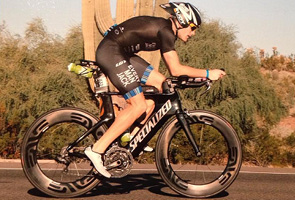
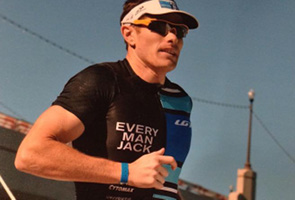
This past season has been an amazing journey. I sit here now, with my Ironman AZ first place trophy for M30-34 age group and my KONA lei, and am still shell-shocked how I arrived here.  I am so incredibly blessed to have the support crew that I have around me.  Back in the very beginning of the season I found myself at the doctor’s office. I had been pushing through some hip pain for long enough and needed some professional help. I knew what was ahead. I was eyeing a race schedule that would have anyone excited.  It could be considered the ‘Best of the Best’ of triathlons around the world- Wildflower Long Course, Escape from Alcatraz, Ironman 70.3 World Championships, and finally Ironman Arizona. My goal was to qualify for Kona out in AZ, but this was 11 months away.

Profile - Blog 1I thought it was too early to think about it, but looking back on it, I was wrong. The crew at Rausch Physical Therapy were my saviors at that time, I just didn’t know it yet. I worked with Christina and the rest of the support team there as they tirelessly worked to get my body back on track. I was stretching, doing strength work and was being educated. That’s the piece that was so valuable.

Even with my injury bringing me down in the dumps both physically and mentally, I was being built up from the inside-out. I worked with the team for about 2 months and came away a healed athlete, yes, but a better educated one as well. This is something that stuck with me throughout the season. I took better care for my body and it paid off.

Profile - Blog 3I showed up on the start line in AZ and had a certain kind of confidence that is hard to explain.  I wrote ‘CMO’ (my wife’s initials, and someone I can’t do these races without), and ‘BELIEVE’, on my hands in marker. I looked at them often during the race when I would start to lose focus or start to hear negative thoughts. My secret during races is recognizing those negative thoughts that come and embrace them. Every person will have some sort of negative thought that will come in their head during a race like Ironman and the best way to handle it is to treat it like a person. I always say, “oh hey, there you are. I was wondering when you were going to show up. You’ll have to take a seat now though because I am about to do something incredible”.

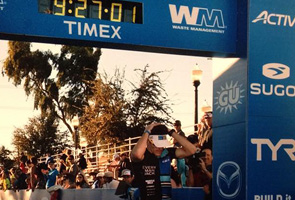
Profile - Blog 4I had a solid swim and came off the extremely windy (worse than past years) bike course in 2nd place in my age group. I felt good starting the run and knew what I had trained for and knew what I was capable of. It was my time to execute that plan. I ticked off the miles and found myself in first place around mile 9. I tried not to stop and start high-fiving people at that point because I was so pumped. I have never been in first before in a 70.3 or full Ironman race like this. I went through the halfway point and threw up a #1 sign to my family cheering for me. I could feel their energy and feel the fact that they were proud of me. The next 8 or so miles were tough feeling like I was running aid station to aid station looking for sugar. I got a time from fellow teammates telling me I was about 5min up on second with only 5 miles to go. I was running scared but at the same time, I BELIEVED!

There were moments where I wanted to walk and give up. But there were more times when I felt like I was floating and had visions of what I would do going down the finishing chute as an age group champ.  It’s funny how things really play out though. That last mile was damage control and even tunnel vision. All I had left when I crossed the finish line was me putting my hands on my head in shock- I couldn’t believe what I had just done. I wanted to share my excitement with my family immediately. I wanted to hug them. I was just too crushed to do so. It would have to wait until a later time. I was KONA bound. But better yet, I was a changed athlete, and I truly believe it was due to the education I received early on from the crew at Rausch. They laid the foundation, I built it up. They believed in me and I am forever grateful. Thanks for reading.

The Weightless Way to IMAZ

Name:
Robin Littrell

Number of Ironmans completed:
2, IMAZ 2012 & IMAZ 2014.

What was your reason for IMAZ 2014?
IMAZ 2014 Training was a little different from my first experience, but I was very committed to make it to the race. You see I was racing with my daughter Briana.  How many mothers out there can say,“I did an Ironman with my daughter”! Bragging rights forever!!!

How did your training go?

My training started at a nice and steady pace. I didn’t have any real issues, but started to feel a little bit of pressure in my right foot.   My coach advised me to see my doctor ASAP. I did, long story short is I was diagnosed with a stress fracture. I saw a podiatrist was told to tape my foot and run.

Did you do anything outside of what the Podiatrist suggested?

I was looking into other ways to train. I have been to Rausch for various reasons and knew about the Anti-gravity treadmill. I started to use the Altra-G Treadmill to keep my endurance and mileage up. It was a great way to get my training in without further injuring my foot. I also had weekly physical therapy sessions with Dustin, the combination was just perfect.

And how did you feel come race day?

When race day came I was so thrilled that once again I was at the starting line ready to go!!

Arizona Ironman 2014 was very challenging to say the least! But I finished☺I am again thrilled to say I am an ironman!

This time around it took the whole village to get me there, without the encouragement from my wonderful coach Martha,  Rausch PT and my husband “Bob” my journey would have  a very different ending.

Winning the Kona Lottery

How long has competing at Kona been a dream of yours for?

Competing at the Ironman World Championship in Kona has been a dream I pursued for more years than I can count. I started competing in triathlons in 1994 a couple years after graduating from college where I had cycled competitively for five years. Early on, I saw the Ironman World Championship on TV and was captivated by the goal and dream of someday finishing this race.

How did you finally gain a position at Kona?

Absent the speed to qualify with an age group win at a qualifying race, my only option to race in Kona has been a lottery spot. I have entered the lottery every consecutive year for longer than I can remember without luck. This year’s lottery winners were announced on April 15th at 9:00AM PST. With no email from the WTC by 9:03AM, I resigned myself to another year without an entry. As I glanced over the list of lottery winners on the Ironman website to see if recognized any names, I suddenly encountered my name on the list. What?! I had a sense of disbelief since I hadn’t received an email. Was I reading this right or were my eyes deceiving me? I reached for my phone and checked my email again. The email confirming my lottery spot had arrived at 9:24AM. I was stunned and elated. I finally had my chance to make this dream a reality.

Once in, where did you training take you?

In the months leading up to the race, my training progressed well. In training for other IM distance races previously, I knew to temper my enthusiasm in the early months, stay healthy, keep it interesting and have fun. Over the summer, I raced at Escape from Alcatraz, Vineman 70.3, Coveathlon and Big Kahuna Aquabike. Plans for racing IMLT 70.3 as a final big training day fell through with the race cancellation, but the long rides and runs were in the bank so I took this in stride. I was fortunate to stay healthy as my training volume increased. A bit of discomfort in my heel area was quickly addressed with a few visits to Jessica Snyder at Rausch Physical Therapy. I was able to keep moving forward in my training without any downtime which was important both physically and mentally.

What were a few highlights of race week in Kona?

We arrived in Kona on Tuesday before race day. Leading up to race day, I enjoyed practice swims in the ocean, the coffee boat and the Underpants Run along with some relaxation time and a drive to Hawi to check out the bike course. Another highlight was a chance encounter along Alii Drive with Chrissie Wellington who wished me a good race as I rode my bike to check-in on Friday.

The big day has arrived, how did it go?

A big part of competing in an Ironman is taking the conditions of the day and making the best of the circumstances. When the cannon went off on race morning, my first goal was to finish and enjoy the experience. And if I’m honest, I had a finish time in mind I thought I could achieve if circumstances allowed.

The swim felt good and I was out of the water in 1:24. A little slower than I expected, but no reason to fall apart over 9-10 minutes. The first 30 miles of the bike were comfortable and on target. Out on the Queen K, conditions abruptly changed at Mile 30 with an incredible headwind that left me riding 7.7mph on flat terrain. I watched my average speed plummet and later learned my support crew thought I’d crashed or flatted with the sharp decrease in speed. By Mile 40, I was reassessing my time goals. As the strong winds continued to gut both my speed and ability stay aero, I knew my time goal was slipping away. The ride on to Hawi was hard. And slow. And uphill. And windy. Probably the toughest riding conditions I’ve experienced in 27 years as a cyclist. I was grateful for the turnaround in Hawi and anticipated tailwinds, but with gusting crosswinds, even the downhill was slow in order to maintain bike control. 112 miles later, I came off the bike absolutely fried. My legs rebelled at my attempt to run in to T2 and I slowed to a brisk walk. Coming out of T2, I again tried to run. I was able to jog easily and gradually loosened up to maintain a decent pace through the first 16 miles. The pace slowed a bit until Mile 25 but I kept a moderate jog while walking the aid stations. As I came back into town, my pace picked up heading downhill to Alii Drive. Making the final turn on Alii Drive was magical. My legs no longer hurt. My pace accelerated all the way across the finish line. I finished in 14:42.

It’s been a few weeks since Kona, have you been able to reflect much?

Recently a friend asked me if I ever asked myself “Why am I doing this?” when I was out on the course that day. My answer came easily, “no”. On race day, I was able to embrace every minute of the day, from the pre-race nerves to a beautiful swim, the incredibly challenging winds on bike course and the run along Alii Drive at sunset. And the finish….An incredible feeling of accomplishment beyond words. I feel privileged to have had to the opportunity to race in Kona along with incredible support from a wonderful group of friends and husband who supported me through my training and traveled to Kona to cheer me on.

 

Gait This

There are many ways to do something, but often time there is a better or best way. Just because you can do something a certain way, doesn’t mean you should. Example: You can drive a car at 5000 RPM at all times. The car is fully capable of this and will withstand it…for a while. Your running gait is similar. You can get away with poor mechanics and gait for a while, but in the end it will catch up with you. It will present itself in the form of having to cease running, injuries, or being forced to slow down. None of these are desirable outcomes. The investment of a running gait analysis can really help to identify the key form flaws that will lead to major issues.

Did you know the Performance Lab offers such service? We call it “Run Right.” Get your running mechanics analyzed just in time for the off season of racing. Allow yourself the leisure of pressure free training while you strengthen and correct your run form.

Read more about Gait Analysis.

Questions? email jack@rauschpt.net Jack McPheron, Performance Lab Director


5 Season Success Tips

“Success is the sum of small efforts repeated day in and day out” – Robert Collier.

I couldn’t agree more with Mr. Collier, but what do those small efforts look like on an everyday level? What are the little things that your body needs to stay healthy as you endure a grueling season of ___________ (it all counts).

This list is meant to be encouraging. So don’t go getting all – “I don’t have time for that”, “I’m too busy to take care of myself, I have too much training/practice to do”. The key to this opportunity is SMALL. Remember, its all the little things that you do that keep you healthy and in the game.


  1. Have a great OFF SEASON! – this is your chance to let your body heal up. Get rested and get ready for the next opportunity to succeed. So if you skip this, you are missing out. Give your self 2-4 weeks of fun, play, recovery, something different. When making your training program, start with a defined off-season. Whether your 11 or 59 playing baseball or running a marathon, your body is not meant to do the same thing all year round.
  2. Get STRONGER – that’s right people strong and stable muscles get hurt less, they protect joints, they hit the ball further and they protect you. So get stronger. The pre-season time is best time to make this happen. 3-5 strength workouts per week: weights, crossfit, boot camp, ABC Pilates, Run Fusion, etc. You can strength training (and you should) during season too, but knock it down to 1-2 strength workouts per week.
  3. Build your CORE – your core is where its at. Its the center of you, its the first thing that contracts when you throw a baseball and it should be engaged during your entire marathon. It can be trained daily and core work should be challenging but fun. No I am not talking about sit ups here, they work your abs and make you look good on the beach; but they don’t do much for your core. I’m talking about Planks, Overhead Squats, Spiderman’s, Pilates, Inch-worms, etc… These strengthen and stabilize the center of you so that your arms and legs can be awesome.
  4. RECOVER every day – if you want to feel great for tomorrow’s workout. Your time spent recovering each day is dependant on how long and how hard your days workout was. It can be as easy as icing your throwing elbow, to as long as wearing compression pants for 6 hours after your workout. Remember, how you recover today will determine how well you start practice tomorrow.

Check out these RECOVERY opportunities:

  • Cool Down for 10 minutes after your workout (stretch, drills, technique work)
  • Ice if it hurts or is sore for 10 minutes. Or if you really want to treat yourself, jump in an ice bath for 8 minutes.
  • Compression Pants – these work great to reduce lactic acid build up, flush your legs, and are research proven to make you run/ride faster tomorrow. 3-6 hours of wear after your workout is best.
  • Stretch – spend 2 minutes stretching every muscle you used in todays practice. Slow and easy. And if your coach tells you not to stretch because it will make you slower, find a new coach (yes, I’ve heard this before:)
  • Tissue work – foam roll, massage stick, massage, ART, etc. All of it works as long as you do it! This is the most important step to recovery. Spend time rewarding your tissues for the hard work they put in today. In fact, if you are going to pick one thing to do out of this whole post, PICK THIS ONE!
  1. Technique – spend time honing in your technique. Work on your mechanics, do focused drills in your warm up and cool down during every workout. This is a great way to prevent injury, because the vast majority of overuse injuries come from flawed techniques. Did you know that during a 3 hour bike ride your knees bend and straighten over 16,200 times! If you do it wrong 16,000 times every workout, you’re going to get hurt! Same goes for baseball. If you throw the ball 100 times per game with bad mechanics your elbow and your shoulder will get injured. So do it RIGHT. #RunRIGHT, #BikeRIGHT, #ThrowRIGHT – biomechanical analysis and movement correction to help you get it RIGHT.
  2. Get Treated – often. Your body goes through a lot every practice. Not all of it ends up in an injury, if taken care of. But it will end up in the dreaded time off, season ending, ordeal if you don’t listen to your body and get it worked on. Who works on you is up to you, PT’s, Chiro’s, ART’ers, Massage Therapists, etc are all great at keeping your tissues healthy. So find someone in your area, that helps make a difference. Of course Rausch PT has 7 PT’s, 4 massage therapists, an ART guy, and a whole rad team to keep you in the game. I know not everyone reading this lives in the OC. So go find someone that know’s how to work with athletes and can keep your tissues healthy. The more often you get treated the better you’ll feel, practice, respond, and succeed.

Bottom line, take care of your body this season and it will take care of you.

“Listen to your body when it whispers to you, because when it screams at you its too late” – Amber Neben, World Champion Cyclist.

I love this line from Amber, she’s right on. Do the little things that add up to a successful season of whatever you play. Parents, you’ll have to chat with and keep up with your kids as they work hard on their teams. Pain is never normal in any sport for any reason. Utilize the #fastpassPT option at Rausch PT to get in right away. No prescription needed to get examined and fixed by the best PT’s.

One last point – as the end of the year is coming soon. You have the opportunity to use Flexible Spending and Health Savings Accounts – you can use these towards our Performance Lab services. Right Right. Bike Right. Throw Right. VO2 Max. AlterG. ABC Pilates. Custom Orthotics and Hypoxico.

Kevin signature

Training Knowledge is Power

VO2 Testing

With the introduction of the internet not all that long ago, we have all quickly realized now more than ever that knowledge is power. We can see this in everyday life and it is important to know that knowledge is extremely powerful when it comes to our athletic training as well. How much knowledge do you have when it comes to your training? Are you aware of your anaerobic threshold, your aerobic threshold, your heart rate training zones, or your resting metabolic rate? If not, you should be!

Many people train at a medium-hard intensity for every workout and wonder why they aren’t seeing the benefits? Training nonspecifically without a plan can lead to plateaus, injuries, and a lack in performance. VO2 testing can help you to determine your training zones as well as your anaerobic and aerobic threshold. All of this information is very important in order to cater your daily workouts to your specific training and racing goals.

A VO2 Test is a graded exercise test on a treadmill or bike with a mask over your face that measures the volume of your expired air as well as the percent of oxygen and carbon dioxide in each expired breath. By gathering this data, one can learn their aerobic and anaerobic threshold, and potentially your VO2 Max. This information will help you to understand your heart rate zones and training intensities for effective training. Heart rate zones are unique to each person’s physiology and should be known when training for any endurance event. Training too hard or too easy can lead to long term damage and falling short of goals.

A VO2 Test is the perfect way for you to gain an edge over your competition and to understand how to train smarter, not harder. VO2 testing isn’t just for the elites anymore as it makes training more enjoyable and safer for athletes of all abilities.

Schedule your test today and get on the road to better performances and less fatigue!

Cost:$150

Schedule Here

Questions? email jack@rauschpt.net Jack McPheron, Performance Lab Director

School Shoes

Make the most important decision for your child’s athletic career and foot health for the rest of their life.

Pick the right shoe!

We are cursed with weak, deformed, narrowed, and problematic feet. And it started when we were small. Those super cute shoes that you shoved your kids feet into for way too long are the start of the dysfunction that permeates a lifetime of tough footwear choices.

I am not a crazed barefoot dictator, there are in fact some shoes out there that are great for your feet and your kids feet.

But what do short and tight shoes do to your foot anyway?

In short, they bend your toes inward (causing bunions); tighten your calves (changing your posture & run form); weaken your feet (altering the way you run); and so much more…

These effects start the minute you put on a shoe that is too small, too tight, has a high heel and so on. All of these alter the normal mechanics of you foot leading to more and more changes as you age.

The detrimental effects are somewhat noticeable during childhood and may look like Severe’s Disease.

Then when sports get a little more intense during early teen years foot dysfunction can lead to Patellar Tendonitis.

Fast forward another 15 years when you’ve started to recapture your youth and get back into fitness by training for a Half Marathon, you wind up with Plantar Fascitis. Jump another 20 years, and you’re having a hard time walking around the harbor because of knee arthritis. Told you this was a big deal…

Of course there is hope!

At any time in this cycle you can choose the right shoes and take care of your feet. So start with your kids this year. Check out this list when buying shoes:

  1. Buy bigger! Give them as much room as possible
  2. Look for a wider toe box (the front of the shoe)
  3. FORGET stability shoes (they don’t work nor have they ever…)
  4. Get the flattest shoe possible (zero drop is a big buzz word)
  5. Say no to heels!

Remember, less is more.

All research has shown that extra padding in shoes is a waste and actually causes more trauma to the foot and knee joints as well. Think about shoes like Vans or Converse. They protect your feet from the ground, but allow your feet to work like they should. Furthermore, take your shoes off as much as possible. Play barefoot in the grass, sand or dirt. Its great for your feet!

Shoe Recommendations:

School Shoes:

  • Altra
  • Vans
  • Merrell
  • Converse

Running Shoes:

  • Newton
  • Altra

Take the time this year, to get your kids feet into the most mechanically sound shoes possible. It matters now and later. Our feet didn’t get this messed up overnight, so if you’ve got issues; get into the office ASAP so we can help direct you back on track. We’re here to help.

Kevin signature

More Athletes Than Ever are on the JUICE

For the past few years, athletes have been guzzling beet juice before their races to load up on nitrate, which helps muscles use oxygen more efficiently. We usually think of nitrate as a nutritional villain in foods like hot dogs and bacon, but a growing body of research suggests that it plays a crucial role in cardiovascular health. But, if you don’t care for the taste of beets and you prefer “natural” ways to JUICE.

There are other healthy and natural beverages you can grab and down a glass for amazing health and endurance benefits.

Some include:

1) Watermelon Juice:

  • Reducer of post training muscle soreness and aches due to the amino acid and L-citrulline.

2) Pickle Juice

  • Provides athletes a two-for-one punch with sodium and vinegar in just one shot to help reduce cramps and prevent hydration

3) Dark Tart Cherry Juice

  • Helps to reduce post-race muscle soreness and fatigue due to the enormous amount of antioxidants.

4) Capuacu Juice

  • Chock full of polyphenols and flavonoids— natural ingredients found in cocoa, helps to relieve pain and strengthen immunity.

5) Apple Cider Vinegar

  • An Apple a Day will keep the doctor away is true! Apple Cider Vinegar will provide athletes with amazing performance and recovery benefits.


Click HERE to read the complete article and learn how to pick the right juice!


There is a better way to Run!

Each and every runner possesses a unique running style based on their injuries, anatomy, and experiences. We all have our little hitches and traits, however, there is a better way to run. Every runner has inefficiencies in their gait that cost energy and speed. A Run Right will help you to identify these inefficiencies to enable you to run faster and stronger for longer.


Here’s how it works:

  • Your Run Right analysis begins with a comprehensive physical evaluation to determine your muscle recruitment patterns, range of motion, pains, and running background. Following the physical evaluation you will have a chance to experience the Alter-G Treadmill to have your gait analyzed. Video recording will be utilized from 4 different camera angles to get a complete view of your running gait.
  • Following the video recording, we will walk you through your gait frame by frame. Inefficiencies and biomechanical flaws will be identified and strategies to correct them will be provided.
  • After the analysis, we will put you back on the Alter-G treadmill to practice your efficient gait with running cues.
  • The analysis will finish with us walking you through your results. Strategies for improvement and necessary strengthening regimen will be discussed along with key exercises to ensure a successful home program.
  • All runners will be sent home with their results, a self massage ball, and the knowledge on how to Run Right.

Everyone can benefit from a Run Right!

Be sure to call the clinic and get yours scheduled today (949) 276-5401.


Best Day Season Starts

With school ending and summer time kicking into full gear, it’s easy to get caught up with endless days at the beach. Sun up to sun down, making sure the oceans still salty and the sands still warm. This year grab the whole family, spend the day and the beach and give one special kid the BEST DAY ever.

Most of you know Jill – she is the “Jill of ALL trades”. She bounces around the clinic helping patients with exercises, handles our social media and drives the Rehab-u-lance to various events. When summer time hits and she’s not here from sun up to sun down you can find her volunteering with the Best Day Foundation.

The Best Day helps build confidence in kids with special needs through various water activities. Surfing, kayaking, paddle boarding and more. They have chapters dotted along the california coastline including Orange County, Ventura and Santa Barbara. So, whether you are hanging out in the OC or plan on taking a road trip, there is always an opportunity to give back to the community.

And truly, not only will you make a difference in these childrens lives, they too will show you how to have your BEST DAY.

Best Day Foundation, Check’em out!