Performance & Prevention Archives - Rausch Physical Therapy & Wellness

Blog

Strategies for Ocean Swims

Assess the conditions

As summer approaches, many triathletes are swimming in open water to prepare for upcoming races. Training in the pool is great to work on distance and technique. It is important to incorporate ocean water training to be confident in the conditions on the day of the race. Practicing a few swims at the race site will help you prepare mentally by becoming familiar with the surrounding environment and potential hazards. The more experience you have swimming in different ocean conditions, the more prepared you will be for race day.

Assessing ocean conditions is critical for successful swimming. One week before your event, check out the surf report! It is important to mentally and physically prepare for your upcoming ocean swim. Surfline.com is a great site for accurate forecasts.

 Getting in the water before the race has several benefits. First, you can assess the bottom to look for any inshore holes or rocks to avoid while entering during your race, the last thing you need is to sprain your ankle or twist your knee. Second, you can assess the power of the waves while also assessing the strength and direction of the ocean current. Assessing the current is one of the most critical things to do before an open water swim. This will help you gauge where you start on the beach to make the best water entry to hit the buoy without having to swim up the current. Assessing the current takes time and experience in the water, spend time getting comfortable in the ocean and getting a ‘feel’ for it. Third, taking a quick dunk in the water will help to avoid that initial shock when you hit the water at the start of the race. Lastly, I suggest asking local lifeguards about any possible hazards to be aware of during your water entry and exit to avoid possible injury.

Water Entry

Arguably, one of the most important parts of a competitive ocean swim is your water entry, not the amount of time you put in swimming laps. A good water entry starts with gauging were to enter the water after assessing the current.

A quick and efficient water entry through the surf line will separate you from the rest of the pack. Use high knees when running out through the surf line. As it starts getting more difficult to run, you want to start ‘dolphining’ through the surf line. ‘Dolphining’ is a technique used to get through the ‘impact zone’ efficiently. Start  ‘Dolphining’ in waist-deep water by diving with both arms over your head, grab the sand bottom to pull yourself forward while bringing your legs underneath your body to explode out of the water through the surf. Continue ‘Dolphining’ until the water gets too deep, then begin your swim. Swim with your head up through the surf line to keep an eye out for waves. In the case of an approaching ‘set’ of waves, it is always safer to swim toward the wave than away from it. Once past the waves, periodically take a few strokes with your head up to keep your eye on the buoy marker.

Rip currents

Rip currents can make or break you. While we are all taught to ‘stay out of rip currents’, these currents can be used to your advantage in getting through the impact zone more efficiently. Swimming with the outgoing rip current can save time and energy to swim faster through the surf line where waves generally don’t break. This technique should only be used by experienced ocean swimmers with good ocean knowledge and awareness.

 Water Exit

Once you round the buoy, use landmarks on the beach to swim straight. Make sure to avoid any rip currents swimming towards shore, getting stuck in a rip will cost you time and energy. If you find yourself swimming in sandy or foamy water not making any progress, chances are you are in a rip current. Swim parallel to shore to the blue water, then continue swimming towards shore.

In the impact zone, keep your head on a swivel by turning on your back or looking over your shoulder to look for oncoming waves. Bodysurfing can save a lot of time and energy in the impact zone. This takes time and experience to learn but can be a huge asset at the end of a swim. Continue swimming until your hand hits the sand, then start with high knees to exit the water. Remember, running is faster than swimming. Don’t fight the current, it will be faster to run back than to fight the current swimming.

Tips for ocean swims

  •       Check conditions before your swim
  •       Minimize your time in the ‘impact zone’
  •       Use landmarks to help swim straight
  •       Avoid rip currents on your way to the beach
  •       Practice ‘ins and outs’ to have faster water entries and exits
  •       Always swim with a partner

Strategies for Ocean Swims 1

Clay Simons

clay@rauschpt.net

Did you know there’s no prescription needed from a doctor to see us – but we will communicate your progress and treatment to your doctor if you’d like us to!  (949) 276-5401

Disclaimer — All the information that you find on our blogs and social media pages is for informational purposes only and is not intended to be used as your personal professional diagnosis, or treatment. Come and see us for your excellent, personalized care! https://rauschpt.net/

RauschPT

Should I keep running or stop?


How often have you heard a runner say my hip, ankle, knee hurt so I took some time off and it got better but then I started running again and it came back.

Running injuries are very different from the common injuries you hear about from football, basketball, or soccer. Rarely do they occur because of traumatic injury or a specific moment, most commonly it is an overuse injury caused by “training load error.” Basically what happened is the tissues you are stressing during running were overloaded for some reason be it mechanics, training stress, or tissue resiliency. The most important aspect to always look at is have you changed something about your running recently: mileage, intensity, frequency, or terrain? These factors change the accumulation of stress on your body and tissues, if you are not properly prepared for that then injuries will develop.

Pain is difficult to judge with running as there is always a level of discomfort/pain associated with running. So how can you tell if you can keep running, stop running, or as is most often the case alter how much or often you are running. The danger with stopping to run completely is you may not be helping the problem but actually making it worse. If you stop you will decondition the tissue you’ve injured and it will stop hurting but run the risk of restarting the same injury. This can lead to a bad cycle of run-injury-rest-run-reinjury etc. The best option is to alter what you’re doing and work on the tissues in order to strengthen them so that when you resume running at your goal mileage/intensity etc you will be able to handle the load.

The best way to judge what you need to change is to ask yourself a few questions about your
injury/pain.

1. Does it hurt all the time?

If it hurts all the time you probably should stop running and get it checked out by your PT.

2. How long does it take for the pain to start?

If it kicks on at X miles or after X minutes then just run less than that for a few weeks and gradually start lengthening it back out

3. Does your pain get worse if you keep running?

If your pain keeps getting worse the further you run then you probably should back off.  Keep an eye on whats happening but take it easy and probably get it checked out by your PT.

4. Are certain workouts better or worse?

Speedwork or hills is the only thing that irritates your injury? Avoid that specific type of running for a few weeks and then slowly try to ramp back into it.

5. Does your pain return to normal after?

If you stop running and everything feels fine again, give it a few days or a week. If it’s not improving then go see your PT.

Overall stopping to run is not always the best option, there are plenty of ways that you can modify what you’re doing in order to keep forward on your goals or keep active.

Rausch Physical Therapy remains your caring team and can accommodate you with a specific, personalized plan. Visit our Facebook page at https://www.facebook.com/rauschpt or call us at (949) 276-5401 to learn how we can help you. Don’t forget: there’s no prescription needed to see a PT in California.


Should I keep running or stop? 2Dr. Max Biessmann PT, DPT

Let’s talk! We are here to help. Give us a call for a complimentary consultation. We would love to meet you.

Did you know there’s no prescription needed from a doctor to see us – but we will communicate your progress and treatment to your doctor if you’d like us too!
(949) 276-5401

RauschPT


To stretch or Not to stretch, That is The Question!?

I am really stiff and feel super tight! I should probably stretch more often or go to yoga or something right?!.. The all too common question that I get on a daily basis. And the all too common answer that I give is: “IT DEPENDS!” Because honestly, it does, just depend.

After some studies showed that static and prolonged stretching may cause the nervous system to temporarily weaken the stretched muscle, many athletes and sports programs have eliminated it from their warm-up routines. However, little research has actually examined the performance effects of “dynamic stretching,” in which the limbs and joints stay in motion as you stretch.

A new study, which was published in June in Medicine & Science in Sports & Exercise, a group of international scientists, many of whom work with elite, national-team athletes, decided to test different stretching routines.

Essentially what they found was that the group of athletes they tested had no change in performance whatsoever no matter what their warm-up had been. While this is only one study, what it provides testament to is exactly what I have been proclaiming… “IT DEPENDS”

In practical terms, these findings suggest that if you enjoy and trust stretching before a competition or workout, you may as well keep stretching, whether that is dynamic, static, or a combo of both. Some of the subjects of the study reported “feeling more prepared for competition when the stretching was included.” Thus, a psychological factor could also be at play, and a placebo is real people!

So, what does this really mean for you? It means, if you feel better, you will then move better, which will allow you to get better and perform better! So, feeling stiff after sitting on your butt working all day (which c’mon people, read my blog and STOP doing that!.. Myth of the Ergonomic Workplace ) before you head out to run, you better do something to get yourself “warmed-up.” Personally and professionally as a practicing Physiotherapist, I believe in the theory of dynamic warm-ups prior to the activity and static/prolonged stretching post-workout. It gets your blood flowing, heart rate up, and allows your neuromuscular system to prime itself for the task at hand. With that said, there are days I need to just lay down, unwind, calm down and maybe hang out doing a hand to toe stretch to allow my nervous system to down-regulate and de-stress before “feeling” ready to go for my run or bike ride.


Capata-300x300

Dr. Kevin Capata
PT, DPT, CSCS

Let’s talk! We are here to help. Give us a call for a complimentary consultation. We would love to meet you.
Did you know there’s no prescription needed from a doctor to see us – but we will communicate your progress and treatment to your doctor if you’d like us too!
(949) 276-5401

RauschPT
Disclaimer — All the information that you find on our blogs and social media pages is for informational purposes only and is not intended to be used as your personal professional diagnosis, or treatment. Come and see us for your excellent, personalized care! https://rauschpt.net/

4 ways you make running harder than it should be — and How to Fix Them

We are always looking for ways to get faster while running, but instead of looking at the things to make you faster let’s focus on the things that are slowing you down and work to minimize their effects.

Sit too much

We spend a lot of time sitting: sitting in the car, sitting at work, sitting at school, and sitting in front of the TV the list goes on and on. Sitting may be comfortable and a useful low energy position but it can be killing your running ability. By sitting on your gluts you are deactivating the most powerful and important muscle for running. You are putting your hip flexors in a shortened position which will reduce your ability to extend your hips, another key part of running.

The Fix

Get up and move!! This is one of the easiest ways to combat too much sitting. Get up and move around every 20 min or so add some deep squats, lunges anything to get you out of that seated position for a little. This is where a sit to stand desk can come in handy to allow you to spend time in alternate positions. Also, shoot for a minimum of 5000 steps a day, these can add up quickly just walk to places you would otherwise drive to, park a little farther away or go for a short walk during your lunch break.

Slump while sitting

As if sitting by itself isn’t bad enough we tend to sit in a slumped posture with our heads jutted forward to try and be closer to the computer screen or looking down at a desk all day. This will make everything from above worse plus have an effect on your upper body posture. Your head will move forward which will place more strain on your low back as you try to hold your “bowling ball” with outstretched arms instead of close and stacked over your pelvis. Your shoulders rounded which will reduce your ability to complete a natural arm swing motion while both running and walking.

The Fix

Again get up and move around is the most important aspect to help correct this. No posture is truly bad, the only bad part is how long you stay in any given posture. Check the ergonomics of your desk, make sure you bring your computer screen towards your face not your face towards the screen. Stretch your pecks in the doorway or while lying on a foam roll to balance out the rounded posture.

Bad footwear

Many people spend a lot of time discussing the importance of X or Y type of running shoe and why each one is special or “faster”. But no one really puts much focus on the shoes they wear most of the day. You can wreak havoc on your feet by wearing hard, stiff, lifted heel shoes all day that stiffen up and weakened joints and muscles of your foot making it hard for your foot to complete its job as your initial contact to the ground while running.

The Fix

Try and get shoes with thin and flexible soles that allow your foot to move freely on the ground and adjust to variances in terrain and make the muscles of your footwork. Or even better try to fit in some barefoot time every day. You can add a little bit of barefoot running in grass or sand to the end your runs to help your feet remain strong and flexible allowing you to run better.

Just run to run

Running is a great way to exercise and improve your overall fitness but there are many things outside of running you can and should do to prepare yourself to run further, better and faster. Ideally you get into running with some level of fitness behind you or you build your way into slowly and with the proper progressions. Run the same speed, distance, and/or route over and over.

The Fix

Get your running form looked at by a professional in order to optimize your stride and become more aware of how you’re running. It’s also to mix up the distances and paces at which you run in order to create varying stresses that your body must adapt to in order to make you a stronger and more resilient runner. There are also plenty of great strengthening and alternative aerobic training activities that may not be running but can greatly help your running.

Sincerely,

Dr. Max Biessmann
PT, DPT


Physical Therapy

Graduated from the University of St Augustine with a bachelor in Microbiology from the University of California, Davis. Max began swimming competitively at the age of five and swam through college. Max also ran cross country in high school, so he naturally gravitated toward triathlon. Max has completed 10 IRONMAN races, including the IRONMAN World Championships in Kona twice, and he has a decade of swim and triathlon coaching experience. He is excited to have a career that allows me to combine the biology and scientific research-based approach with his passion for coaching and sports.

Max is excited to be the newest member of the Rausch PT team, and looking forward to helping people achieve their goals through physical therapy and all the unique opportunities available here at Rausch PT.

Click to learn more about Sean and our other physical therapists »

Let’s talk! We are here to help. Give us a call for a complimentary consultation. We would love to meet you.

Did you know there’s no prescription needed from a doctor to see us – but we will communicate your progress and treatment to your doctor if you’d like us too!

(949) 276-5401

RauschPT

Disclaimer — All the information that you find on our blogs and social media pages are for informational purposes only and are not intended to be used as your personal professional diagnosis, or treatment. Come and see us for your excellent, personalized care! https://rauschpt.net/

How to Prevent Anterior Cruciate Ligament (ACL) and Other Major Knee Injuries in 30 minutes or Less

It is no surprise that knee injuries account for 60% of all high school sport-related injuries, and more specifically ACL injuries are the most common and account for 50% of knee injuries. The most vulnerable population(s) being at risk for these injuries are those 12-25 years old, female, and play high-risk sports
(i.e. soccer, basketball, volleyball, skiing). You always hear about “so and so just blew their ACL and now they are out for the rest of the season,” or maybe that so and so was you and it ended your glory days prematurely. There is usually a long and extensive rehab process and you can’t help but compare notes to your friends. But why is it that no one ever explicitly talks about how to prevent these injuries in the first place? Sure, you’ve done your pre-game warm-up or post-game cool-down, but how effective is it really?

The good news is, there are exercise-based knee injury prevention programs that ARE super effective in decreasing the risk of a major knee injury (i.e. ACL, MCL, LCL, PCL, meniscus tears, and patellofemoral disorders). In September 2018, the Journal of Orthopaedic & Sports Physical Therapy (JOSPT) released a brand-spankin’ new set of clinical practice guidelines highlighting recommendations for the use of such programs. For your reference, clinical practice guidelines are recommendations intended to optimize patient care that are informed by a systematic review of evidence. A systematic review is basically the highest quality of scientific research out there that you can trust.

Please reach out to Rebecca Gasca, PT, DPT at Rausch PT and Sports Performance if you’d like help implementing a program individually or for your team!

JOSPT Clinical Practice Guidelines

Click Here To Learn More

HarmoKnee

Click Here To Learn More

Knäkontroll  

Click Here To Learn More

Let’s talk! We are here to help. Give us a call for an initial evaluation and assessment. We would love to meet you.

Did you know there’s no prescription needed from a doctor to see us – but we will communicate your progress and treatment to your doctor if you’d like us too!

(949) 276-5401

RauschPT

Disclaimer — All the information that you find on our blogs and social media pages are for informational purposes only and are not intended to be used as your personal professional diagnosis, or treatment. Come and see us for your excellent, personalized care! https://rauschpt.net/

References

https://www.ncbi.nlm.nih.gov/pmc/articles/PMC3867093/

https://www.jospt.org/doi/full/10.2519/jospt.2018.0303

Dear Parents: Stop Overusing Your Kids

Originally published August 17, 2015

Dear Parents of Young Athletes:

As a physical therapist, I have the privilege to work with many of your young all-stars. Some of your kids are here to recover from an injury as quickly as possible so they can get back to competing; others come in for injury prevention so they don’t go down again; and still more are simply going above-and-beyond to understand how their body works so they can push their limits. A few of these young athletes are simply, hyper-focused individuals, self-driven to be the best in their sport, and I’m always impressed by their desire to be here and get better. Unfortunately more often than not, your kids are here because of you, the parent.

Parents are pushing their young athletes to perform and—this is going to be hard for some of you to hear—it’s usually too hard, too much and too fast.

From talking to your kids while they’re on my table, I’ve learned that it’s not uncommon for young athletes to have practice twice a day, sometimes for up to four to six hours a day, just for one sport! Whether it’s swimming, running track, or playing baseball, what this means is that your kids are performing one repetitive, sport-specific movement pattern for hours at a time, day after day, for many, many months straight.

Our bodies were not meant to perform one type of movement pattern for the amount of time that most of these athletes are putting in. Kids used to play a variety of sports throughout the year, which provided the body with more diversity and helped avoid overusing one set of muscle groups. However, our society’s current fascination with the specialization of one particular sport has dramatically increased the tendency of our young athletes to overdevelop particular muscle groups without any counter balance. Over time, the overuse of these muscle groups results in an overwhelming demand that their young bodies simply cannot support, which then leads to the injuries plaguing our children these days.

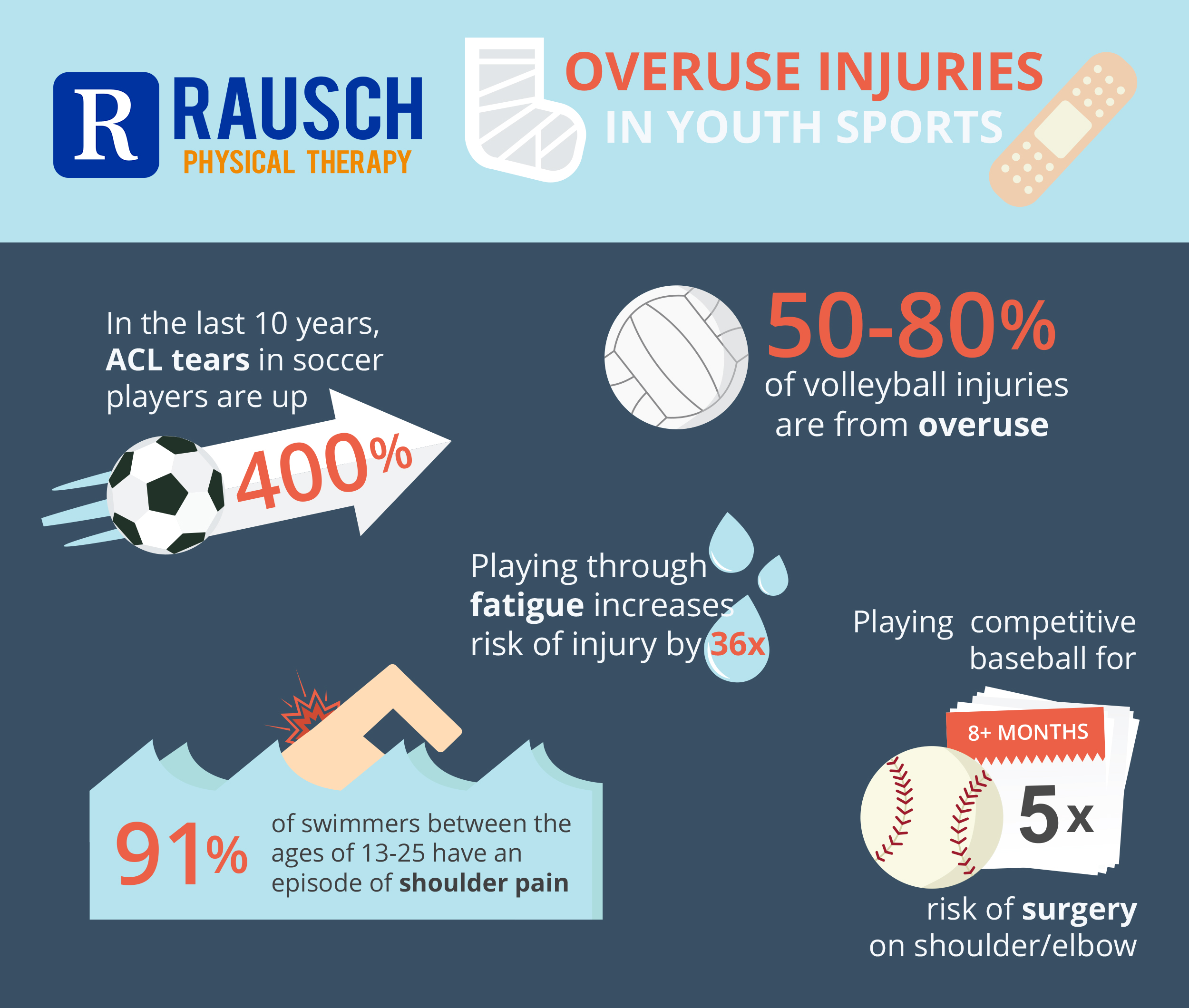
A prime example of this issue is a young soccer player. Between high school and club games, practices and tournaments, she’s essentially playing soccer year-round. She continues to push her body over and over, month after grueling month, for just this one sport. The result? Her quadriceps become too dominate; her hamstrings, glutes and outside stabilizers are basically non-existent because of the lack of strength training in her other muscle groups. This can potentially lead to an ACL tear, which studies show are up 400% over the last decade.

overuseyouthinjurystats

So whether you like to hear it or not, the fact of the matter is kids are suffering more overuse injuries these days, which ironically leads to a decrease in their overall playing time. You think you have your kid on the path to the Olympics, but instead they’re headed to my PT table with an increased risk of surgeries and chronic joint pain later on in life.

Now don’t get me wrong, I think it’s great that these young athletes are so determined to become the next Mike Trout, Michael Phelps, Misty May-Treanor and so on, but the emphasis on overtraining is a serious issue that needs to be addressed. It all starts with you, parents! Can you be the difference maker in your young athletes’ lives?

Please take caution in playing your young athlete for more than eight months consecutively in a given year. A lot of these injuries can be prevented through multiple sport play, active rest and coming in to see one of our sport-specific PTs here at Rausch Physical Therapy & Sports Performance as soon as your child starts showing warning signs of overuse injury (Remember, if they’re in pain, they should have been in here weeks ago.)

With proper injury prevention knowledge and tools, together we can help reduce this alarming overuse injury trend and keep our kids happy, healthy and in the game much longer.

Sincerely,

Jonathan Meltzer, PT, DPT

[framedbox]

Statistics and Additional Reading:


Dear Parents: Stop Overusing Your Kids 3Jonathan Meltzer graduated from the University of Redlands with a bachelor of arts in biology and a minor in physical education. Following graduation, Jonathan discovered his passion for physical therapy while working as a Physical Therapy Aide. After graduating top of his class from Loma Linda University in 2012 with a Doctorate in Physical Therapy, Jonathan began his career at Rausch Physical Therapy and Sports Performance. Jonathan’s goals are to identify limitations and treat his patients with the most recent and innovative techniques in order to maximize functional independence and obtain his patients’ individual goals.
Let’s talk! We are here to help. Give us a call for an initial evaluation and assessment. We would love to meet you.

Did you know there’s no prescription needed from a doctor to see us – but we will communicate your progress and treatment to your doctor if you’d like us too!

(949) 276-5401

RauschPT

Disclaimer — All the information that you find on our blogs and social media pages are for informational purposes only and are not intended to be used as your personal professional diagnosis, or treatment. Come and see us for your excellent, personalized care! https://rauschpt.net/

Sports Injury Prevention Tips

Sadly, medical science has yet to figure out how to clearly identify people who are at risk for sports injuries. Injuries happen, but we mostly don’t know why they happen to the people they happen to, so prevention is a bit of a crapshoot. This article reviews some of the closest things we have to evidence-based injury prevention options.

But first, let’s deal with a classic tactic that is not evidence-based …

Stretching ain’t it

Weekend warriors and a lot of amateur athletes tend to believe that injury prevention is pretty much all about having a stretching regimen, and they are usually feeling guilty about not doing it enough. If I had a buck for every time I’ve heard someone say, just before a game of ultimate, “I should really do some stretching” … well, heck, I could afford to play ultimate for a living.

Lucky for them, they aren’t really missing anything important. As established elsewhere, stretching doesn’t really work for the things people think it does, and it is particularly useless at preventing injury. Here are five ways to prevent injury that are a much better use of your time …

Train in the Goldilocks Zone: manage your training “load”

One of the few things we know for sure is that injury is linked to training “load”— how hard and quickly your tissues are challenged. So load management is one of the best overall strategies for preventing injuries. What “load management” mostly means is avoiding spikes and lulls in training and competition where possible … and when they do occur, be more cautious for a while. Train regularly and moderately, with only moderate increases in load.

That’s the tip of the iceberg on the topic of load management. It’s simple in principle, but the devil is in the details. In 2016, a panel of experts for the International Olympic Committee covered all of those details in an exhaustive scientific paper on this topic, “How much is too much?” Here are the main points they made, translated to plain English:

  • There’s not enough research, surprise, and what we do know is mostly from limited data about a few specific sports. But there’s enough to be confident that “load management” overall is definitely important.
  • Both illness and injury seem to have a similar relationship to load — lots of overlap.
  • Too much and not enough load probably increase the risk of both injury and illness. You want to be in the Goldilocks zone! But the devil is in the details …
  • Not everyone is vulnerable to high load, and elite athletes are the most notable exception: they are relatively immune to the risks of overload, probably because of genetic gifts. Everyone else gets weeded out!
  • Big load changes — dialing intensity up or down too fast — are much bigger risks than absolute load. If you methodically work your way up to a high load, it may even be protective.
  • “Load” can also refer to non-sport stressors and “internal” loads, which are legion. Psychology, for instance, probably does matter anything from daily hassles to major emotional challenges, as well as stresses related to the sport itself.

Most of the tips below are really just diving deeper into the implications of load management.

Warm up

The best simple way to prevent injury is to warm up. Prepare for any intense activity by doing a similar activity less intensely. In other words, start slow! To warm up your tissues, you need metabolic activity: the heat causes physical changes in connective tissues that make them more pliable. Many more complex benefits arise from the stimulus of mild physiological stress.Mobilizations are an excellent warm-up method, but really it’s just a matter of starting intense activities slowly.

Conversely, don’t overdo it. I’ve seen sports teams scrimmage for an hour before game time. I think that’s crazy: players go into a competition not only warmed up but worn out. In competition, you can’t afford to give up any resources, and you only have so much juice in a day — no matter how fit you are. Athletes get hurt far more when they are fatigued than when they’re fresh.

And speaking of being tired …

Get your zzzleep

As just mentioned, fatigue is a major risk factor for injury. Sleep deprivation is an almost universally underestimated problem. It’s a major factor in chronic pain. It impairs athletic performance, getting more sleep boosts performance, and injury rates and recovery are probably affected too.

People who actually do get enough sleep are extremely rare, and of course, actual insomnia is a common problem. Insomnia treatment is not as hard as people think, and it’s a great indirect injury prevention tip, something that is definitely relevant to performance and injury risk — but has nothing to do with what you’re doing before, during, or after workouts.

Cultivate coordination

Many traumatic injuries are probably caused by minor glitches in coordinating fast, powerful movements — an inability to sense and respond to traumatic forces at just the right time, either from lack of developed skill and/or fatigue. Creating coordination takes practice at complex and specific tasks (working within genetic advantages and disadvantages). But you can make some progress simply challenging yourself with a wide variety of activity and sensations, and coordination can be improved. For instance, a particularly long-term study followed a men’s basketball team for six years, tracking their injury rates in response to “classic proprioceptive [coordination] exercises” — which seemed to clearly reduce ankle sprains, and possibly more.

Balance is one of the most basic elements of coordination and isn’t much of a concern for younger athletes, but it becomes one for older adults — and even fit older people fall just as much as their less active counterparts. Fortunately, if you practice tasks that require balance, your balance will usually get better (as long as there’s no medical issue). And better balance means fewer falls.

Play smart, not hard

Many injuries are caused by excessive and misdirected effort! That might seem like a bit of a no brainer, but people need to learn this. I certainly did. It is one of the great lessons of martial arts.

I remember the day I learned this lesson in ultimate, watching an older woman play. She seemed unlikely to be competitive — she was simply too old, and a little overweight. In fact, it turned out that she was the best player on the field that day, entirely because she was clever. I particularly remember how little she ran. Although there were certainly bursts of intensity, her effort was precise and savvy, and time and again she got the better of other players with only a fraction of the sweat.

One particularly important way of playing smart is to relax into intense challenges …

Chill out, man

Adaptability prevents injury, and rigidity is the opposite of adaptability. Relaxation is more psychological than golf. To purge rigidity from your system, you will have to go on the journey of self-exploration: most tension is emotional and protective. You won’t be able to relax and be “comfortable in your own skin” until you know yourself better. Meanwhile, you’ll get more injury prevention mileage.

Part II: Collateral and re-injury prevention

Don’t underestimate the importance of prevention … after you’ve already been injured! After an injury, you should double-down on injury prevention.

The risk of re-injury and collateral injury is a significant factor in many cases of chronic pain. Minor re-injury can stop healing in its tracks, or at least slow it down. Injury “prevention” is therefore not just a way of keeping yourself from getting injured in the first place, but directly relevant to recovery from obvious injuries that have already happened. Double or triple your alertness and caution when limited by an injury, and bear in the mind the risk of minor re-injury turning an injury into a chronic pain problem.

We’re not just talking about the risk of a second “oh @#$!&” moment, dramatically re-injuring your injury, although that can certainly happen: re-injury routinely occurs in small, sneakier ways. And every minor re-injury impedes recovery. Minor re-injuries can be so subtle that you aren’t even really aware that it’s happening — all you know is, you aren’t getting better fast enough. (Although it’s awfully hard to tell how fast is fast enough.

Good health care professionals are always considering the “aggravating factors” of their patients’ pain problems. What factors in patients’ lives are making the problem worse? What keeps people from healing? What adds insult to injury? In a sense, almost every “aggravating factor” is basically just a kinda re-injury. You could call them “micro” re-injuries.

When you are trying to figure out why your injury isn’t healing, do not neglect this important perspective: could you be slightly re-injuring yourself regularly? Have you actually removed from the equation any forces that might be, even just slightly, hurting you again … and again … and again …?

Injury déja vu: the risk of real re-injury

Obviously, injured parts are vulnerable. A classic example of re-injury is the ankle sprain. The anterior talofibular ligament in the ankle is the most commonly injured structure in the body — and undoubtedly the most commonly re-injured structure in the body. Once it is damaged, it is never the same again. The chances of having a second ankle sprain are way higher than the chances of having the first. Almost exactly the same is true of muscle strains (“pulled” muscles), one of the most common athletic injuries.

People also often continue doing the very same activity that injured them in the first place. Like me, for instance: for years, I had almost annual compression sprains of my thumb joint — a “thumb jam,” well known to rugby players — from playing ultimate. I was at great risk for re-injury because I kept exposing myself to the same dangers, and the thumb was so damaged that virtually any impact constituted a real hazard, flaring it up again for weeks.

The need to avoid re-injury might seem too obvious to even bother writing about. But the failure to do so isn’t just an amateur mistake made by people too eager to get back to normal after an injury. For decades, patients have often been encouraged to do so by professionals, to the point of serious risk. It’s been in vogue in physical therapy for a long time now to “mobilize” injuries as quickly as possible — probably too much in vogue. In the zeal to get people on their feet again ASAP, serious sprains — which are worse than fractures in some ways — are almost never put in a cast. Turns out that’s a mistake. A 2009 experiment published in the Lancet presents clear evidence that a full cast for a severe ankle sprain is superior to the almost universal practice of using braces and tubular compression bandages. The editors write, “This elegant study highlights the need for trials to address common problems.” n other words, it has not been common sense to make re-injury avoidance a top priority.

In many contexts, getting active makes complete sense — but doing it prematurely can be a disaster. You definitely have to consider the risk of re-injury when you are trying to heal.

Collateral injury: when you are hurt, you are at higher risk for completely different kinds of injuries

One of my clients had a shoulder injury — an ordinary thing, no big deal, just a little rotator cuff lesion, a tear in the muscles around the shoulder socket. Unfortunately, it impaired her ability to catch herself when she tripped and fell. It is amazing — shocking, really — just how hard you fall when you aren’t able to catch yourself. She fell face first onto a curb, and fractured her jaw and facial bones severely … a much more grievous injury than the original shoulder injury.

This kind of thing is surprisingly common. Patients with injuries need to be wide-awake alert to the fact that you are more vulnerable when you’ve been injured!

Being injured is an unfamiliar state, and it’s the “weirdness” of that state — the new sensations, and limitations — that gets people into trouble. An injury basically induces poor coordination (some more than others). Just like a child needs to be warned to look both ways before crossing the street, injured people — especially if they’ve never been injured seriously before — need to be warned to be much more alert to potential dangers.

Masking symptoms

A major mechanism for re-injury is the overconfidence given by masking symptoms with medication. Pain killers and anti-inflammatories, when they are effective, can make you feel less vulnerable than you actually are. And that’s when you’re going to go too far and hurt yourself … again. And you may not even realize it, both because of the masking and because it doesn’t have to be serious re-injury to really slow down recovery.

“Masking symptoms,” especially with medications, is often maligned because it doesn’t “treat the root cause.” But masking symptoms can be a good idea, and it should not be eschewed just because it doesn’t have a real healing effect … because there are very few real healing effects! “Healing” is mainly about removing impediments to natural recoveries, like stress on tissues. It’s not dictated by some mythical power to speed healing, but by a strong understanding of the nature of the problem and what pisses it off and impedes recovery. Focus on facilitating natural recovery, and don’t knock a little “symptom relief” along the way.

But, if you decide you need some symptom relief, you must exercise more cautiously.

Let’s talk! Give us a call for a complimentary assessment.

Did you know there’s no prescription needed from a doctor to see us?
(949) 443-0713

logo-top

[https://www.painscience.com/articles/injury-prevention.php]

How to Get Race Ready in Five Steps

When was the last time you rolled up on race day feeling 100% prepared? Think back to your last big race, were you healthy, well-rested and happy with your training? There are so many factors to getting race ready; it takes a lot of planning to get it right, but it is possible.

Unfortunately, I normally work with athletes who don’t get it right. They end up hurt, bummed and sulking into our physical therapy office. The funny thing is, all I usually hear during that first appointment is, “I know better,” or  “Yeah, I felt this pain starting a couple months ago, but…”

Enough with the buts! Here are five easy steps to follow to make sure you get it right for your next big race. These steps work for any kind of race—running, cycling, triathlon, ultra or IRONMAN.

Step 1: Start training sooner.

Don’t rush into a long distance race without giving your body enough time to train to adapt. Your body is amazing and it will adapt to what you ask it to do; you just have to give it the right amount of stimulus and time. It’s pure physiology from there. Tough workouts break down muscle fibers and cause micro-inflammation in your tissues; the recovery time in between workouts allows your body to heal and subsequently get stronger each week.

However, this could be a lot to ask of your body if you decided to just go hard every day for a month in anticipation for a big race. That’s where the magical taper time comes in (See Step 5.)

Step 2: Pilates & Yoga count during your training.

Don’t skip core and flexibility training—those two are the keys to injury prevention.

Step 3: Love your tissues.

Stretch every night, use the foam roller and/or massage stick, and make regular appointments to get worked on by a manual physical therapist or therapeutic massage therapist.

Step 4: Recover.

In between every work out, use recovery tights, Norma-tech, Compex, hydrate, and eat like an athlete.

Step 5: STOP! Taper Time.

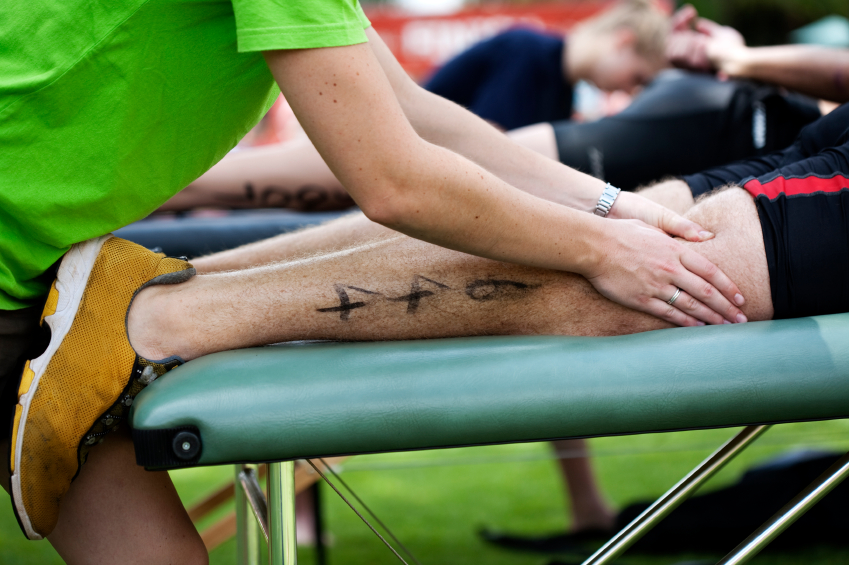
sports-massagePlan for a “tapering period” and build it into your training schedule. Tapering periods can be one week for short races and up to three weeks for longer races. Start to taper by decreasing the distances/time of your workouts, then use that saved time for MORE TISSUE WORK (See Step 3.) At minimum, get one massage during your taper period, but a couple would be better!

Benefits of training tapering

By scheduling in a tapering period toward the end of your training block, you give your body the final healing and prep time it needs before a race. However, this can only occur if you take advantage of the “extra” time you have because your training volume is lower. If you get massage work done, stretch, and use strategies to benefit from this tapering period, then your body will do its final recovery from all your months training.

Finding out how much taper time your body needs is a balancing act that you’ll get better at every year. Working with an intuitive coach can help, but remember that you are the only one your body talks to, so it’s up to you to listen to what your body is trying to tell you and act accordingly.

FINAL STEP: Enjoy the heck out of your race!

Once you get into the groove of well-planned training, core work, tissue work, recovery, and tapering, you’ll realize how much easier it is to be a successful racer.

All the best to your health,

Inbox-35061-messages-1987-unread


Kevin RauschAs the president and founder of Rausch Physical Therapy & Sports Performance, Kevin Rausch, PT, MPT takes great pride in the care of every single patient he treats. Kevin specializes in sacroiliac joint dysfunctions, running and cycling injuries, and return-to-sport planning for athletes. Since the first day he opened his clinic in 2006, Kevin has strived to provide the best in care, service and technology so as to strengthen his patients’ total body health and get them back to doing what they love.

Find Kevin on Google+


Are Breaking Pitches Age Dependent?

It’s said that Cy Young Award winner Clayton Kershaw of the Los Angeles Dodgers wasn’t initially a valid prospect as a Major League Baseball pitcher. That is until one spring training game in 2008, when he sent Boston Red Sox heavy hitter Sean Casey back to the dugout shaking his head, leading Vin Scully to exclaim, “Ohhh, what a curveball! Holy mackerel! He just broke off Public Enemy No. 1.” Most Dodgers fans will remember March 9, 2008 as the day of the breakout breaking pitch that started Kershaw’s legendary career.

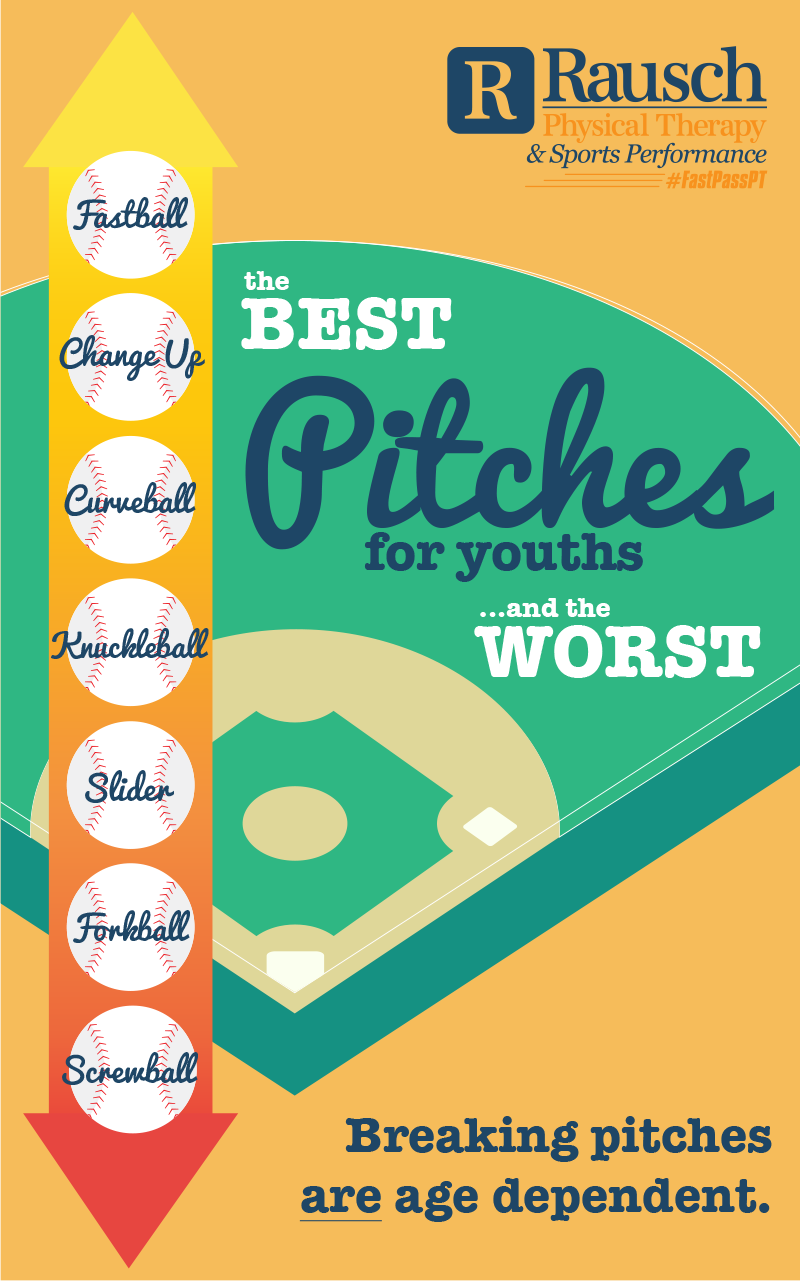
Image by Rausch Physical Therapy & Sports Performance.

Kershaw was just 19 years old when he showed the world he had mastered his 12-6 curveball in that storied spring training game. However, it’s been long proposed that allowing young pitchers to throw breaking pitches, such as curveballs and sliders, has created more injuries in youth baseball. So just how much truth is there to that old adage?

The best pitches for young baseball players

Research highlights the importance of factoring in the age and physical maturity of a player before teaching certain breaking pitches. Several recent studies claim that most throwing injuries that develop later on in a baseball player’s career can be traced back to throwing breaking pitches incorrectly or at too young of an age.

Due to the immaturity of a young pitcher’s body and the lack of strength throughout his/her shoulder and forearm, the best pitches for young ballplayers to learn are the fastball and change up. These two pitches create the least amount of strain and torque on the shoulder and elbow.

The worst pitches for young baseball players

While there is no definitive proof that throwing curveballs directly causes injury, this pitch does place increased strain on the shoulder when thrown incorrectly. With this in mind, coaches and parents should hold off on teaching their players how to throw a curve until s/he is at least 15 years old. What about the slider? While the angle of release makes the slider easier on the shoulder than the curveball, due to the increased torque on the elbow compared to other pitches it should still not be initiated until a pitcher is at least 16 years old. Other pitches, such as the sinker, knuckleball and screwball, also put significant strain on the shoulder and elbow and are therefore not advisable until a pitcher is much older.

Age (in Years) Recommendation For Learning Various Pitches

This chart explains the appropriate age to start teaching ballplayers certain pitches:

Fastball: 8 ± 2 Slider: 16 ± 2
Change-up: 10 ± 3 Forkball: 16 ± 2
Curveball: 14 ± 2 Screwball: 17 ± 2
Knuckleball: 15 ± 3

Even once a ball player is determined mature enough to learn breaking pitches, there still needs to be proper instruction to safely execute these pitches and minimize a player’s injury potential. Breaking pitches are age dependent, and coaches and parents must adhere to this guideline or they’ll increase the risk of injury in their child or players.

[framedbox]References and Further Reading:


Jonathan-Meltzer

Jonathan Meltzer graduated from the University of Redlands with a bachelor of arts in biology and a minor in physical education. Following graduation, Jonathan discovered his passion for physical therapy while working as a Physical Therapy Aide. After graduating top of his class from Loma Linda University in 2012 with a Doctorate in Physical Therapy, Jonathan began his career at Rausch Physical Therapy and Sports Performance. Jonathan’s goals are to identify limitations and treat his patients with the most recent and innovative techniques in order to maximize functional independence and obtain his patients’ individual goals.

A lesson in mental toughness from Russell Wilson

I don’t know Russell Wilson personally, but in my practice as a Professional Sport Psychologist for the past 33 years, I know a thing or two about what it takes to become a champion, about mental toughness and resilience to adversity, all of which Russell and the Seahawks displayed so beautifully in the NFC Championship game on Sunday.

Like NFL quarterbacks, all athletes have to deal with obstacles, challenges and setbacks.  Will they fold under such circumstances, believing that they cannot succeed and wait for the next opportunity to prove themselves?

stock-footage-a-female-athlete-breathes-heavy-and-sweats-after-an-intense-exercise-while-looking-into-the-cameraOr…like Russell Wilson, will they embrace the mindset of a champion, by maintaining supreme confidence in the face of adversity and bounce back from setbacks? Do you have a game plan on the back burner to deal with unforeseen setbacks in your sport? Do you have the confidence and mental toughness to be resilient in the face of adversity?

One important lesson to be learned from Russell Wilson is that we all have choices regarding how to assess a really devastating situation.  During the first half of his game against Green Bay, his performance was so poor that he had a zero quarterback rating, and he was playing the worst game of his NFL career. With his team down by a score of 16-0, one choice Russell had was to admit to himself that it wasn’t his or the Seahawks’ day, lose the belief that a victory was possible, and just try to get through the second half without more embarrassment.  In other words, play it safe, while expecting to lose.

But neither Russell Wilson nor the Seahawks think that way.  Even with only a few minutes left in the game, with his team still trailing by 12 points, he trusted his ability to bring victory to the Seahawks.  Mental toughness is the ability to sustain your intensity and bounce back, despite setbacks, adversity, and unexpected obstacles.  And that kind of mental toughness paid off.

Mental toughness skills include confidence building, resiliency, and developing an “identity statement” that an athlete can repeat, along with other positive affirmations each day.

An “identity statement” is a realistic reminder (no room for modesty here) of the real qualities you possess as an elite athlete and the vision you have of your future performance.  The purpose of such a statement is to enhance your self-esteem and confidence, especially when you begin to doubt yourself.  Here is an example:

“I am intelligent and I know my sport better than anyone on my team.  I have the greatest work ethic and I will eventually be an all-star.”

Combining such a statement with relaxing breathing and visualizing past successes builds the mental toughness necessary for bouncing back from setbacks.  Certainly Russell Wilson, the Seattle Seahawks and the coaching all practice mental toughness and it really paid off big time in the NFC championship game!


dr-singer11Jack N. Singer, Ph.D. is a licensed and certified Clinical/Sport Psychologist and Performance Success Coach, based in Mission Viejo, CA.  For more information and a FREE 15 minute consultation for all Rausch PT clients and family, contact Jack at 949-481-5660. www.drjacksinger.com

How to Prevent Throwing Injuries in Youth Baseball

Jonathan Little League
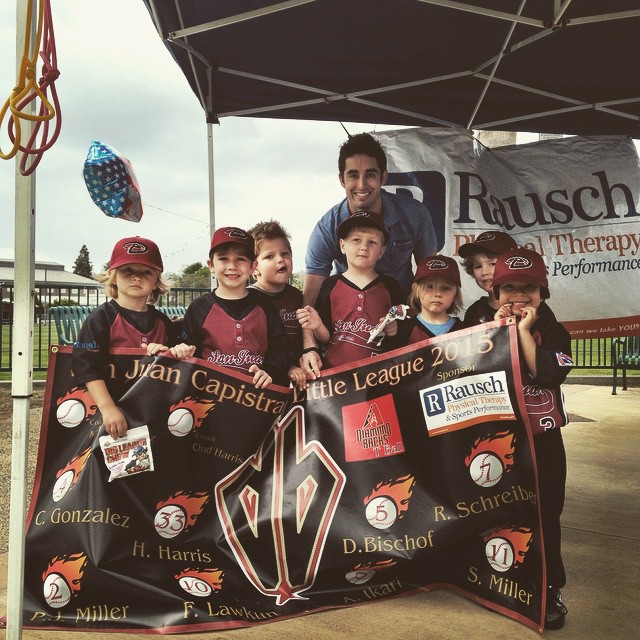
Start ’em young! Jonathan in the community educating little leaguers and their parents about youth baseball injury prevention.

Around the office, they call me “The Baseball Guy.” My years of clinical treatment of ballplayers at Rausch Physical Therapy and Sports Performance, coupled with my interest in biomechanical research, has motivated me to find new ways to reverse the alarming increase in youth baseball arm injuries. In fact, for the past two years I have been developing injury prevention programs for southern Orange County baseball leagues to help protect our youth’s elbows and shoulders.

And it looks like I am not the only one getting on base with this initiative. Major League Baseball and USA Baseball recently teamed up to launch their Pitch Smart program, which is designed to educate parents, coaches and young athletes about how to avoid overuse injuries. It includes information on pitching guidelines, injury risk factors, Tommy John surgery and more.

I have found that out of all the risk factors that can cause injury, the number one is pitching too much, both in a game and in any given year. New research is coming out every month about the correlation of throwing too much and arm injuries in little league athletes. Did you know:

  • If you pitch more than 100 innings in a year, whether little league, club or showcase, it will increase your risk of injury by 3.5x
  • If you pitch greater than 8 months in a year, it will increase risk of surgery by 5x
  • Kids should take off about 2-3 months of competitive pitching in a year and engage in other sports or active rest where they are still using their arms, just not in a pitching motion


Throw Right
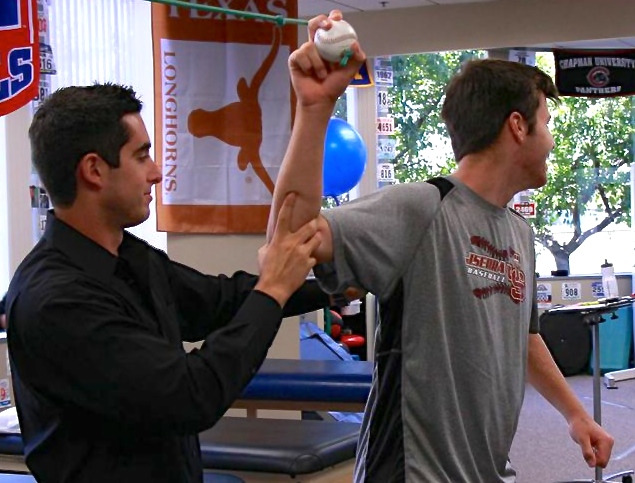
Jonathan taking a patient through Rausch Physical Therapy Throw Right program.

We as medical professionals need to transfer this information to the public so that change can occur in the traditions and schedules of little league baseball. The Pitch Smart initiative proves to me—and hopefully to parents and coaches—how crucial injury awareness and prevention is. I want to take this information and use my skill to prevent, rehabilitate and treat the youth of little league baseball. At Rausch PT, we offer our Throw Right program, which is designed to improve throwing mechanics and decrease risk of injury by evaluating strength, balance and range of motion. It’s a great way for throwing athletes of any age and experience to stay healthy and in the game for many, many years.

If you have any questions about throwing injury prevention or rehabilitation, please send me an email and I will be happy to answer them. For now, take care of those elbows and shoulders!

Sincerely, The Baseball Guy

Jonathan Meltzer, D.P.T.

jonathan@rauschpt.net


Jonathan-Meltzer

Jonathan Meltzer graduated from the University of Redlands with a bachelor of arts in biology and a minor in physical education. Following graduation, Jonathan discovered his passion for physical therapy while working as a Physical Therapy Aide. After graduating top of his class from Loma Linda University in 2012 with a Doctorate in Physical Therapy, Jonathan began his career at Rausch Physical Therapy and Sports Performance. Jonathan’s goals are to identify limitations and treat his patients with the most recent and innovative techniques in order to maximize functional independence and obtain his patients’ individual goals.

Triumph this Year!

Leading Off Blog 2If you’re reading this, then you’re like most of us. You made an awesome resolution for 2015, and have probably already failed at it. Take it easy. You’re amongst good company. We’ve already done the same thing. As I prepared to write this #2015 Leading Off section, I spent some time on one of my favorite websites, TedX.com. This site if full of interesting ideas, out of the box thinkers, and challenging viewpoints. Check it out.

Leading Off Blog 1I was intrigued by this talk “Quit Trying and Triumph” by Clare Barcus. Its a must see! In her presentation she speaks about her own hurdles in life and how she used to “try” to overcome them. The difficulties she has are real, they can and did negatively affect her life, work, school, and social well being. Throughout most of her life she “tried” to overcome her hurdles, until in one certain situation, she realized that she needed to deal with, accept, and triumph over her hurdle. It’s an amazing story!

This year, I challenge all of you to TRIUMPH. Be victorious in your journey and concer. Triumph does not come easily. It is not a “try” type of an effort, and it is not a weak-sauced “resolution” that you will forget about in a month. Triumph, is a supreme process of achievement through specific and hard work. Through struggle and strive. Despite your hurdles, physical challenges, and above the ever present negativity. It takes commitment and self introspection on a daily basis.

Leading Off Blog 3So what will you be triumphant with this year?

Will you be a better dad – Will you make the team – Will you get a promotion at work – Will you commit to helping a charity – Will you get into college – Will you start a new adventure – Will you fix that nagging leg injury – Will you do an Ironman – Will you get in shape – Will you deal with a personal issue – Will you spend more time with a friend in need – WILL YOU____________________________________?

“Do or do not. There is no try” – Yoda

#TRIUMPH this year!

Inbox-35061-messages-1987-unread