Uncategorized Archives - Page 5 of 10 - Rausch Physical Therapy & Wellness

Blog

Newly discovered Alzheimer’s genes further hope for future treatments


(CNN)An analysis of the genetic makeup of more than 94,000 people in the United States and Europe with clinically diagnosed Alzheimer’s led to the discovery of four new genetic variants that increase risk for the neurodegenerative disease.

These genes, along with others previously identified, appear to work in tandem to control bodily functions that affect disease development, the study found.

“This is a powerful study, and a step forward for our understanding of Alzheimer’s,” said neurologist Dr. Richard Isaacson, who directs the Alzheimer’s Prevention Clinic at Weill Cornell Medicine.

“Finding these new genes allows clinicians to one day target these genes with therapeutic interventions,” said Isaacson, who was not involved in the study. “It also gives us a greater insight to potential causes of Alzheimer’s.”
The study’s findings will not change anyone’s “day-to-day life or medical practice any time soon,” said Heather Snyder, the Alzheimer’s Association’s senior director of medical and scientific operations, who was also not involved in the new research.
“That said, they do give us potentially useful insights into the bodily processes that may cause or interact with the changes of Alzheimer’s disease and other dementias,” Snyder added.

Unprecedented numbers

Led by a team from the University of Miami’s Hussman Institute for Human Genomics, an international consortium of researchers analyzed data collected by four centers, two in the United States and two in Europe, that make up the International Genomic Alzheimer’s Project.

he study, published Thursday in the journal Nature Genetics, was the second genome-wide association study to be performed by the group on individuals with known Alzheimer’s compared to a group of controls. The first study, published in 2013, looked at nearly 75,000 people and identified 11 gene “loci,” or locations, that had not been previously known to be associated with the development of Alzheimer’s.
By increasing the numbers to 94,000, the new study added 30% more data to the analysis, allowing the researchers to verify 20 previously found genes and add four.
How the new genes — IQCK, ACE, ADAMTS1 and WWOX — along with a previously discovered gene called ADAM10, affect the development of Alzheimer’s is under investigation. But once their specific functions are understood and examined, researchers say they will be able to begin to develop potential drug targets.
“Alzheimer’s is a complex disease. It’s not like Huntington’s or Parkinson’s, where one gene is altered and you get the disease,” said senior author Dr. Margaret Pericak-Vance, director of the Hussman Institute.
“With Alzheimer’s, it’s multiple genes acting together,” Pericak-Vance said. “We were trying to get at the very rare gene variants that could contribute to Alzheimer’s. And we couldn’t do that before. We just didn’t havethe sample size to do it.”
The study validated the previously discovered role of amyloid and immune system genes in the development of Alzheimer’s, said Harvard professor of neurology Rudy Tanzi, director of the Alzheimer’s Genome Project and a member of the international consortium.
“We had seen amyloid early on, but it had not been verified in a [genome-wide association study],” Tanzi said. “So I think one exciting thing is that it brings us back to amyloid as a major player.
“I should also say that we’re also seeing that the other major pathway besides the amyloid is innate immunity,” Tanzi said. “In this study we’re seeing even more innate immune genes affecting one susceptibility to neuroinflammation.”
A susceptibility to neuroinflammation is key, Tanzi says, “because at the end of the day, plaques and tangles may set the stage, but it’s neuroinflammation that kills enough neurons to get to dementia.”
Now having more than a dozen gene targets on how immunity ties into Alzheimer’s, Tanzi said, should “really facilitate a new drug discovery.”

Precision medicine

The increase in sample size allowed the researchers to discover “hubs of genes” that might impact the development of Alzheimer’s. “And some of those genes have the potential to have more than one function,” said lead author Brian Kunkle, an associate scientist at the Hussman Institute.

“They may be increasing risks through different disease pathways,” Kunkle said. “Prediction of risk and treatment for each individual will rely on what type of changes a person has in each of those 25 genes or other biomarkers.”

Isaacson said the ongoing work could lead to “precision medicine at its finest.”

“A person can take many different roads to Alzheimer’s,” Isaacson said. “If we can find out what road a person is on through identifying certain genes, we can target specific interventions that may work preferentially for that specific person.”
As to when that might occur, Kunkle is cautiously optimistic.
“It’s difficult to say if it will help someone that has Alzheimer’s now,” he said. “Hopefully, we will have treatments developed for their family members that may have these genes that are putting them at risk.”
Let’s talk! Give us a call for a complimentary assessment.

Did you know there’s no prescription needed from a doctor to see us?
(949) 443-0713

logo-top

[https://edition.cnn.com/2019/02/28/health/alzheimers-genes-discovery-treatment/index.html]

3 Ways a Physical Therapist Can Help Manage Headaches

Headaches affect 47% of the global population and are described by the type and location of pain in the head. Many headaches are harmless and resolve gradually. However, more frequent moderate to severe headaches can impact your ability to do daily activities and quality of life.

Different types of headaches include:

  • Tension
  • Cervicogenic or neck muscle-related
  • Migraine
  • Secondary headaches from an underlying condition, such as fever, infectious disease, sinus disorder, or in rare cases, a tumor or more serious illness
  • Unspecified headaches

A physical therapist will perform a clinical examination to diagnose the type of headache and develop an effective treatment plan. Physical therapy has been proven to:

  • Decrease or resolve the intensity, frequency, and duration of headache
  • Decrease medication use
  • Improve function and mobility
  • Improve ease of motion in neck
  • Improve quality of life

A physical therapist treatment plan may include:

  1. Manual therapy: Proven hands-on techniques are designed to alleviate joint and muscle stiffness, increase the mobility of the head and neck, decrease muscle tension and spasms, and improve muscle performance.
  1. Exercise: Research has shown that various types of specific exercises will decrease pain, improve endurance, decrease inflammation, and promote overall healing. In addition to individualized prescribed exercises, customized home-exercise programs are an essential part of the treatment plan.
  1. Education: Educational strategies have been found helpful at lessening the severity and/or frequency of headaches. These strategies include identifying highly individualized triggers (ie, dietary, sleep, movement/postural habits, stressors, hydration). Effective strategies to alleviate symptoms also include a wide variety of relaxation techniques.

Why suffer if there’s a possibility you can have relief? And we CAN help!

Let’s talk! Give us a call for a complimentary assessment. We will help you live pain-free.

Did you know there’s no prescription needed from a doctor to see us?

(949) 443-0713

logo-top

Keep Your Immune System Healthy

Your immune system defends you against the viruses that cause colds and flu. These eight steps can help support your immune system so it’s ready to fight those viruses.

  1. Eat plenty of fruits, vegetables, and whole grains.
  2. Get at least 30 minutes of exercise most days of the week.
  3. Get enough sleep.
  4. Wash your hands.
  5. Keep up with your vaccinations. Almost everyone who’s at least 6 months old should get a flu vaccine every year.
  6. Keep your weight healthy.
  7. Don’t drink too much alcohol.
  8. Don’t smoke.

Get the Nutrients You Need

Food is your best source. Fill half your plate with vegetables and fruit, and split the other half between lean protein and grains, as the government’s “MyPlate” guidelines recommend.

Not sure if you’re getting enough vitamins and minerals? Ask your doctor or a nutritionist about that.

Don’t overdo supplements. Taking too much can be bad for you. Your doctor can let you know what you need.

Manage Your Stress

Everyone gets stressed. Short bursts of stress may help your immune system. But lasting stress is a problem. It can hamper your immune system.

You can take action to tame stress. Make these steps part of your stress management plan:

  • Get enough sleep.
  • Learn and use relaxation techniques.
  • Exercise.
  • Take time for yourself.
  • Build your support network of people you can talk to.
  • Consider counseling, especially when you’re going through a very stressful time.

Trying to get, or stay, healthy? Give us a call for a complimentary assessment. We will help you live your best life.

Did you know there’s no prescription needed from a doctor to see us?

(949) 443-0713

logo-top

Eggs Are Among The Healthiest Foods You Can Eat

Eggs were unfairly demonized because the yolks are high in cholesterol.

However, studies show that cholesterol from eggs doesn’t raise blood cholesterol in the majority of people.

New studies that include hundreds of thousands of people show that eggs have no effect on heart disease in otherwise healthy individuals.

The truth is, eggs are among the healthiest and most nutritious foods you can eat.

Almost all the nutrients are found in the yolk, and telling people to avoid the yolks (or eggs altogether) is one of the biggest mistakes in the history of nutrition.


logo-top


A Guide to Burnout

Overview

Burnout is a state of mental and physical exhaustion that can zap the joy out of your career, friendships, and family interactions. Continual exposure to stressful situations, like caring for an ill family member, working long hours, or witnessing upsetting news related to politics and school safety can lead to this stress condition.

Burnout, however, isn’t always easy to spot. With that in mind, we’ve put together a guide to help you identify the signs of burnout, as well as ways to prevent it.

Interested in helping friends, family members, or co-workers who may be experiencing this stressful state? We’ve also included a list of our favorite burnout intervention tips and tricks.

What is burnout?

Coined by the psychologist, Herbert Freudenberger in the 1970s, burnout describes a severe stress condition that leads to severe physical, mental, and emotional exhaustion.

Much worse than ordinary fatigue, burnout makes it challenging for people to cope with stressand handle day-to-day responsibilities.

People experiencing burnout often feel like they have nothing left to give and may dread getting out of bed each morning. They may even adopt a pessimistic outlook toward life and feel hopeless.

Burnout doesn’t go away on its own and, if left untreated, it can lead to serious physical and psychological illnesses like depression, heart disease, and diabetes.

Who gets burnout?

Anyone who’s continually exposed to high levels of stress can experience burnout. Helping professionals, such as first responders, doctors, and nurses are especially vulnerable to this health condition.

Along with career-induced burnout, people caring for children can also have this type of extreme exhaustion. A recent study found that, just like doctors and business executives, mothers and fathers can also burn out.

Personality characteristics like needing to be in control, perfectionism, and being “Type A” can also increase your risk of burnout.

Need help staying healthy and feeling great? Give us a call for a complimentary assessment. We will help you live your best life.

Did you know there’s no prescription needed from a doctor to see us?

(949) 443-0713

logo-top

April 2017: Clinic Phone Updates


Last updated: April 21, 2017

On April 18, we discovered that our clinic phones, specifically the message recording system, have not been working properly. Upon receiving complaints of voicemails going unreturned, we had the phone system company look into the issue, and they informed us that periodically since January 1, voicemails have not been recording/saving due to an undetected system error. As frustrating as this is, now that we have identified the problem we are able to take the necessary steps to resolve it as quickly as possible! In the meantime:

If you are attempting to schedule, cancel or reschedule an appointment, or if you need to get in touch with us for any reason, please follow up with an email to info@rauschpt.net if you do not receive a call back within two hours.

(Please include your full name, phone number, and time you left a voicemail.)

We apologize for the inconvenience, and we sincerely appreciate your patience and understanding during this time. At Rausch Physical Therapy, patient care is our top priority. We value every person who trusts us with their care, and in our eyes, that starts from the moment you first call our office. You’re here to work hard, recover and get stronger; the last thing we want is to have you worry about something as simple as a phone call. We extend a sincere apology to anyone who has been effected by this phone messaging system error, and we appreciate everyone for their continued patience as we update our phone system over the next few weeks so we can provide you with the best patience experience possible here at Rausch PT.

Order Your Rausch PT Gear Today

Rausch Racing Gear

You’ve worked hard to get here, so make sure you’re 100% race ready with your own #TeamRauschPT gear.

To place your order:

  1. Click here to download the Rausch PT Race Gear Order Form (Please be patient as the form completely loads.) Order forms are also available at the Front Desk.
  2. Email your completed form to casey@rauschpt.net or drop off with Front Desk staff.
  3. You will receive a call/email response within 48 hours to confirm your order.


All orders must be placed by 12 p.m. on Wednesday, July 15, 2015.


How to Get Race Ready in Five Steps

When was the last time you rolled up on race day feeling 100% prepared? Think back to your last big race, were you healthy, well-rested and happy with your training? There are so many factors to getting race ready; it takes a lot of planning to get it right, but it is possible.

Unfortunately, I normally work with athletes who don’t get it right. They end up hurt, bummed and sulking into our physical therapy office. The funny thing is, all I usually hear during that first appointment is, “I know better,” or  “Yeah, I felt this pain starting a couple months ago, but…”

Enough with the buts! Here are five easy steps to follow to make sure you get it right for your next big race. These steps work for any kind of race—running, cycling, triathlon, ultra or IRONMAN.

Step 1: Start training sooner.

Don’t rush into a long distance race without giving your body enough time to train to adapt. Your body is amazing and it will adapt to what you ask it to do; you just have to give it the right amount of stimulus and time. It’s pure physiology from there. Tough workouts break down muscle fibers and cause micro-inflammation in your tissues; the recovery time in between workouts allows your body to heal and subsequently get stronger each week.

However, this could be a lot to ask of your body if you decided to just go hard every day for a month in anticipation for a big race. That’s where the magical taper time comes in (See Step 5.)

Step 2: Pilates & Yoga count during your training.

Don’t skip core and flexibility training—those two are the keys to injury prevention.

Step 3: Love your tissues.

Stretch every night, use the foam roller and/or massage stick, and make regular appointments to get worked on by a manual physical therapist or therapeutic massage therapist.

Step 4: Recover.

In between every work out, use recovery tights, Norma-tech, Compex, hydrate, and eat like an athlete.

Step 5: STOP! Taper Time.

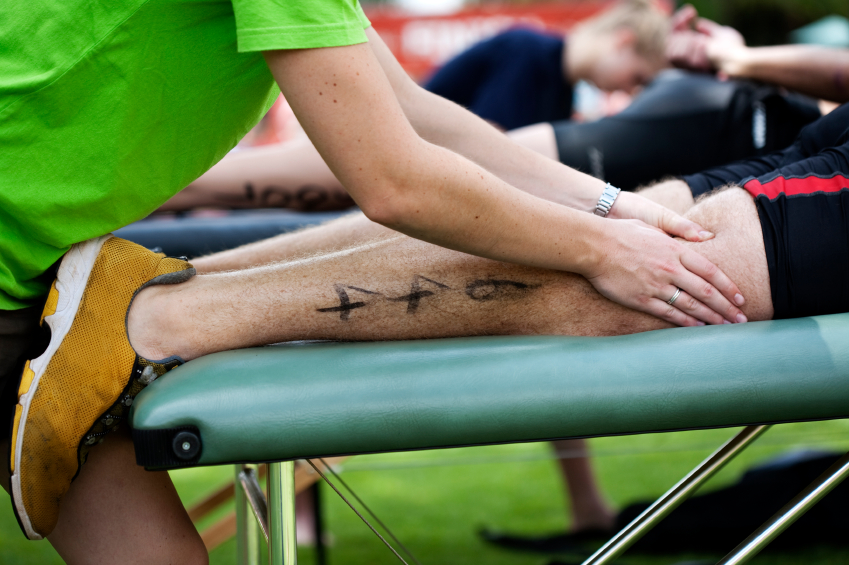
sports-massagePlan for a “tapering period” and build it into your training schedule. Tapering periods can be one week for short races and up to three weeks for longer races. Start to taper by decreasing the distances/time of your workouts, then use that saved time for MORE TISSUE WORK (See Step 3.) At minimum, get one massage during your taper period, but a couple would be better!

Benefits of training tapering

By scheduling in a tapering period toward the end of your training block, you give your body the final healing and prep time it needs before a race. However, this can only occur if you take advantage of the “extra” time you have because your training volume is lower. If you get massage work done, stretch, and use strategies to benefit from this tapering period, then your body will do its final recovery from all your months training.

Finding out how much taper time your body needs is a balancing act that you’ll get better at every year. Working with an intuitive coach can help, but remember that you are the only one your body talks to, so it’s up to you to listen to what your body is trying to tell you and act accordingly.

FINAL STEP: Enjoy the heck out of your race!

Once you get into the groove of well-planned training, core work, tissue work, recovery, and tapering, you’ll realize how much easier it is to be a successful racer.

All the best to your health,

Inbox-35061-messages-1987-unread


Kevin RauschAs the president and founder of Rausch Physical Therapy & Sports Performance, Kevin Rausch, PT, MPT takes great pride in the care of every single patient he treats. Kevin specializes in sacroiliac joint dysfunctions, running and cycling injuries, and return-to-sport planning for athletes. Since the first day he opened his clinic in 2006, Kevin has strived to provide the best in care, service and technology so as to strengthen his patients’ total body health and get them back to doing what they love.

Find Kevin on Google+


Finding the Best Kinesiology Tape for Your Body

You’ve seen it on professional athletes, you’ve seen it on weekend warriors, and if you’ve been to our clinic you have definitely seen it on our patients. So what exactly is that colorful, stretchy tape, and should YOU be using it, too?

Go into any sporting goods store and you’ll immediately notice that there are many different brands of kinesiology tapes out there (each claiming to be better than the other,) but what exactly separates the different brands? More importantly, how do you know which one will help best with your own recovery? To answer these questions, you first have to understand what k-tape is and how it works.

What is kinesiology tape?

The basic idea behind all kinesiology tapes is that they are elastic, which means that they stretch and move with you. This is in contrast to your average white athletic tape, which is more rigid and hence limits mobility. Most kinesiology tapes have a heat-activated adhesive component, which allows the tape to last a few days on clean skin without peeling off (even after showering!) Some brands offer cotton-based tapes with natural dyes, while others have more of a nylon component with artificial coloring. Some tapes come pre-cut, while others are sold in roll form. If applied properly, they all essentially do the same thing.

How does kinesiology tape work?

The most common ways to tape muscles or joints using kinesiology tape is to ask yourself why you are taping in the first place: are you taping to inhibit (relax/shut down)? Facilitate (activate)? Stabilize, control edema/swelling, or control pain? Each of these techniques requires specific placement and different tension application in order to perform their duty. While you can certainly YouTube “K-Tape,” “Rocktape,” “Kinesiotape,” etc. and find millions of videos on how to fix that pesky ITB issue or stabilize a knee cap that won’t stop moving, it’s best to have a professional teach you the specifics and application technique to receive optimal care and avoid the potential for other injuries.

You’ll probably notice that most brands have a swirl pattern of adhesive on the backside of the tape. Not only are they cool to look at, those swirly lines also serve a purpose. The swirls expand and recoil based on the amount of stretch a practitioner applies to the tape, targeting small receptors within the skin and underlying tissues to assist with healing. The amount of tension applied, the area of skin covered, and the directionality of how the tape is applied are all key factors in getting the best results.

Kinesiology tape DON’Ts

Now, some of the following may seem silly to some and have you saying, “Duh!” Nevertheless, I have to caution you on the following issues you can run into with kinesiology tape, as I wouldn’t bring them up if they haven’t happened to some poor soul in the past.

  1. Make sure you DO NOT have an allergy to adhesives. Most tapes are latex-free, however if band-aids and other similar products irritate your skin, k-tape may not be in the cards for you.
  2. Watch out for body hair. If the area you want to tape is hairy, it may be a good idea to shave or trim the hair before application. The tape will not stick very well if there’s too much hair, as it’s meant for direct skin contact. More importantly, remember this rule of thumb: sticky + increased activation with heat + a few days of activity = OUCH!! when it’s time to peel off.
  3. If the tape is itchy or causes more symptoms, remove it immediately. There’s no point in getting a rash or having increased discomfort.
  4. The tape has water repellent properties, so pat it dry with a towel after a swim, shower, etc. Due to the heat activation properties of the adhesive, I DO NOT recommended using a blow dryer to get the tape dry (Please refer to #2 for THAT outcome!)
  5. Lifesaver tip: the tape is de-activated with oils. So, if you find the tape painful to remove, grab some lotion, baby oil, olive oil, etc. and slowly peel back while applying the oil to the adhesive side of the tape.


So, which kinesiology tape is best for you?

When taped appropriately, most products will give positive results and can stay in place anywhere from 3-5 days or more, depending on location, activity, sweat factor, etc.  Again, in order to achieve optimal results and ensure you’re applying the tape specifically for your body’s needs, have a professional teach you first.  That being said, my recommendation for the best go-to brands would be either Kinesio Tape or RockTape. Both have proven to be super effective and tend to last longer than their other counterparts.


Lyndsay

Lyndsay DeFilippo PT, DPT, CKTP received her Doctorate of Physical Therapy from New York University in 2010. She’s a Graston Practitioner and a Certified Kinesiotaping Practitioner. Lyndsay looks at each injury as a constantly changing puzzle, which is only solved when her patient returns to what s/he loves doing. She enjoys helping with the full recovery process, which includes providing the education, tools and fundamentals to prevent re-injury and the potential for new injuries.

Should I Ice or Heat My Injury?

As a licensed physical therapist, I have been asked about ice versus heat many times. “When should I use ice?” “When should I use heat?” “What about IcyHot?” Then, there are the patients with pulled muscles who ask me, “Should I try to stretch it?” So, ice versus heat: which should you be doing? Well, it depends.

When to Use Ice

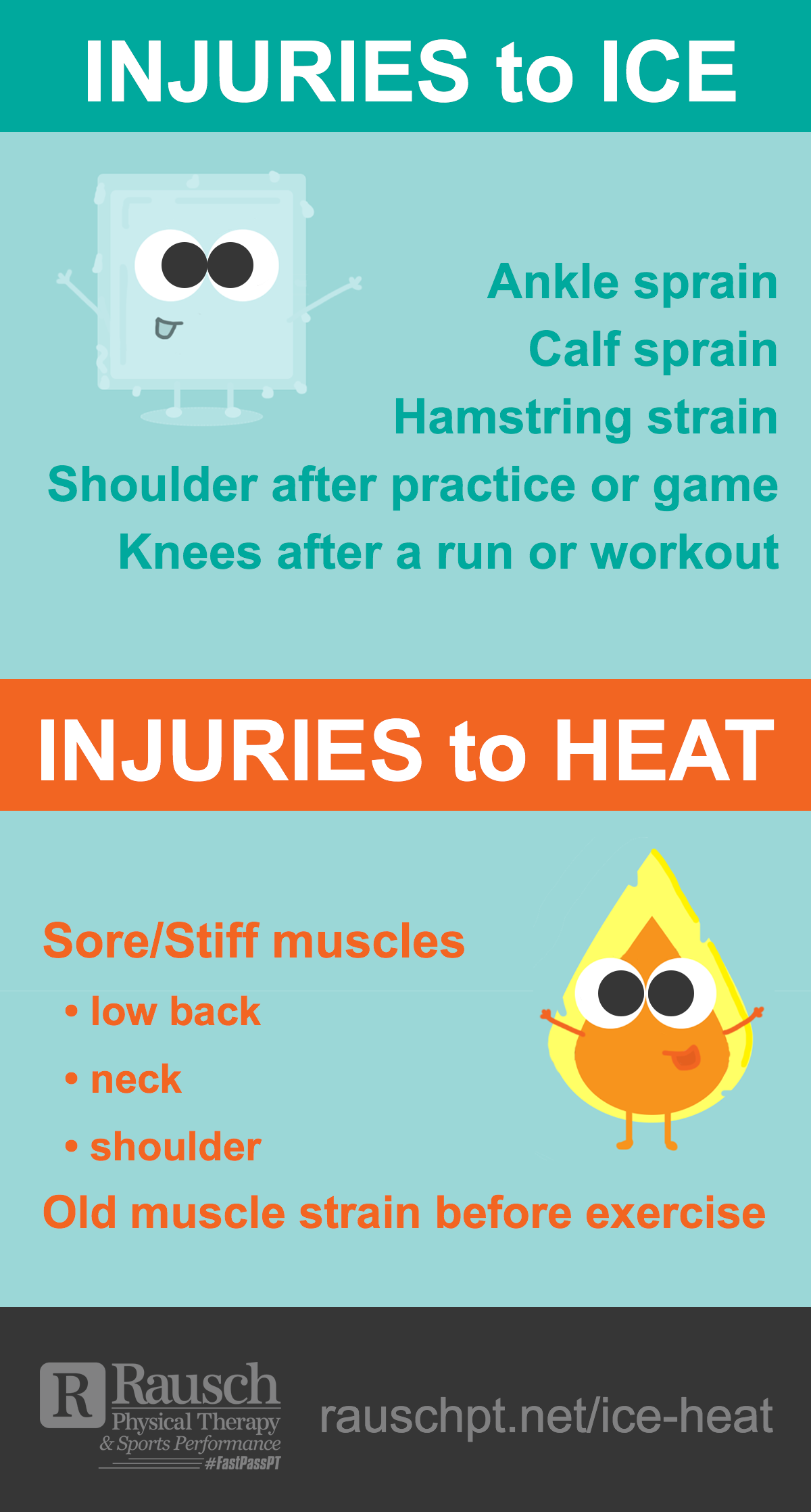
As a general rule, I advise using ice for any acute injury (injury occurring within the last 48-72 hours.) Ice will control the inflammation and prevent a muscle or joint from becoming so puffy and stiff that it cannot heal properly. Now, there are some people in the world of sports medicine who will argue against the use of ice because they believe inflammation is part of the natural healing response. This is absolutely true, however,the inflammatory process occurs immediately; so even the fastest application of an ice pack will not beat this natural inflammation.

Rausch PT Ice-Heat-InfographicApplying ice simply prevents the natural inflammation and swelling from becoming excessive and potentially causing secondary tissue death, which happens when there’s so much swelling that blood flow is completely blocked and healthy tissue becomes hypoxic. In clinical practice, uncontrolled swelling turns into pitting edema (a thick, putty-like substance that leaves an indentation when you press on the tissue.) This in turn leads to a stiff and—what I describe as,—“sticky” muscle or joint.

If your injured area is s hot, swollen or painful, ICE IT. Crushed ice is the best at reducing tissue temperature since it undergoes an actual physical change (from a solid to liquid.) But be warned:ice burn is a real thing, and I usually see this with the use of gel packs. To avoid ice burn, use a pillowcase as a barrier between the skin and gel pack. Ice for 10 to 15 minutes at a time. For a brand new injury, ice can be applied hourly.

When to Use Heat

For anything that is stiff, tight or sore, I typically recommend heat. This usually applies to chronic and ongoing injuries – the neck or low back pain after a long day of sitting, or shoulder pain after working on the computer. Heat increases blood flow, relaxes muscle and makes the other fascial tissues more pliable (i.e. the joint capsule.) Physical movement or exercise is actually the best way to increase tissue temperature because your body is warming from the inside. Yes, believe it or not, gentle exercise (walking, stationary cycling, etc.) will actually do more for you than a heat pack.

IcyHot and other topical heat rubs targets the superficial sensory nerve fibers to create the sensation of cold or heat, which can reflexively cause muscle relaxation by inhibiting pain. Does it help with healing? No, but it doesn’t hurt either. Know that there is no magic solution.

Whether you are using ice or heat, , ice and heat application should be part of an all-encompassing rehabilitation program – including soft tissue mobilization, strengthening and re-training of motor control and movement patterns.

Pulled Muscles: Stretch or Don’t Stretch?

First off, you should always do a proper warm-up and cool-down to help prevent pulling a muscle in the first place. However, if you have a pulled hamstring or strained calf, DO NOT stretch it. You should never try and stretch an already over-stretched muscle.. A muscle strain occurs when the muscle fibers are pulled beyond their ability to recoil properly, so they snap back. Yes, I know it’s tight, but if you pull on (stretch) it,  the muscle will only continue to tighten and add to the current strain.

Instead of stretching it, now would be an appropriate time for ice, and in a couple of days you can start heating, foam rolling and stretching. If you have any doubt, you can schedule an evaluation with your Rausch physical therapist who will  assess the severity of your injury and let you know  when you can start stretching it, as well as help you to strengthen the area to prevent straining the muscle a second time.


Jess-web

Jessica Snyder (PT, DPT, ATC, CSCS) received her Doctor of Physical Therapy degree at the University of St Augustine for Health Sciences – with an emphasis on orthopedics, movement science, and manual therapy. Jessica started her career as a Certified Athletic Trainer working with high school, college and professional athletes. She is also a Certified Strength and Conditioning Specialist (enhancing her ability to build custom strength, stability and performance-centered rehabilitation and return-to-sport programs) and Certified Natural Running Coach. Being a runner herself, Jessica specializes in running-related injuries, including the entire lower extremity. She is also passionate about treating headaches and neck/shoulder pain.

Visualizing Your Way to a Quicker Recovery

If you are an athlete, odds are you have at one time or another been sidelined by an injury. The frustration that comes with being unable to train and compete can lead to a loss in motivation and a longer recovery process. To combat this, athletes should learn to use visual relaxation and performance techniques and practice them diligently.

There are many forms of relaxation training that athletes can use to help accelerate rehabilitation after injury, including kinesthetic (progressive muscle relaxation), mindfulness (breathing techniques), auditory (listening to calming voices), hypno-relaxation (using hypnosis to induce relaxation, and visual methods (including imagery).

Visual relaxation methods to speed up recovery

  • Remembered imagery. Remember a pleasant and relaxing time in your life. Re-experience it. Become fully absorbed, focusing on what you see, smell, hear and feel against your skin as you visualize that calming scene.
  • Constructed imagery. Imagine a pleasant or relaxing scene in your mind. Step into the picture and experience the scene fully.
  • Hypnotherapy using imagery. Make up a recording or listen to one by a professional hypnotherapist, that includes visualizing healing red blood cells surrounding the injured muscle, tendon, bone, etc. with nutrients, directed at rapid reduction of inflammation and total healing.

Injured athletes should experiment with all available relaxation methods to find the ones that are most comfortable and beneficial. A combination of methods can be used; it’s up to athletes to decide which ones are best suited for them. Once the athlete has become comfortable with a specific technique, it then must be practiced for maximum results.

Three steps to visualize sport performance while injured

If you’re injured, you can still visualize championship-level performance and begin to lay hypnotic tracks in your subconscious mind that will carry over once you’re physically able to perform. Here are some easy steps for visual performance training while you’re still injured:

  1. Watch videos of yourself performing, especially ones highlighting best previous performances. If a personal highlight reel isn’t available, watch training videos of other great athletes in action.
  2. Close your eyes and imagine your ideal performance. Really get a good sense of what you look like and feel like when you perform.
  3. Practice this imagery using the actual time sequence of your average performance. For example, if you’re a track athlete, “run a race” on a stationary bike. If the race is for 400 meters, “race” on a bike for 50 seconds and at the same time visualize your performance.

You may feel a little silly at first, but trust me, this works.

Staying motivated during rehabilitation

After being injured, athletes can lose a sense of identity and become depressed from not being able to compete. That’s why constant feedback and support from coaches and teammates is so crucial to helping an injured athlete stay motivated. Coaches should encourage injured players to make appearances at practices, and athletes need to be proactive about remaining involved in the team and its progress. Coaches can assign certain duties at practice, involve them in strategy sessions, or let them assist in keeping stats. If an athlete has an upper body injury, they can jump on an exercise bike at practice sites to both maintain endurance and still be a part of the team.

If you stay motivated, practice your visual relaxation and performance techniques, and keep up with your physical therapy treatment, you will be ready to physically compete again before you know it.


dr-singer11Jack N. Singer, Ph.D. is a licensed and certified Clinical/Sport Psychologist and Performance Success Coach, based in Mission Viejo, CA.  For more information and a FREE 15 minute consultation for all Rausch PT clients and family, contact Jack at 949-481-5660. www.drjacksinger.com