Back and Spine Archives - Rausch Physical Therapy & Wellness

Blog

Demystifying Back Pain

As we step into a new year filled with resolutions and aspirations, prioritizing our health is more crucial than ever. And few things are as fundamental as maintaining a healthy back. Join us at Rausch PT as we kick off the year by debunking eight myths about back pain. We can offer you solutions to alleviate and prevent back pain, with targeted exercises, therapeutic techniques, and expert guidance to restore mobility, strengthen muscles, and promote a pain-free, active lifestyle. All supported with Rx Massage, should you so desire!

8 common myths about back pain

Posture Perfection: Tips and Exercises

Maintaining good posture and its impact on our overall health and well-being is often underestimated. From sitting at a desk all day to hunching over our devices, poor posture has become a common modern-day affliction. Learn the crucial role your posture plays and strategies to improve your routine by reading the article below.

Good posture involves training your body to stand, walk, sit, and lie in positions where the least strain is placed on supporting muscles and ligaments during movement or weight-bearing activities.

If any of the following guidelines causes an increase of back pain or spreading of pain to the legs, do not continue the activity and seek the advice of a doctor or physical therapist.

The spinal curves

Your spine has natural curves that form an S-shape. Viewed from the side, the cervical and lumbar spines have a lordotic, or a slight inward curve, and the thoracic spine has a kyphotic, or gentle outward curve. The spine’s curves work like a coiled spring to absorb shock, maintain balance, and to facilitate the full range of motion throughout the spinal column (see Anatomy of the Spine).

These curves are maintained by two muscle groups, flexors and extensors. The flexor muscles are in the front and include the abdominal muscles. These muscles enable us to flex, or bend forward, and are important in lifting and controlling the arch in the lower back.

The extensor muscles are in the back. These muscles allow us to stand upright and lift objects. Working together these muscle groups act as guy wires to stabilize your spine.

What is good posture?

Posture Perfection: Tips and Exercises 1

Posture is the position in which you hold your body upright against gravity while standing, sitting, or lying down.

Proper posture requirements:

  1. Good muscle flexibility
  2. Normal motion in the joints
  3. Strong postural muscles
  4. A balance of muscles on both sides of the spine
  5. Awareness of your own posture, plus awareness of proper posture which leads to conscious correction. With much practice, the correct posture for standing, sitting, and lying down (as described below and on the following page) will gradually replace your old posture.

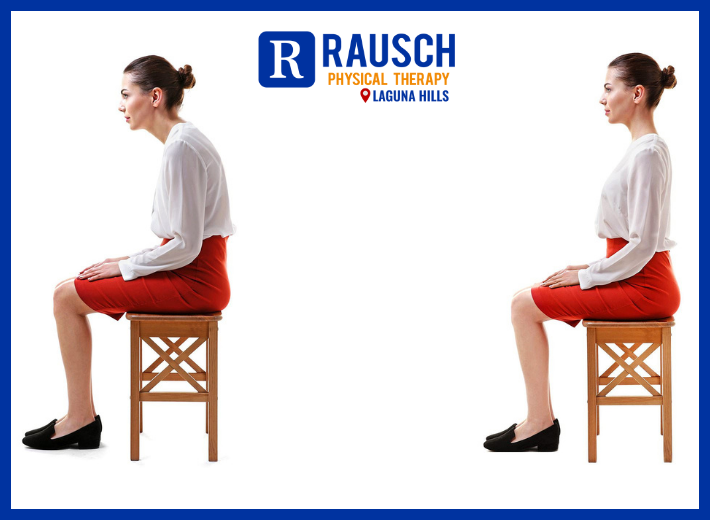
Proper Sitting Posture

Shoulders over hips, feet flat on the floor, low back support provided, and chin aligned over the chest.

Proper Sitting Posture at Desk

Posture should start with shoulders over hips with good low back support. Details include: elbows flexed to 90 degrees, knees bent to 90 degrees, feet flat on floor or supported with stool/ phonebook (enough that there is a finger width gap between the knee and the chair). Computer monitor should be at eye level, head position should include ears aligned with shoulders. The computers mouse should be close enough that the elbow remains in a bent position. Finally, pen/phones should be kept within 14-16 inches of reach.

Sit to Stand

Place your feet so that toes and knees are in line. Bend forward so your nose is over your toes. Push up from the chair with a controlled motion. Use your hands as needed.

Tying Shoes

Place your foot on your opposite knee to keep from bending too far forward.

Proper Bending and Reaching Technique (Golfers Lift)

Please be aware that bending and lifting are contraindicated after lumbar fusion/kyphoplasty procedures. This technique is provided for the rare occasions when you absolutely require objects being picked up from the floor. Note that the subject has arranged herself in a position where she can use the leg as a lever arm to pull her body back up to its standing posture while maintaining a flat back.

Proper Sleeping Posture

When lying on your back a pillow support should be utilized under the knees. Remember a pillow should support the neck not the head.

Proper Sidelying Posture

Place the pillow support between the knees with another pillow support at the lumbar spine and a third pillow supporting the neck and head. The lumbar support pillow is only necessary if there is a gap between the bed and the waist.

Log Roll

With starting position lying on your back bend your knees.

Roll onto your side.

Keep your shoulders and hips together as a unit as you roll.

Place your top hand to the bed and push up while lowering your legs to the floor.

Slowly raise your body while lowering the legs to assume an upright position.

Getting In & Out of Car

Getting in the Car

  • When getting into the car, back up to the car seat until you feel the seat behind your legs.
  • Reach one hand behind you for the back of the seat while placing your other hand on the dashboard for balance.
  • Lower yourself slowly to the seat and bring your legs into the car one at a time.
  • Scoot your hips back until you are fully on the seat.

Getting out of the Car

  • Position the seat all the way back for maximum leg clearance.
  • Bring each leg out one at a time, turning your hips and shoulders with your body to avoid twisting at your spine.
  • Place one hand on the back of the seat and one hand on the door frame or dashboard.
  • Push up to a standing position; don’t pull.
  • Tip: Placing an empty plastic bag on the seat of the car will make sliding in and out of the car easier for you.

Preventing back pain and injury

Self care. Using correct posture and keeping your spine in alignment are the most important things you can do for your back. The lower back (lumbar curve) bears most of your weight, so proper alignment of this section can prevent injury to your vertebrae, discs, and other portions of your spine. If you have back pain, you may need to make adjustments to your daily standing, sitting, and sleeping habits and learn proper ways to lift and bend (see Self Care for Neck & Back Pain). Your workspace may need to be rearranged to keep your spine from slouching. Because extra pounds can make back pain worse, you should maintain a weight that is appropriate for your height and body frame.

Exercise. Regular exercise is important to prevent back pain and injury. A program of strengthening, stretching and aerobic exercises will improve your overall fitness level. Research has shown that people who are physically fit are more resistant to back injuries and pain, and recover quicker when they do have injuries, than those who are less physically fit (see Exercises: Back Stretches & Strengthening).

Ready to make positive changes in your posture and overall health? Our expert physical therapists are here to guide you. Schedule your appointment today at 949-597-0007. You can follow us on TikTok and Instagram for more inspiration and tips.


Reference: [https://mayfieldclinic.com/pe-posture.htm]

Effective Strategies for Back Pain Relief

Are you tired of living with chronic back pain that limits your mobility and affects your quality of life? Surgery may not be the only solution. At Rausch PT, our dedicated team of physical therapists is committed to helping you find relief, regain functionality, and restore your overall well-being. Learn here seven ways to treat chronic back pain without surgery.

Back pain is considered chronic if it lasts three months or longer. It can come and go, often bringing temporary relief, followed by frustration. Dealing with chronic back pain can be especially trying if you don’t know the cause.

Back pain rehabilitation specialist Andrew Nava, M.D. , offers insights into common chronic back pain causes and nonsurgical treatment options—and advises not to give up hope.

Common Causes of Chronic Back Pain

Chronic back pain is usually age-related, but can also result from a prior injury. The most common causes include:

  • Arthritis of the spine —the gradual thinning of the cartilage inside the spine
  • Spinal stenosis —narrowing of the spinal canal that may lead to nerve pain
  • Disc problems, such as a herniated or bulging disc
  • Myofascial pain syndrome—unexplained muscle pain and tenderness

In some cases, it’s difficult to pinpoint the cause of chronic back pain. “If your doctor has exhausted all diagnostic options, it’s time to seek a second opinion from a back pain specialist,” recommends Nava. It’s important not to make rushed decisions or undergo extensive medical procedures until the origin of the pain is found. Not only may they not help; they could make the pain worse, warns Nava.

If the source of the pain is not known or can’t be treated, your best option may be to work with your doctor on reducing the flare-ups and making the pain manageable with nonsurgical treatments.

Nonsurgical Treatments for Chronic Back Pain

Effective Strategies for Back Pain Relief 2

  1. Physical Therapy

    Exercise is the foundation of chronic back pain treatment. It’s one of the first treatments you should try under the guidance of your physician and spine physical therapist. However, the same set of exercises doesn’t work for everyone, says Nava. The exercises have to be tailored to your specific symptoms and condition. Maintaining the exercise routine at home is also a big part of success.

    Physical therapy for chronic back pain may include:

    • Retraining your posture
    • Testing the limits of pain tolerance
    • Stretching and flexibility exercises
    • Aerobic exercises
    • Core strengthening
  2. Mindfulness and Meditation

    Chronic back pain is straining both physically and emotionally. To manage the frustration, irritability, depression and other psychological aspects of dealing with chronic pain, you may get referred to a rehabilitation psychologist. This specialist may recommend meditation, yoga, tai chi and othercognitive and relaxation strategies to keep your mind from focusing on pain

  3. Diet

    Some diets are highly inflammatory, especially those high in trans fats, refined sugars and processed foods. Consult with your doctor to see if your diet could be contributing to your chronic back pain and how you could change it. Maintaining a healthy weight could also help lessen your back pain by reducing the pressure on your spine.

  4. Lifestyle Modifications

    When you have chronic pain, it’s important to accept your limitations and adapt. “Listen to your body and learn to pace yourself,” suggests Nava. Take a break when mowing the lawn, or make several trips when carrying groceries. Take note of the activities that worsen your pain and avoid them if possible. Not only could this help your back feel better, it could also prevent the underlying condition from advancing. Another important lifestyle change to try is giving up smoking. Nicotine is scientifically known to accentuate pain and delay healing.

  5. Injection-based Treatments

    Nerve blocks, epidural steroid injections, nerve ablations and other types of injection-based procedures are available for chronic back pain. They are used when the source of the pain is known and can sometimes help rule out certain causes if the treatment doesn’t work. Injections may stop or lessen pain for a certain period of time, but are not intended as long-term solutions and shouldn’t be used in isolation.

  6. Alternative Treatments

    Acupuncture, massage, biofeedback therapy, laser therapy, electrical nerve stimulation and other nonsurgical spine treatments can also make a difference for chronic back pain. Talk to your spine specialist about alternative treatments that could benefit you.

  7. Pharmacologic Treatments

    Analgesics, anti-inflammatory drugs, muscle relaxants and other medications can be used to help control chronic back pain. However, most come with unwanted side effects and are not intended for prolonged use.

    “Opioid medications generally shouldn’t be used as the first, the only or the long-term line of treatment for chronic back pain,” recommends Nava. Many of them are addictive and don’t address the underlying cause of your pain. Opioids should be prescribed only after a thorough exam by a specialist and if other drugs have failed to provide relief. If you find yourself relying on opioids to get through the day, it may be time to seek a second opinion.

Explore non-surgical treatment options for back pain. Our highly skilled physical therapists will assess your condition, develop a personalized treatment plan, and guide you through exercises that target the root causes of your pain. Contact us today at 949-597-0007 to schedule your consultation. And don’t forget to follow us on Instagram for more helpful tips and information on how to stay healthy and pain-free.


Reference: [https://www.hopkinsmedicine.org/health/conditions-and-diseases/back-pain/7-ways-to-treat-chronic-back-pain-without-surgery]

Treating Sciatica

Sciatica is a condition many people reference, but do you know what it is? Did you know we can help you with it — a lot? Sciatica is a very uncomfortable symptom of many issues that affect the back, pelvis, and hips. People with sciatica often experience pain in their back as well! Learn more about this condition and how it can be treated, and then call us for your Rausch PT appointment — and let’s discuss your discomfort! 

We will look at treatments for acute and chronic sciatica individually:

Acute sciatica treatments

Most cases of acute sciatica respond well to self-care measures, which include:

  • Over-the-counter painkillers, such as ibuprofen, which are also available to buy online.
  • Exercises, such as walking or light stretching.
  • Hot or cold compression packs help to reduce pain. They are available to purchase online. It is often helpful to alternate between the two.

Not all painkillers are suitable for everyone; individuals should be sure to review options with their doctor.

Chronic sciatica treatments

Treatment of chronic sciatica usually involves a combination of self-care measures and medical treatment:

  • physical therapy
  • cognitive behavioral therapy (CBT) – helps manage chronic pain by training people to react differently to their pain
  • painkillers

Surgery may be an option if symptoms have not responded to other treatments and continue to intensify. Surgical options include:

  • Lumbar laminectomy – widening of the spinal cord in the lower back to reduce pressure on the nerves.
  • Discectomy – partial or entire removal of a herniated disk.

Depending on the cause of sciatica, a surgeon will go over the risks and benefits of surgery and be able to suggest a suitable surgical option.

Exercises and stretches

Treating Sciatica 3

There are many ways to relieve the pressure on the sciatic nerve through exercise. This allows patients to:

  • alleviate their symptoms on their own
  • reduce or avoid taking medications where possible
  • find longer term comfort and relief for their condition during flare-ups

Causes of sciatica

Sciatica is a common symptom of several different medical conditions; however, an estimated 90 percent of cases are due to a herniated (slipped) disk. The spinal column is made up of three parts:

  • vertebra (individual bones in the spine that protect underlying nerves)
  • nerves
  • disks

Disks are made of cartilage, which is a strong and resilient material; the cartilage acts as a cushion between each vertebra and allows the spine to be flexible. A herniated disk occurs when a disk is pushed out of place, putting pressure on the sciatic nerve.

Other causes of sciatica include:

  • Lumbar spinal stenosis – narrowing of the spinal cord in the lower back.
  • Spondylolisthesis – a condition where a disk slips forward over the vertebra below it.
  • Tumors within the spine – these may compress the root of the sciatic nerve.
  • Infection – ultimately affecting the spine.
  • Other causes – for instance, injury within the spine.
  • Cauda equina syndrome – a rare but serious condition that affects the nerves in the lower part of the spinal cord; it requires immediate medical attention.

In many cases of sciatica, there is no single obvious cause.

Risk factors for sciatic nerve pain

Common risk factors include:

  • Age – people in their 30s and 40s have a higher risk of developing sciatica.
  • Profession – jobs that require lifting heavy loads for long periods.
  • Sedentary lifestyle – people who sit for long periods and are physically inactive are more likely to develop sciatica, compared with active people.

Pregnancy

Although sciatica-like pain can be a problem during pregnancy, an estimated 50–80 percent of women have back pain during pregnancy. Hormones produced during pregnancy, such as relaxing, cause ligaments to loosen up and stretch, which can potentially cause back pain in some women.

However, sciatica due to a herniated disk is no more likely during pregnancy.

Outlook

In most cases, sciatica will go away on its own; in the vast majority of cases, surgery is not needed. Around half of people will recover within 6 weeks.

Prevention of sciatica

In some cases, sciatica can be prevented; there are several lifestyle changes that can reduce the chances of developing it, including regular exercise and making sure proper posture is used when standing, sitting upright, and lifting objects.

Physical therapy is a natural and healthier solution to many pain problems. Our team can teach you proper techniques to reduce your chances of recurrence. If you’re facing sciatica symptoms or other conditions, try a PT session. Find our team at 949-276-5401 or meet us on our Facebook page.


Reference: [https://www.medicalnewstoday.com/articles/7619#treatments]

5 Stretches to Prevent Low Back Pain in Mountain Bikers

Dr. Cheryl Moore- Dana Point

As mountain bikers, we put our bodies through a lot of abuse with grueling pedals uphill to hard-hitting descents, but that does not mean that we should deal with low back pain every time we go riding. Research shows that 30-70% of bike riders have back pain. Staying faithful to maintenance and prevention programs can be challenging, but incorporating stretching exercises into your pre-ride routine can help you bike longer and train harder for races such as the upcoming Over the Hump series. 

The most common causes of low back pain in bikers are poor posture and muscle imbalance. While riding, it is crucial to find a neutral pelvis, meaning that the back is not arching too much or too rounded. If you never had a bike fit to set up your bike’s geometry, I recommend checking out your local bike shop or come in for a Bike Right, where we will assess your riding biomechanics and make suggestions to set up your bike. That way, you can get the most out of riding your bike.

Muscle imbalances occur when one muscle that crosses the joint is tighter or stronger than the opposing muscle, causing an imbalance in posture. Spending too much time sitting at a desk or on a bike leads to tightness in the hip flexors, quads, hips, and chest. A hunched or rounded shoulder posture results, putting more stress on the back and making it more difficult to maintain a neutral pelvis. Poor posture over time can cause more significant back injuries such as disc herniation, muscle strains, and decreased joint mobility.

Cheryl’s Mountain Bike Low Back Pain Prevention Program: 

These five pre-ride stretches will improve hip mobility, decrease tension in the low back, decrease muscle imbalance and ensure that your back is warmed up and ready to ride after a long day at the office.
5 Stretches to Prevent Low Back Pain in Mountain Bikers 4

  1. Child’s pose: 

This stretch will help improve the mobility of both hips and open up/decrease stiffness in the lumbar spine on the bike.

  1. Hand up stretch: 

This hip flexor stretch will improve hip mobility and sitting posture on a biking

  1. Seated Hands on Knees Cat/Cow: 

More functional to biking than quad ped cat/cow, this stretch will improve pelvic and lumbar spine mobility

  1. Cobra:

Lumbar spine extension relieves the pressure on the intervertebral discs and improves lumbar spine mobility

  1. T/S extensions over the foam roll: 

Improving mobility of the chest /upper back and decrease stress on the lumbar spine

It is critical NOT to push through the tightness when focusing on stretching. Stretching should be gentle and easy. Perform this stretching routine before every ride. Perform stretches 2x and hold each for 30 seconds. When foam rolling, roll for 1 min.

Conclusion: 

Don’t let the struggle or fear of low back pain keep you off the bike. By maintaining a pre-ride stretching routine, the only thing that you should be worrying about is what trail to shred next. If we can help – we are here!

Why Ideal Posture May Help Relieve Your Back Pain

We usually underestimate how the physical demands from our daily life can affect our posture. Lifting, carrying, and sitting poorly can cause repetitive stress injuries and affect our back health. By becoming aware of how you’re moving and adopting some good habits, you can start to promote better posture and overall health. Learn more about how your ideal posture might help relieve your back pain. Need help? We are here to help you solve your back issues once and for all — not a mere band-aid! 

If it seems like the perfect, ideal posture, where the upper back is straight and not rounded, and the lower back has a gentle sweeping curve that neither slouches nor over arches, is more the exception than the rule, you may not be too far off from the truth. Most people don’t know that getting good posture takes work. Without making daily efforts towards an ideal posture, you may over time find that moving around without pain requires even more work than would a preventative program.

What Ideal Posture and Good Body Alignment Have in Common

Ideal posture is really about body alignment; in other words, the way your structural parts such as head, trunk, hips, knees, etc., relate to your form as a whole.

Whether you’re standing, sitting, lying down or moving, the body parts need to be balanced in order for ideal posture to take place.

Types of Posture

Why Ideal Posture May Help Relieve Your Back Pain 5When you’re sitting or standing still, posture is considered to be static, and when you’re moving, it’s considered dynamic. Both static and dynamic postures are categorized as active postures.

If you’re lying down and doing nothing, this is known as inactive posture.

Proper Alignment Underlies Ideal Posture

You’re probably pretty close to ideal posture when you can get your head, shoulders, spine, hips, knees, and ankles to all line up well with one another. Also called proper alignment, this state of body balance underlies everything from a good workstation and industrial ergonomics to successful back surgery. In general, though, establishing and maintaining good body alignment may be one way you can reduce, or even eliminate, undue stress on your spine.

Any of the above types of posture may be ideal or non-ideal. This where body alignment comes in.

Ideal alignment is a standard and (mostly theoretical) position in which all joints of the body are centered and balanced. Ideal alignment is the most mechanically efficient position for any given activity, whether static or dynamic.

Why is this important? Because mechanical efficiency enables the muscles that surround your joints to work in balance, which in turn, may help reduce strain, tension, and injury. Balanced muscles conserve energy, too.

Instead, most of us are “creatures of habit”—meaning over time, we’ve developed certain habits in our joint positioning that may lead to imbalanced muscles. When this is the case, some muscles become chronically stretched while others become chronically tight—all in an effort to hold you up or move you around. Imbalanced muscles often lead to pain or movement limitation.

Have You Had a Posture Assessment?

According to physical therapists Kendall and Kendall, in their landmark reference book, Muscles: Testing and Function (with Posture and Pain) the best way to determine if one’s posture is ideal or less than ideal is by looking at joint positions and gathering visual information about the planes into which parts of each joint move, as well as the axes around which those movements occur. This is called a posture assessment.

In a posture assessment, your body alignment is compared with the ideal standard, which is in the form of a plumb line. The plumb line is usually a string with a small weight attached to the bottom to help keep it straight. The other end of the string is affixed to the ceiling so that it can be used as an accurate reference for ideal alignment.

During a posture assessment, you stand next to the plumb line while your evaluator compares the relative positions of the following parts to it:

  • ears
  • shoulder joint
  • spine
  • hip joint
  • knee joint
  • ankle joint
  • feet

If any of the parts don’t line up with the reference, this may signify misalignments in one or more areas.

The good news is that body misalignments such as these can quite often be addressed by stretching, strengthening, and developing core strength, along with developing good sitting, standing and resting posture habits. That said, it’s important to work with a qualified, licensed physical therapist in order to use exercise to achieve ideal posture.

Rausch PT Laguna Hills professionals have the skill and expertise you need to correct your posture. We provide treatments that help improve and restore function and reduce pain – with no prescription from a doctor required. Call our experts today at (949) 597-0007 and make an appointment. We would also love to have you join our Facebook community where you can get health and wellness updates and learn about what we have to offer ongoing!


Reference: [https://www.verywellhealth.com/ideal-alignment-296929]

How Much Does Your Posture Weigh?

Hi, my name is Kathryn and I am a PTA at Rausch PT in Dana Point, CA. Many of my patients would attest that I am a drill sergeant when it comes to posture. Although part of my obsession comes from years of ballet training and teaching, my main reason for meticulous awareness of posture comes from the daily encounters I have with patients experiencing posture-related pain. There are many aspects to posture, too much to cover in one blog. So today I would like to focus on one of the most common postural deviations I come across in my clinic and while observing the public: forward head posture or “tech neck.”

Our technology-heavy lifestyle has to lead to an increase in forwarding head prevalence, with up to 75% of people reporting some sort of neck-related pain. There are many possible causes of neck-related symptoms, but poor posture is one of the leading factors. Poor neck posture can have many ramifications including; neck pain, headaches, muscle spasms, shoulder pain, disk herniations, as well as nerve pain through arms and back.

For every 10 degrees that you tilt your head forward, you increase roughly 10 lbs of pull onto your spine and musculature. To put it in perspective, your neck is designed to hold an average of 12 lbs in a neutral position, so an increase in forwarding head to 60 degrees increases the demand by 400%. Our bodies can handle this type of demand for a short period of time with daily movement, but it is when this position becomes the norm that problems arise.

Luckily, any habit can be unlearned with the proper tools. If caught in time, forward head posture can be reversed to relieve pain and prevent any lasting damage.

A few tips to reduce your risk of forwarding head:

  • If you spend any amount of time at a computer you are at risk! Ask your employer for an ergonomic evaluation to assess your workplace set up. If a proper evaluation cannot be provided, adjust your setup to have the monitor at eye level, seat so your hips and knees are at 90’, elbows by your side and 90’ to reach the keyboard.
  • Hold cell phone, tablet, and books at head level vs bringing head down. You can do this by placing a pillow on your lap and propping your elbows on top of it.
  • See a physical therapist! They will be able to assess your posture and tailor a treatment plan for your specific needs. Remember though, any at-home exercises they prescribed need to be completed! You only see your PT twice a week for an hour, so following up with those exercises help with your healing process.

Kathryn Toteroh Physical Therapist (1)-minKathryn Totheroh

Let’s talk! We are here to help. Give us a call for a complimentary consultation. We would love to meet you.

Did you know there’s no prescription needed from a doctor to see us – but we will communicate your progress and treatment to your doctor if you’d like us too! 

(949) 276-5401
RauschPT


Disclaimer — All the information that you find on our blogs and social media pages is for informational purposes only and is not intended to be used as your personal professional diagnosis, or treatment. Come and see us for your excellent, personalized care! https://rauschpt.net/

Tips to Improve Posture

Posture is the positioning of the body when a person is sitting, standing, lying down, or performing different tasks. Researchers have linked bad posture with some uncomfortable health conditions and a high risk of injury, especially during exercise.

Having good posture is very important. Poor body positioning and alignment can cause various health problems, such as:

  • Back and Neck Pain
  • Poor Balance
  • Difficulty Breathing
  • Headaches
  • Incontinence
  • Constipation
  • Heartburn

Poor posture may be responsible for other conditions, as well. According to Harvard Health, researchers are investigating possible connections between bad posture and sleep disturbances, fatigue, and mood disorders.

Poor posture can be habitual, and it may also stem from poor muscle tone and low levels of strength and flexibility.

There are many ways to overcome habitual bad posture and build the right muscles.

Exercises and stretches

The most helpful exercises for improving posture affect the core — the back, buttocks, and abdomen.

Bridge


Begin by lying flat on the back with the legs shoulder-width apart, the knees bent, and the heels as close to the buttocks as possible.

With the hands at the sides, lift the buttocks and lower back off of the floor. There should be a diagonal line from the knees to the hips and down to the shoulders.

Hold this position for a few seconds, then gently lower the hips to the floor. Repeat this exercise 8 to 10 times per session.

Back extension


Lie on the stomach with the legs straight and the arms bent. Look down at the floor, keeping the neck straight and the hands-on either side of the face.

Keeping the forearms flat on the floor and keeping the head and neck straight, gently use the arms to lift the upper body, while arching the back.

Hold this position for a few seconds, then gently lower the body to the starting position. Repeat this exercise 8 to 10 times per session.

Plank


Several variations of the plank exercise can help improve posture. Below is the basic plank, but a person may find different versions more or less effective.

Begin by lying on the stomach. Shift the position so that the weight of the body rests on the forearms and toes, with the rest of the body hovering above the floor. Some people prefer to have their arms outstretched and their hands, not their forearms, touching the floor.

Stay in this position for a few breaths, focusing on keeping the core and abdominal muscles tight, before lowering the body and releasing the position.

Hip flexor stretch

Stand with the legs together. Using the right foot, take a big step forward, keeping both the feet and knees pointing forward.

Gently bend the right knee and lunge forward, until there is a stretching feeling in front of the left hip.

Hold this position for a few seconds, then return to standing. Repeat the exercise, this time using the other foot to step forward.

Standing quad stretch


From a standing position, slowly bend the right knee and bring the right foot up behind the body.

Using the right hand, grab the right foot and pull it closer to the buttocks, until there is a stretching feeling in the hip and quadriceps — a group of muscles in the front of the thigh. Make sure that the knees stay close together.

Hold the stretch for a few seconds and release it, slowly lowering the foot to the floor. Repeat the exercise on the other side.

Chest stretch


Stand straight, with the legs shoulder-width apart.

Using both hands, reach behind the body and interlace the fingers with the palms pointing upward.

Keeping the back and arms straight, gently pull back and down through the shoulders. Hold the position for a few seconds, then release it.

Other tips for improving posture

In addition to regular stretching, there are many ways to improve posture. These include:

  • Using a posture device: There are braces or shirts that gently pull back the shoulders to improve the way that the person sits and stands.
  • Staying active: Exercise can help build up the muscles necessary for maintaining good posture.
  • Being mindful of devices: Make sure that computer screens and keyboards are at a height that encourages healthful posture. Desk chairs and work surfaces should also be at an appropriate height.
  • Maintaining a healthy weight: Carrying extra weight can put extra stress on the muscles and pull the body out of alignment.
  • Getting enough support: Make sure that the buttocks, back, and thighs have enough support when sitting down. Use a small pillow behind the back if necessary, and ensure that the hips and thighs are parallel to the floor.
  • Using the imagination: When standing up, pretend that there is a string extending from the top of the head into the air. Imagine that someone is pulling on that string, keeping head up and the shoulders, hips, knees, and ankles in a straight alignment.

Summary

Good posture is important. Maintaining proper alignment of the body while sitting and standing helps prevent injury and pain and supports the functioning of the muscles and the rest of the body.

Being mindful of body positioning, stretching regularly, and employing some of the tips listed above can help improve posture.

Let’s talk! We are here to help. Give us a call for a complimentary assessment.
Did you know there’s no prescription needed from a doctor to see us?
(949) 443-0713

logo-top

{Reference: https://www.medicalnewstoday.com/articles/325365.php#summary}

Exercises for Easing and Preventing Upper Back Pain

Upper back pain and tension are common complaints, particularly when people feel stressed or spend a lot of time hunched over desks or computers. Exercises that stretch the neck, shoulders, and upper back can help relieve pain and loosen tight muscles.

Muscles tension in the shoulders can also lead to neck stiffness and headaches, so it is important not to ignore upper back pain. Regular stretching can relieve current back pain and help prevent it from returning.

In this article, we describe several exercises and stretches for easing upper back pain. For some of these exercises, it may be a good idea to use a yoga or exercise mat, rather than performing them on hard flooring.

We also cover when to see a doctor for upper back pain.

Cat-Cow Pose

To perform the Cat-Cow Pose:

  1. Begin on all fours. The hands should be underneath the shoulders and the knees directly beneath the hips. This is the Table Pose.
  2. Slowly arch the back upward, pushing down through the shoulders and dropping the head to the chest. This is the Cat Pose.
  3. Hold it for a few seconds, then release it.
  4. Return to the starting position but continue to drop the lower back toward the floor. Gently move the head back so that the chin and nose are pointing upward. This is the Cow Pose.
  5. Hold it for a few seconds, then release it.
  6. Return to the Table Pose and repeat the whole sequence several times.

Wall Stretch

To perform the wall stretch:

  1. Stand with the right side of the body facing a wall.
  2. Bend the right arm at the elbow and place the forearm against the wall. The upper arm should be completely straight so that the elbow forms a 90-degree angle.
  3. Gently take a step forward with the right foot and twist to the left, allowing the right shoulder and upper back to stretch.
  4. Hold the stretch for a few seconds, then return to the starting position.
  5. Repeat the stretch several times on both sides.

Child’s Pose

To perform the Child’s Pose:

  1. Begin in the Table Pose but bring the big toes together.
  2. Slower lower the hips toward the floor, placing the buttocks on top of the feet. While doing this, bring the chest down to rest on the thighs and the forehead down to touch the floor.
  3. Stretch the arms out in front, with the palms touching the floor.
  4. Remain in this position for several breaths or as long as feels comfortable.
  5. Pushing through the arms, slowly return to a sitting position.


Instead of extending the arms forward, a person can also try placing the arms backward beside their thighs. The palms should be facing upward.

Another variation is to stretch the right arm forward while threading the left arm under the right arm and out to the side, rotating the head to face it.

A person then repeats the stretch on the other side. This variation creates a gentle rotation and twist motion in the back and shoulders.

Trunk rotation

To perform the trunk rotation:

  1. Lie on the back with the knees bent and the feet flat.
  2. Gently rotate the knees to the right, keeping them bent.
  3. Hold this position for a few seconds.
  4. Return the knees to the center.
  5. Repeat the stretch several times on both sides.

Neck flexion

To perform the neck flexion:

  1. Sit or stand up straight.
  2. Gently drop the chin to the chest, making sure to stop if there is any pain or discomfort.
  3. Roll the head so that the right ear is down toward the right shoulder. Hold this position for a few seconds.
  4. Keeping the chin down, slowly rotate the head back, continuing until the left ear is near the left shoulder. Hold this position for a few seconds.
  5. Continue this gentle rotation of the head from shoulder to shoulder several times. Pause and deepen the stretch whenever there is muscle tension.

Shoulder roll

To perform the shoulder roll:

  1. Stand or sit up straight, keeping the arms down by the sides.
  2. Gently roll the shoulders forward, lifting them up and down in a continuous circular motion. Try to keep the arms relaxed.
  3. Do this for around 30 seconds, then repeat it in the opposite direction.

Overhead arm reach

To perform the overhead arm reach:

  1. Begin in a sitting or standing position.
  2. Stretch the arms above the head.
  3. Lean to the right, keeping both arms stretched upward. To deepen the stretch, use the right hand to gently pull the left arm to the right.
  4. Return to the starting position.
  5. Repeat the stretch several times on both sides.

Knee-to-chest

To perform the knee-to-chest stretch:

  1. Begin by lying on the back.
  2. Gently lift the legs and bend the knees, bringing them to the chest.
  3. Hug the knees to the chest for a breath, then relax, allowing the feet to return to the floor.
  4. Repeat a few times, as needed.

Thoracic extension

To perform the thoracic extension:

  1. Sit on the floor.
  2. Place the block or roller on the floor behind the body. Slowly lie back so that it supports the upper back area — the thoracic spine. The buttocks should be on the floor and the hands behind the head, supporting the head and neck.
  3. For a deeper stretch, extend the arms above the head while bending the body backward.
  4. Take a few deep breaths and let the back and shoulder muscles relax.
  5. Repeat this several times.

When to see a doctor of PT

Upper back pain often gets better on its own, particularly with rest and gentle stretching.

However, see a doctor if the pain is severe or does not go away. The PT can help determine whether there is a more serious cause for the pain and can recommend treatment options.

Summary

Upper back pain is common and usually not a cause for concern. Rest, over-the-counter medications, and gentle stretches and exercises can often help relieve the pain.

See a doctor of PT for an evaluation if the pain is severe, if it does not get better, or if there are any other symptoms or concerns.


How Physical Therapy Can Relieve Sciatica Symptoms


Whether it be because they’re undiagnosed or because their doctor just prescribed pain medication for the symptoms, many people with sciatica fail to realize that a physical therapist can actually help relieve the discomfort, pain, and weakness in their leg with manual therapy, therapeutic exercises and education.

Ashley-Blog
BY ASHLEY HELLER, PT, MPT, RAUSCH PHYSICAL THERAPY

[framedbox]

If you suffer from sciatica, don’t just manage the symptoms with products or pills.
Call (949) 276-5401 to schedule an evaluation*. We’ll determine the specific cause of YOUR sciatic symptoms and design a specific treatment plan that addresses the root of the problem for long-term relief.
*You do not need a doctor’s referral to be treated by a physical therapist.

[/framedbox]
Sciatica is a general term used to describe painful sensations and/or weakness down the back of the leg–where the sciatic nerve runs–due to nerve irritation or compression. Sciatica can radiate down the buttock or back of the thigh, and it may even travel below the knee into the calf and foot.

The “sciatic nerve” is actually a group of nerves, shown in yellow.
(Image Author: K. D. Schroeder [CC BY-SA 4.0], via Wikimedia Commons)
The sciatic nerve is actually a group of nerves that exit at the lumbar spine; these nerves are responsible for supplying the legs with both sensory and motor function. People with sciatica may experience muscle weakness or uncomfortable sensations (e.g. pain, numbness, tingling or burning) down their leg.

Where and how your symptoms appear will vary depending on the specific nerve root affected, as well as the underlying pathology and its severity.

Common causes of sciatica

While there are several factors that can cause nerve irritation or compression, the most common pathologies, or “root of the problem,” are disc injuries.

    • A disc bulge happens when there’s increased pressure on the disc, which causes it to bulge to one side. Sciatica can develop when this bulge compresses one of the nerves going down into the sciatic nerve. Disc bulges can develop from simple wear-and-tear as we age, which can weaken the outer portion of the disc. You can visualize a disc bulge by thinking of a water balloon being squeezed.
    • A disc herniation occurs when a disc bulge ruptures, causing the inner nucleus of the disc to extrude (think toothpaste being squeezed out of the tube.) Both disc bulges and herniations may result in sciatic symptoms because they increase nerve irritation or compression.
    • Degenerative changes in the spine, such as degeneration degenerative disc (DDD) and arthritis of the facet joints, may cause nerve root compression leading to sciatica.
    • A condition known as Spondylolisthesis refers to a vertebral defect that results in a fracture. Vertebral defects may fracture under heavy or repetitive loads of the spine, which is commonly seen with teenagers starting to lift weight or in gymnasts. This type of fracture may result in spinal instability and nerve compression.


How your physical therapist can relieve sciatica symptoms

Many people with sciatica have no idea that a physical therapist can identify the specific cause of their sciatica and get rid of those uncomfortable symptoms with great manual therapy, targeted therapeutic exercises and education.

The discomfort, pain or weakness usually radiates down the buttock or back of the thigh, but it can even travel below the knee into the calf and foot. Peripheralization refers to the symptoms moving further down the leg away from the spine (bad), whereas centralization refers to symptoms moving out of the leg towards the spine (better.) The goal in physical therapy is to centralize sciatic symptoms to decrease pain in the leg.

Physical therapists have a number of manual therapy techniques in their toolbox to help achieve centralization, such as:

      • Increasing flexibility without stretching out the nerve
      • Decreasing pressure in the disc to alleviate nerve irritation
      • Decrease stiffness between the vertebrae to improve mobility and decrease movement restriction
      • Increase lumbopelvic stability to help stabilize the spine
      • Educate on proper lifting mechanics to reduce risk of traumatic or “wear-and-tear” injury


Conclusion

If you suffer from sciatica, don’t just manage the symptoms with products or pills. Call us right now at (949) 276-5401 to schedule an evaluation*; we’ll determine the specific cause of YOUR sciatic symptoms and design a specific treatment plan that addresses the root of the problem for long-term relief. With a few weeks of manual therapy and therapeutic exercise, we CAN relieve your pain, discomfort or weakness in your back or leg so you can get back to doing life pain-free.

*You do not need a doctor’s referral to be treated by a physical therapist.


PT-Headshots-AshleyAshley Heller, MPT is a licensed physical therapist at Rausch Physical Therapy & Sports Performance. She received her Masters of Physical Therapy degree at California State University, Long Beach and is passionate about working with patients with shoulder, knee and ankle injuries. With background in orthopedic-related injuries and post-operative rehabilitation, Ashley believes that the combination of manual therapy and personalized therapeutic exercise program is vital to recovery. Known as the Water Sports PT, Ashley says her goal is to help her patients better understand their injuries and the plan for their road to recovery.

Click to learn more about Ashley and our other physical therapists »
Let’s talk! We are here to help. Give us a call for an initial evaluation and assessment. We would love to meet you.

Did you know there’s no prescription needed from a doctor to see us – but we will communicate your progress and treatment to your doctor if you’d like us too!

(949) 276-5401

RauschPT

Disclaimer — All the information that you find on our blogs and social media pages are for informational purposes only and are not intended to be used as your personal professional diagnosis, or treatment. Come and see us for your excellent, personalized care! https://rauschpt.net/