
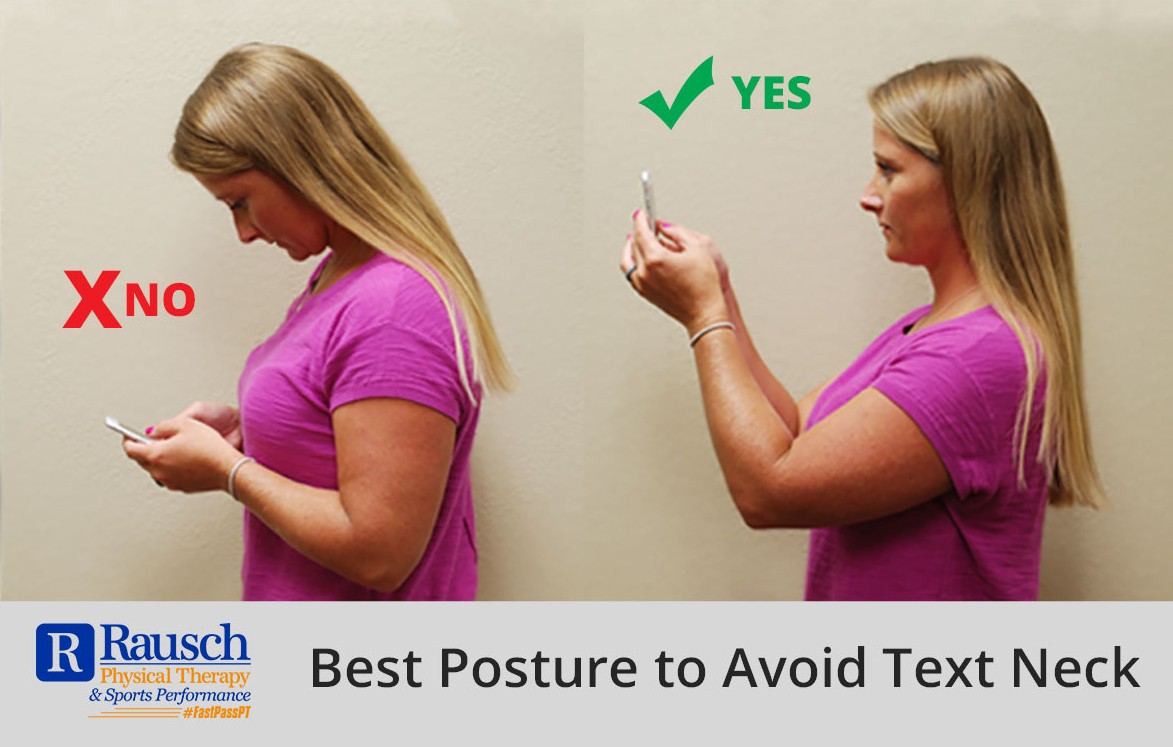
Most neck pain comes from everyday strain, not serious damage. The usual causes are long hours with your head forward over a screen, a pulled or knotted muscle, a bad sleep position, stress, and a stiff upper back. Most of these respond well to simple changes and physical therapy.
Your head weighs about 10 to 12 pounds. When it drifts forward, the muscles at the back of your neck work much harder to hold it up. Do that for hours a day and something eventually complains. Below are the seven causes physical therapists see most, how to tell them apart, and what actually helps.
1. Forward head posture (“tech neck”)
What it feels like: a dull ache at the base of your skull or across the tops of your shoulders, worse at the end of a workday. Headaches that start at the back of the head are common.
Why it happens: looking down at a phone or leaning toward a laptop pushes your head in front of your shoulders. The muscles at the back of the neck stay switched on to hold it there, while the muscles at the front get weak.
What fixes it:
- Raise your screen so the top of it sits at eye level, and bring your phone up instead of your head down.
- Get up every 30 minutes. Even a minute of moving resets the load on your neck.
- Chin tucks: lying on your back with a pillow under your head, gently nod your chin as if making a double chin. Hold 5 to 10 seconds, repeat 10 times.
2. Muscle strain and knots
What it feels like: a sore, tight band along the side of the neck or into the shoulder, often with a tender spot you can press on. It may hurt more when you turn your head one way.
Why it happens: sudden movements, carrying a heavy bag on one shoulder, or a new workout can strain the upper trapezius and levator scapulae. Overworked muscles can also form trigger points, often called knots.
What fixes it: gentle heat, light movement and staying active usually settle a strain within days. For knots, a lacrosse ball against the wall can help. See our guide to trapezius muscle knots. Hands-on work such as Rx Massage can speed things up when a knot keeps coming back.
3. Sleep position and the wrong pillow
What it feels like: you wake up stiff, and it eases as the day goes on.
Why it happens: a pillow that’s too flat, too high or too firm holds your neck bent for hours. Sleeping on your stomach turns your head fully to one side all night.
What fixes it: aim for a neutral neck, with your head neither tipped forward nor dropped back. Side sleepers need a thicker pillow than back sleepers. Our physical therapist’s guide to the best pillow position for neck pain walks through a four-step check.
4. Stress and tension
What it feels like: tight shoulders creeping up toward your ears, jaw clenching, and neck tension that flares on busy days.
Why it happens: stress keeps the muscles around your neck and jaw slightly contracted. Over time that low-level tension turns into soreness.
What fixes it: slow breathing, short movement breaks and regular exercise all help. So does noticing when your shoulders are up and letting them drop. Massage is a good option when tension builds up.
5. A stiff upper back
What it feels like: neck pain along with stiffness between the shoulder blades, and trouble turning your head fully to check a blind spot.
Why it happens: your upper back (the thoracic spine) is meant to share the work when you turn and look up. If it’s stiff from sitting, the neck has to make up the difference, and it gets overloaded.
What fixes it: upper back extensions over a foam roller, open-book rotations, and a doorway chest stretch. Cyclists and desk workers usually need this most. If you ride, see our tips for neck pain while cycling.
6. A pinched nerve
What it feels like: pain that travels from the neck into the shoulder blade, arm or hand, sometimes with tingling, numbness or weakness.
Why it happens: a nerve root in the neck gets irritated, often by a bulging disc or narrowing around the joint.
What fixes it: this one needs a proper assessment. A physical therapist can find positions and exercises that take pressure off the nerve, and many cases improve without surgery. If you have weakness, or symptoms in both arms, see a doctor promptly.
7. Wear and tear
What it feels like: stiffness that’s worst in the morning or after sitting still, with a gradual loss of how far you can turn your head. It’s more common after 50.
Why it happens: the joints and discs in the neck change with age. Those changes show up on X-rays in plenty of people who have no pain at all, so they’re only part of the story.
What fixes it: staying active matters more than anything. Strength and mobility work keeps the joints moving and the muscles supporting them, and physical therapy can build a routine you can keep up.
Quick relief you can try today
- Keep moving gently. Rest for a day if you need to, but long periods of not moving usually make a stiff neck worse.
- Use heat or ice. Heat tends to help tight muscles. Ice can help in the first day or two after a strain. Use whichever feels better, for 15 to 20 minutes at a time.
- Do chin tucks and gentle range of motion. Slowly turn, tilt and nod within a comfortable range. Stop if pain increases or spreads.
- Release your suboccipitals. Tape two tennis or lacrosse balls together, lie on your back, and rest just below the base of your skull on them for a minute or two.
- Open up your upper back. Lie across a foam roller at shoulder-blade height with your hands supporting your head, and gently extend over it.
- Check your setup. Screen at eye level, phone up, pillow at the right height.
When to see a doctor right away
Most neck pain isn’t an emergency. Get medical care promptly if you have any of these:
- Neck pain after a fall, car accident or other injury
- Weakness, numbness or tingling in both arms, or trouble with balance or walking
- Loss of bladder or bowel control
- Fever, a stiff neck and a headache together
- Severe pain that keeps getting worse, or pain with unexplained weight loss
How physical therapy helps neck pain
A physical therapist starts by finding out which of the causes above is driving your pain. That matters, because a pinched nerve and a knotted trap need very different plans.
Treatment usually combines hands-on work for stiff joints and tight muscles, exercises that strengthen the deep neck and upper back muscles, and changes to how you sit, sleep, train or ride. You also go home with a short routine you can keep doing on your own.
At Rausch Physical Therapy, every session is with the same care team, and in California you can start without a doctor’s referral. If spinal alignment is part of the picture, our Rx Chiro team works alongside your physical therapist.
Frequently asked questions
Why does my neck hurt when I wake up?
Usually it’s your pillow height or sleep position holding your neck bent for hours. Stomach sleeping is a common culprit. If the stiffness eases within an hour or so of getting up, sleep setup is the first thing to fix.
Why does my neck hurt on one side?
One-sided pain usually points to a strained or knotted muscle, often from carrying a bag on one shoulder, sleeping turned one way, or always looking to one side at a desk. If it travels down one arm with tingling, a nerve may be involved.
How long does neck pain last?
A simple strain often settles within a few days to a couple of weeks. Pain that lasts longer than that, keeps coming back, or spreads into your arm is worth getting assessed.
Should I see a physical therapist or a chiropractor for neck pain?
Both can help. Physical therapy focuses on finding the cause and building strength and mobility so the pain doesn’t return. Chiropractic care focuses on joint alignment and mobility. At Rausch, our physical therapists and Rx Chiro team work together, so you don’t have to choose.
Do I need a referral to see a physical therapist for neck pain?
Not in California. You can book directly. Medicare patients still need a prescription before their first visit.
Get help at a clinic near you
If your neck pain isn’t easing, our physical therapists can find the cause and build a plan around it. Book at our Laguna Niguel, Dana Point or Mission Viejo clinic, or call (949) 276-5401.