
Pelvic Health Archives - Rausch Physical Therapy & Wellness

Blog

Pelvic Floor Physical Therapy: What It Is and Who It Helps

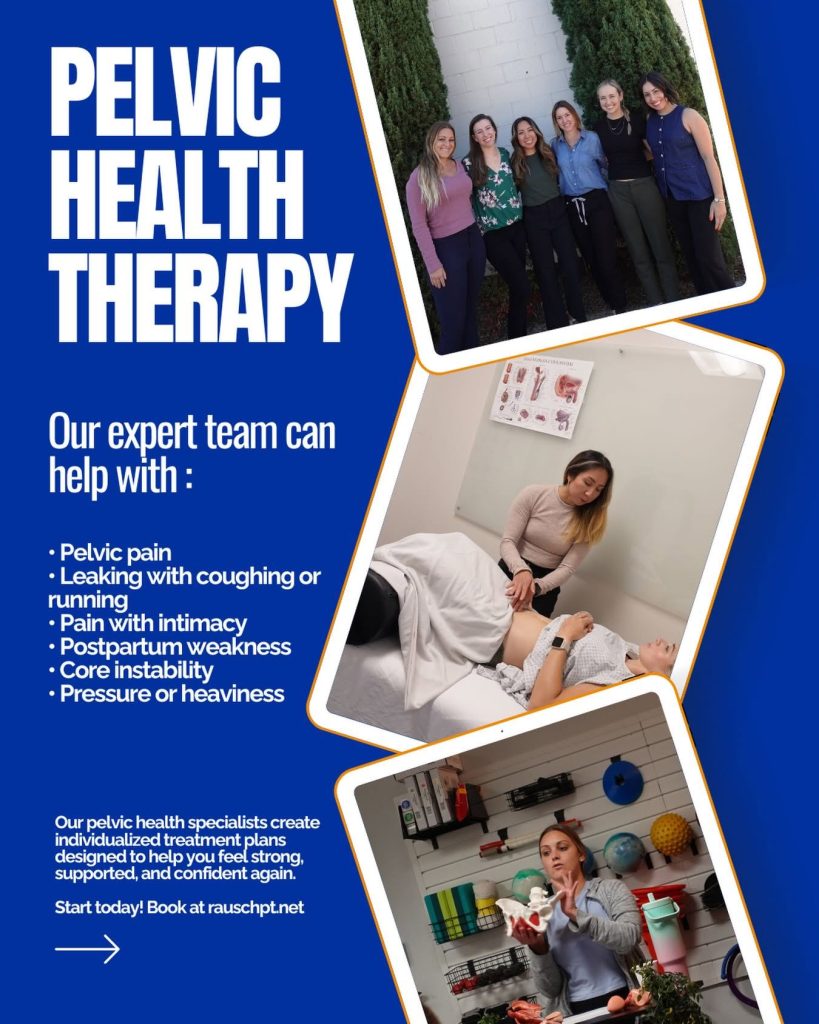
If you’ve ever crossed your legs before a sneeze, planned a run around the bathrooms, or wondered why sex has started to hurt, it’s okay to ask about it. These are the kinds of things we talk through in pelvic floor physical therapy. You can tell us what you’re experiencing in your own words. We’ll help you figure out where to start.

What is the pelvic floor?

Your pelvic floor is a group of muscles at the base of your pelvis. Think of them like a hammock that stretches from your pubic bone to your tailbone. They help support your pelvic organs, control when you pee and poop, and play a role in sexual function.

These muscles need to be able to tighten and let go. Think about how different it is to catch a sneeze versus sit down to pee. If the muscles are already having trouble relaxing, doing more Kegels can make some symptoms feel worse. A pelvic health PT can help you figure out whether to work on strength, relaxation, coordination, or a combination.

Who can benefit from pelvic floor PT?

We work with people who leak when they laugh, jump, or lift. We also see people who feel like they always need to pee, have to strain to poop, or have tailbone or pelvic pain that keeps coming back.

If you’re pregnant or postpartum, we can help with things like pelvic pain, abdominal separation, or heaviness from prolapse. If you’re having prostate surgery, we can help you get familiar with your pelvic floor beforehand and work on bladder control as you recover. We also see people with pain during sex, with tampons, or during pelvic exams, and people with sexual concerns that may be related to pelvic floor muscle function. (NICE)

When is it worth getting checked?

You can reach out as soon as something starts bothering you. That could mean a little leakage on your runs, pressure in your pelvis after a shift on your feet, or realizing you’ve started avoiding activities because you’re worried they’ll hurt. You can also come in to prepare for birth or prostate surgery.

Get prompt medical care if you see blood in your urine or stool or have a fever with pelvic pain. If you suddenly lose bladder or bowel control, especially with new back pain, leg weakness, or numbness around your groin, seek emergency care. (NHS)

What happens in pelvic floor physical therapy?

We’ll start by asking what’s going on and what you’d like to be able to do more comfortably. We might look at how you breathe, how your hips and abdominal muscles move, or what happens during a movement that brings on your symptoms.

Depending on what we find, we might practice relaxing your pelvic floor, build strength, use hands-on treatment or biofeedback, or work through bladder and bowel habits. If an internal exam would help us understand your symptoms, we’ll explain it and let you decide. It’s always optional. What to expect at your first pelvic floor therapy visit.

Explore more

Frequently asked questions

Is pelvic floor PT only for women?

People of all genders can have pelvic floor symptoms. We treat men with concerns like urinary leakage after prostate surgery, persistent pelvic pain, and difficulty with bladder or bowel function.

Will I need an internal exam?

You can choose whether to have one. We’ll explain what information it could give us, and we can begin with an external assessment if that’s what feels right for you.

Do I need a referral?

In California, many patients can start PT without one. If you reach 12 visits or 45 calendar days, whichever comes first, you’ll need approval of your plan of care to continue under California’s direct-access rules. If you have Medicare, call us before booking so we can explain what documentation you’ll need. (ptbc.ca.gov)

Ready to get started?

Our pelvic health team sees patients in Laguna Niguel, Dana Point, and Mission Viejo. Call (949) 276-5401 or visit our pelvic health program page to learn more and book.
Pelvic Pain in Women: Causes, Symptoms & Real Solutions

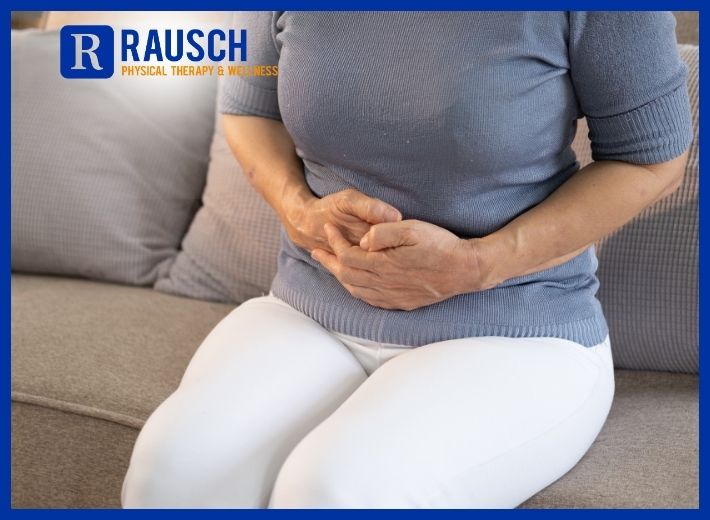
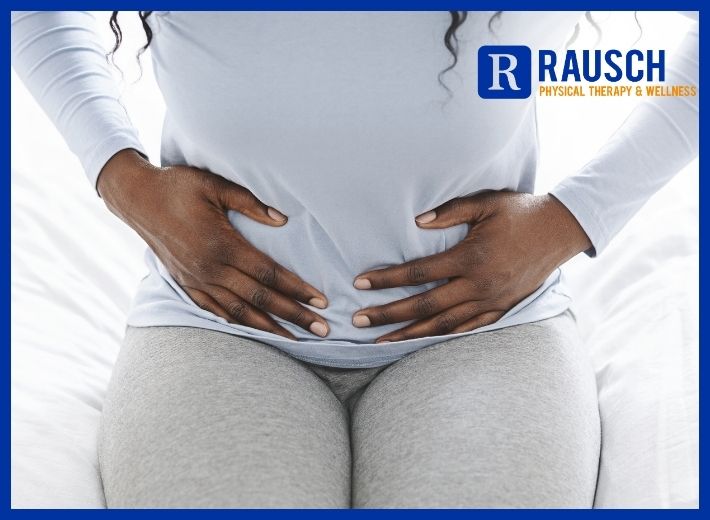
Pelvic pain is incredibly common—but that doesn’t mean it’s something you should ignore or “just deal with.”

For many women, pelvic discomfort shows up quietly at first: a little pressure, occasional pain, or symptoms that come and go. Over time, it can begin to affect workouts, daily movement, sleep, and even confidence.

Here’s the truth:

Pelvic pain is common—but it’s not normal. And it’s treatable.

At Rausch Physical Therapy, we specialize in helping women understand what’s going on in their bodies and guiding them back to strength, comfort, and control.

What Is Pelvic Pain?

Pelvic pain refers to discomfort in the lower abdomen, pelvis, or surrounding areas. It may feel:

  • Sharp or dull
  • Constant or intermittent
  • Triggered by movement, sitting, or specific activities

Because the pelvic region connects multiple systems—muscles, organs, and nerves—the source of pain isn’t always obvious.

Pelvic Pain in Women: Causes, Symptoms & Real Solutions 1

Where Pelvic Pain Can Come From

Pelvic pain often has more than one contributing factor. Common causes include:

Muscle & Movement-Related (most common in PT):

  • Tight or overactive pelvic floor muscles
  • Weak core or instability
  • Postural strain
  • Previous injury or overuse

Internal Systems:

  • Menstrual cycle-related pain
  • Endometriosis or ovarian cysts
  • Bladder issues or infections
  • Digestive conditions like IBS

Learn more about medical causes here:
https://www.healthline.com/health/womens-health/pelvic-pain-in-women

⚠️ Symptoms You Shouldn’t Ignore

Pelvic pain doesn’t always feel “obvious.” It can show up as:

  • Lower abdominal or hip pain
  • Pain with exercise or movement
  • Discomfort when sitting for long periods
  • Pain with intimacy
  • Urinary urgency or leakage
  • Persistent low back pain

If your symptoms are changing how you move or live your life, it’s worth getting evaluated.

Pelvic Pain in Women: Causes, Symptoms & Real Solutions 2

Quick Truths Most Women Aren’t Told

📌 Pain after pregnancy? Treatable.
📌 Leaking during workouts? Not something you have to live with.
📌 Pain with sitting or exercise? Your body is asking for support.

A Patient Success Story

🌿 Pelvic Health Edition: Dr. Emily’s Favorite Patient Success Story 🌿 After seeing multiple providers and still feeling stuck in pelvic pain, this patient was starting to lose hope. That’s when she found Dr. Emily. 🤍 Through individualized care, education, and a plan tailored specifically to her body, she finally experienced the progress she had been searching for. Less pain. More confidence. Real results. Sometimes it’s not about doing more — it’s about doing what’s right for you. If you’ve tried everything and still feel unheard, this is your sign. Book your pelvic health eval today at rauschpt.net

Why Pelvic Physical Therapy Works

Pelvic physical therapy focuses on restoring balance, strength, and coordination in the muscles that support your core and pelvic organs.

At Rausch PT, treatment may include:

  • One-on-one evaluation and guided care
  • Manual therapy to reduce tension and pain
  • Strengthening and relaxation techniques
  • Movement and posture retraining
  • Personalized at-home exercise programs

We create a space that’s comfortable, private, and judgment-free—because we understand how sensitive these symptoms can feel.

Learn More About Our Approach

👉 Explore our Pelvic Health Physical Therapy services:
https://rauschpt.net/pelvic-health-specialist/
👉 Women’s pelvic health physical therapy:
https://rauschpt.net/womens-health/

Pelvic Pain in Women: Causes, Symptoms & Real Solutions 3
Meet our incredible Pelvic Health Specialist Team — dedicated to helping you move, heal, and feel your best from the inside out. Whether you’re navigating pelvic pain, postpartum recovery, or discomfort that’s holding you back, we’re here to help every step of the way. 💜 Call (949) 276-5401 to book your evaluation and start your journey toward confidence and comfort with our amazing team!

FAQ: Pelvic Pain in Women

Is pelvic pain normal?

It’s common—but not normal. Persistent pain is a sign your body needs attention.

When should I seek help?

If pain is ongoing, worsening, or affecting your daily life, it’s time to get evaluated.

Is pelvic physical therapy safe?

Yes. Treatment is always customized to your comfort level and explained clearly every step of the way.

Can pelvic pain go away on its own?

Some mild cases may improve, but many require guided care to fully resolve and prevent recurrence.

Do I need to “push through” the pain?

No. Ignoring symptoms often prolongs the issue. Addressing it early leads to better outcomes.

Do I need a referral?

In most cases, no. California allows direct access, so you can book a pelvic health evaluation without a doctor’s referral. If you have Medicare, a prescription is required before your visit.

You Don’t Have to Live With This

Pelvic pain can feel isolating—but solutions exist, and the right care can make a real difference.

With a personalized plan, you can:

  • Reduce or eliminate pain
  • Improve strength and stability
  • Regain confidence in your body
  • Return to exercise and daily life comfortably

Ready to Take the First Step?

📞 Call Rausch Physical Therapy at 949-276-5401
Book your one-on-one evaluation today
Follow us for tips, education, and support:
👉 https://www.instagram.com/rauschpt/

Feel better. Move better. Live without limits.

Exercise During Your Period And Each Stage Of Your Cycle

If you have a period, it’s likely you’ve experienced some of the negative side effects. There is no medical reason to avoid working out during menstruation or any other phase of your cycle. In fact, exercise may be beneficial for easing some common symptoms like cramps and emotional distress. To work with and not against our bodies, learn more about the phases of the menstrual cycle and how it connects to exercising.

There’s a common belief in the fitness world that regardless of gender, results are only gained with consistent hard work.

However, due to gender bias within the field of exercise science, most research on effective exercise programming is done on male test subjects.

Exercise recommendations are made as one-size-fits-all prescriptions, and women in all life stages optimistically attempt the latest workout trend to gain positive results.

The pressure to maintain a certain body shape is at the forefront of many women’s workout intentions. Yet, at some point in the month, the “always work hard” attitude comes in direct conflict with low energy days, and women can fall victim to their own negative judgment.

As a personal trainer and lifelong exerciser, I’ve gained a new perspective when it comes to exercise and the menstrual cycle. By gaining an understanding of our monthly hormonal fluctuations, we can ramp up our workouts when our bodies are ready for it, and turn down the intensity when our bodies can’t tolerate as much of a physical load.

When we learn how to cycle our exercise with our cycle, we’re using our female biology to our advantage — working smarter, not harder.

To work with and not against our bodies, we must first have a keen awareness of the phases of the menstrual cycle.

Phases of the menstrual cycle

A menstrual cycle averages 23–38 days and comprises 3 phases.

The follicular phase

The follicular phase begins on day one of your period, and it’s characterized by the lowest levels of female hormones throughout the month. Because sex hormones are low, this is when the female body is most similar to that of a man.

The follicular phase continues 5–6 days past the last day of your period, lasting 12–14 days. Following your period, estrogen gradually increases, resulting in the release of luteinizing and follicle-stimulating hormones, culminating in mid-cycle ovulation.

Ovulation

Exercise During Your Period And Each Stage Of Your Cycle 4

Ovulation is when your body releases an egg, and if sperm is present, this is the golden opportunity for implantation and pregnancy to occur. In a 28-day cycle, ovulation occurs right around the midpoint, often close to day 14.

The luteal phase

The luteal phase occurs right after ovulation and lasts for the second half of your cycle, bringing with it the hormonal parade.

At this point, estrogen has a moderate second rise, but more importantly, progesterone enters the picture and brings a number of physiological symptoms along with it.

The luteal phase ends when progesterone peaks, and if you’re not pregnant, both estrogen and progesterone drop and signal to your brain to start your period and begin a new cycle.

Now that we have a basic understanding of the hormonal changes that define the menstrual cycle, let’s talk more about the physiological changes that can affect your exercise efforts.

The effects of fluctuating hormones

The first part of your cycle, known as the follicular phase, is the low hormone phase, and the only cycle symptoms you’re likely experiencing are those of your period.

If you’re trying to exercise hard, it’d make sense that this is the time of the month to put your best efforts forth, as you have no hormonal symptoms complicating things.

The event of ovulation can be marked by a slight rise in a woman’s temperature. This doesn’t seem like a big deal on the thermometer, but it’s important to know that this temperature increase continues past ovulation and lasts the duration of the second half of your cycle.

Given the raised temperature during the luteal phase, the female body is more sensitive to exercising in hot or humid environments (think hot yoga, being in a warm gym, or running outside on a hot summer day), and athletic performance can really take a hit.

Aside from raising your core temperature, progesterone increases your resting heart rate and breathing rate. All three of these symptoms can be interpreted as additional strain on the body, especially when exercising, leaving a woman to feel like she’s having to work harder than usual.

Another characteristic of progesterone is its catabolic effect, meaning that this hormone likes to break tissue down.

This is important when it comes to strength training during the second half of your monthly cycle.

Under ordinary circumstances, strength exercises require a load to work against — bodyweight, bands, cables, free weights — that creates a tension response within the worked muscles.

Muscular tension from repetitively lifting a challenging load leads to microscopic tears within your working muscles. Your body then heals these microscopic tears by regrowing the muscle tissue, resulting in bigger and stronger muscles.

When progesterone is present during the second half of the menstrual cycle, it can reduce this protein regrowth, negatively affecting the process of muscle repair.

Let your biology be your exercise guide

Just a few simple habits can make a big difference when it comes to syncing your workouts with your cycle.

Tracking your cycle

If you want to improve your exercise efficiency in conjunction with your menstrual cycle, the first requirement is to track your cycle.

It’s as easy as keeping a digital thermometer and an alarm clock by your bed. Every morning when you wake up (waking up at the same time each morning is important for this method), before you do anything (don’t get out of bed or even take a sip of water), take your temperature and write it down.

This is especially important during the first half of your cycle, so you can have an understanding of what your waking temperature is. By writing it down every morning at the same time, you’ll be able to see a small increase in your temperature around mid-cycle, indicating ovulation has taken place.

Tracking your menstrual cycle will eliminate guesswork and provide you the ability to anticipate what your body is willing to tolerate.

Note that if you’re on birth control, which can work by preventing ovulation, this method of tracking your cycle might be more difficult.

Choose different exercise at different times of the month

  • Follicular phase. This is when you can HIIT it hard (see what I did there!). Get your high intensity interval training, powerlifting, heavy weight lifting, plyometrics, long runs, hot yoga, hill repeats, or other intense exercise modalities in now. Take at least one rest day between hard workouts, and be mindful of signs of overtraining, as some studies suggest you may be more prone to muscle damage from overtraining during this phase.
  • Luteal phase. This is when to respect your body’s high hormonal load. Moderate cardio (no breathless intervals), outdoor walks and hikes, strength training (low to moderate weight and higher reps), yoga, and Pilates are all great choices. This is a good time to work on enhancing your mobility, and make sure to stay away from hot workout environments.

Work with your body, not against it

Exercise research and recommended protocols rely heavily on data that has used male subjects, as they don’t have the monthly hormone fluctuations that women do.

As a result, women attempt to implement exercise programs that aren’t constructed with female biology in mind, leaving them to wonder where they went wrong when their energy changes.

Through knowledge of their menstrual cycle phases and tracking their cycles, women will be empowered by gaining control of their exercise efficiency while avoiding failed workouts and self-criticism.

Be strong. Be flexible. Be healthier with physical therapy! Don’t waste any more of your time in pain. Contact our team today at 949-276-5401. To get health and wellness updates and learn about what we have to offer ongoing, join our Facebook community.


Reference: [https://www.healthline.com/health/fitness/female-hormones-exercise#Phases-of-the-menstrual-cycle]

Pelvic Organ Prolapse: Not as Scary as It Sounds

Written by Dr. Analise Richtsmeier, PT, DPT, PRPC, PCES

If you’ve never heard those words before, they can sound a little terrifying. My organs are doing WHAT?!

Before you panic, take a deep breath. Pelvic organ prolapse (POP) is a common pelvic health condition. Having a prolapse does not automatically mean surgery, giving up exercise, or living with symptoms forever. Many people significantly improve their symptoms and return to the activities they love with conservative treatment, including pelvic floor physical therapy.

What Is Pelvic Organ Prolapse?

Think of your pelvic floor like a supportive hammock supporting your bladder, uterus, vagina, and rectum. Pelvic organ prolapse occurs when this support system becomes weakened or stretched, allowing one or more organs to descend toward the vaginal opening.

Common types include:

  • Anterior vaginal wall prolapse: The bladder presses into the front wall of the vagina.
  • Posterior vaginal wall prolapse: The rectum presses into the back wall of the vagina.
  • Uterine prolapse: The uterus descends into the vagina.
  • Vaginal vault prolapse: The top of the vagina descends (typically post-hysterectomy).

Prolapse exists on a spectrum from mild to significant. Treatment is guided by your symptoms and quality of life, not simply the anatomical diagnosis.

What are the stages (grades) of pelvic organ prolapse?

Clinicians describe prolapse in stages from 0 to 4. The stage is based on how far the lowest part of the prolapse comes down compared with the hymen, the ring of tissue at the vaginal opening. You may also hear it called a “grade” (grade 1, grade 2 and so on). The two words mean the same thing. The most widely used system is called POP-Q.

  • Stage 0: no prolapse.
  • Stage 1: the lowest point stays more than 1 cm above the hymen. Many people have no symptoms at this stage.
  • Stage 2: the lowest point is within 1 cm of the hymen, either just above it or just below it. This is often when people first notice pressure or a bulge.
  • Stage 3: the lowest point comes more than 1 cm past the hymen, but the vagina is not fully turned outward.
  • Stage 4: complete prolapse. The vagina is fully turned outward, and the uterus or vaginal walls sit outside the body.

Your stage describes position, not how much the prolapse affects your life. Someone with stage 2 can have more symptoms than someone with stage 3, which is why treatment starts with what you feel and what you want to get back to. Pelvic floor physical therapy can help at any stage, and your OB-GYN or urogynecologist can tell you your stage after an exam.

Common Symptoms

Everyone experiences prolapse differently. You might notice:

  • Pelvic heaviness, pressure, or a feeling that something is “dropping”
  • Seeing or feeling a bulge near the vaginal opening
  • A sensation similar to an improperly inserted tampon
  • Difficulty completely emptying the bladder or bowel
  • Lower back or pelvic discomfort, often worsening after prolonged standing

Having these symptoms does not mean your body is broken. Your organs will not fall out during a workout, and a diagnosis does not mean you must stop lifting, running, or staying active.

Why Does Prolapse Happen?

Prolapse is rarely caused by a single factor. Major contributors include pregnancy, vaginal childbirth, aging, and menopause. Other contributing factors involve routine pressure management, such as:

  • Repetitive heavy lifting
  • Chronic constipation, straining, or coughing
  • Genetics and tissue elasticity

Beyond Kegels

Pelvic floor rehabilitation is much more nuanced than simply doing more Kegels. While pelvic floor muscle training is recommended, your pelvic floor must contract, relax, coordinate with your breathing, and work alongside your core, hip, and trunk muscles.

What Does Pelvic Floor Physical Therapy Look Like?

Pelvic PT offers an individualized approach that evaluates strength, coordination, breathing mechanics, and functional movement. Treatment often includes:

  • Pelvic floor muscle training: Improving strength, endurance, and proper relaxation.
  • Breathing and pressure management: Coordinating your diaphragm, abdomen, and pelvic floor during daily activities.
  • Functional strengthening: Progressing to real-life movements like squats, lifting, and running.
  • Bowel mechanics: Improving positioning and habits to reduce straining.
  • Education: Rebuilding confidence to help you return to safe, comfortable movement.

Other Treatment Options

In addition to PT, options like a pessary (a removable support device) or surgery can be explored depending on severity. Nonsurgical treatments are typically recommended first, and a pelvic floor PT can work alongside your OB-GYN or urogynecologist to tailor your care.

The Bottom Line

Pelvic organ prolapse is a common, manageable condition. Your pelvic floor is adaptable, your body can get stronger, and targeted care can help you feel confident moving forward.

Frequently asked questions

What is grade 2 prolapse?

Grade 2 (stage 2) prolapse means the lowest point of the prolapse sits within 1 cm of the vaginal opening, just above or just below it. It’s a common stage, and it’s often when people first feel pressure or notice a bulge. Pelvic floor physical therapy is usually one of the first treatments recommended.

What are the types of vaginal prolapse?

The four main types are anterior vaginal wall prolapse (bladder), posterior vaginal wall prolapse (rectum), uterine prolapse (uterus) and vaginal vault prolapse (the top of the vagina, usually after a hysterectomy).

Get help from our pelvic health team

Our pelvic health physical therapists see patients at our Laguna Niguel, Dana Point and Mission Viejo clinics. Learn more on our pelvic health page, or call (949) 276-5401.

The Fourth Trimester and Pelvic Floor PT

The fourth trimester. The first 3 months after the birth of a child. New mothers are often consumed by their new baby and nothing else matters in the world, as you would and should expect. It is vital to check in on the newborn to ensure their health and development in their first few months out of the womb. However, what also tends to happen is that health care providers, such as the OB-GYN, and even the woman herself forget to attend to the health of the postpartum body. During this time the abdomen, pelvic floor, and vaginal canal are all healing. While it is normal to experience some after-effects of labor/delivery, there are some occurrences that happen that are absolutely not normal. It is the mission of pelvic floor PT specialists, myself included, to spread the word. Let’s remove the taboo and talk openly about what really happens after childbirth and what you can do to fix it.

First, let us establish how long it typically takes to recover from pregnancy and childbirth overall. A woman who goes through an average, non-complicated pregnancy, and vaginal delivery will recover 90-100% of her functional status prepartum between 9-12 months following childbirth. Non-complicated means without physician ordered bed rest, prescription medication use, episiotomy, or epidural injection at any point throughout the pregnancy. Pregnancy and delivery with complication and/or Caesarean section (C-section) will recover 90-100% of functional status prepartum 12+ months following childbirth. Then we have to consider, what is considered “normal” for your body during those first 3 months following childbirth? Normal after-effects and changes include bleeding or discharge, perineum soreness, nipple soreness, extremity swelling, hemorrhoids, constipation, and mild leaking. However, most of these issues should be resolved before the end of the fourth trimester.

OK, got that covered. So what about all that is abnormal? Most obviously, any of those issues that continue past the fourth trimester. Red flags that warrant an urgent return to your physician include continued bleeding and/or discharge, swelling, nausea/vomiting, fever, or general feelings of malaise that are unrelenting. Then there are the misconceptions the abnormal non-urgent issues are “just the way life is going to be now,” or are missed completely. If you have any of these problems, consult your physician and/or pelvic floor PT near you. Problems that can be addressed by pelvic floor physical therapy are as follows:

● Urinary incontinence with strong urges to urinate, or with increases in intra-abdominal pressure (i.e. cough, sneeze, laugh)
● Urinary frequency/urgency
●  or painful defecation
● Pain with sexual intercourse (including sharp pain or diffuse soreness)
● Pelvic organ prolapse (symptoms include perineal discomfort and/or heaviness)
● Diastasis recti separation
● Perineal or C-section scar stiffness and/or sensitivity
● Weak pelvic floor and abdominal muscles
● Neck or back pain related to poor posturing (i.e. holding baby or breastfeeding positions)

Wow, you say. That’s quite the laundry list of problems! It is mind-boggling that so many women walk around postpartum without any form of treatment at all. We would like to think that if any of these issues were mentioned in the 6-week OB-GYN follow up appointment that they would offer or recommend hard solutions, including physical therapy. However, the role of OB-GYNs is to manage and control issues that require medical attention. They are not musculoskeletal experts, so we cannot expect them to solve those problems. In that regard, it makes sense that OB-GYNs and physical therapists should complement one another. There is also the unfortunate truth our healthcare system is not yet in a place to utilize physical therapy as the standard of care following labor and delivery. The good news is that European healthcare is already paving the way in maternal care and the United States should follow suit. We have an extensive basis of credible research demonstrating the value of pelvic PT, now all we need is to spread the word and make people aware of what is available. It is already the mission of pelvic specialists to provide education to those looking for it, now all we need is YOU! As the patient, you have so much power in not only talking to your family and friends but also in bringing your physician(s) this information as some have no idea that this type of PT even exists!

The last point to consider in the fourth trimester is your return to regular activity and exercise. Day one after labor and delivery the postpartum woman can begin to breathe through the diaphragm and practice gentle transverse abdominal contractions to stabilize the pelvis through transitional movements, such as rolling in bed, walking short distances, and going from sitting to standing. After the first 6 weeks, foundational exercises may begin and progress from there. I cannot stress it enough, seek advice from a pelvic PT if any of this information applies to you or someone you know. After all, happy and healthy babies begin with happy and healthy mommies!


RebeccaDr. Rebecca Gasca, PT, DPT

Let’s talk! We are here to help. Give us a call for a complimentary consultation. We would love to meet you.

Did you know there’s no prescription needed from a doctor to see us – but we will communicate your progress and treatment to your doctor if you’d like us too!
(949) 276-5401

Disclaimer — All the information that you find on our blogs and social media pages is for informational purposes only and is not intended to be used as your personal professional diagnosis, or treatment. Come and see us for your excellent, personalized care! https://rauschpt.net/

RauschPT-logo

What is pelvic floor physical therapy?? By: Dr. Rebecca Gasca, PT, DPT

In order to fully answer this question that I get on a regular basis, one must understand what the pelvic floor is. The pelvic floor is a group of muscles at the bottom of your pelvis that are essentially responsible for urination, defecation, and sexual activity.

5 “S” Functions of the Pelvic Floor

  • Support of abdominal and pelvic organs
  • Sphincter control of bowel and bladder
  • Sexual function such as achieving and maintaining arousal and orgasm
  • Stability across the pelvis and hips, including transferring force appropriately through spine to lower extremities
  • Sump pump, which is a muscular action that facilitates transfer of lymph (or swelling) from lower extremities and pelvis up through the trunk to be cleaned and recycled by the circulatory system

Now that we understand what a pelvic floor is, let us get to answering the mysterious question of pelvic floor PT.

Did you know:

  • 1 out of 4 women have one or more pelvic floor disorders?
  • 17% of women with a pelvic floor disorder will have urinary incontinence?
  • Nearly 90% of men that undergo prostate surgery will have a pelvic floor disorder?

That’s a lot of people! To put it another way, consider a few of these real life scenarios to help you relate.

Imagine you are a male cyclist with a new onset of groin and buttock pain. You have been to an orthopedic PT, which has helped most of your symptoms, but pain still remains. Pelvic floor PT can help with that! After the resolution of orthopedic impairments, there is a portion of patients that continue to present with symptoms referring from the pelvic floor muscles.

Imagine you are a female who celebrated the birth of her second child 2 months ago. You are experiencing leaking with strong urges to urinate and when you cough, sneeze, and laugh. Everyone tells you this is normal, but your gut tells you something just isn’t right. Your OB-GYN just cleared you to be able to have sex with your partner, but to your dismay you have to stop because it is painful. This concerns you because you’ve never had pain before. There is good news though, pelvic floor PT can address all of these problems! And chances are, they are all related.

OK, great!

What does a pelvic floor examination and treatment plan look like?

Depending on your medical history and subjective examination, your pelvic floor PT may recommend an internal examination along with a screen of external structures. Your pelvic floor PT has additional specialty education and training on how to properly assess and treat these issues. During the examination, your pelvic floor PT will be able to fully understand your mobility and strength limitations and devise an individualized program to help you reach your goals.

Stay tuned into our blog for new information coming out about specific pelvic floor conditions that can be treated with pelvic floor PT.


Rebecca

Dr. Rebecca Gasca

Let’s talk! We are here to help. Give us a call for a complimentary consultation. We would love to meet you.

Did you know there’s no prescription needed from a doctor to see us – but we will communicate your progress and treatment to your doctor if you’d like us too!
(949) 276-5401

RauschPT


Disclaimer — All the information that you find on our blogs and social media pages are for informational purposes only and are not intended to be used as your personal professional diagnosis, or treatment. Come and see us for your excellent, personalized care! https://rauschpt.net/